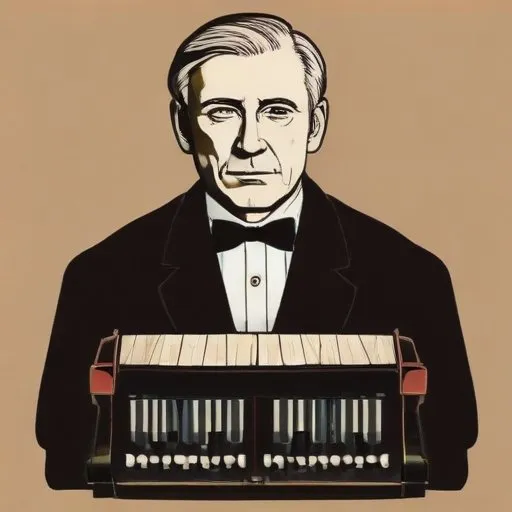
Mart Saar: The Estonian Composer and Collector of Folk Songs
Early Life and Education
Mart Saar, a renowned Estonian composer, organist, and collector of folk songs, was born on September 15, 1882, in Hpassaare, Livonian Governorate, Russian Empire (now Estonia). He is best known for his unique blend of Estonian folk music with contemporary sounds, creating a distinctive style that has left an indelible mark on the world of music.
Saar's early life was marked by a strong musical foundation, receiving education in the village school at Kaansoo and the Suure-Jaani Parish school. His music teacher, Joosep Kapp, was the father of Artur Kapp, another famous Estonian composer. Additionally, his father, Mihkel Saar, was a talented organist who provided him with lessons at home.
Adult Life and Career
In 1901, Saar left his hometown to pursue higher education in music at the Saint Petersburg Conservatory. He graduated in 1908 but chose to continue his studies, eventually becoming a music teacher in Tartu in 1911. Ten years later, he moved to Tallinn, Estonia, where he established himself as a freelance composer and organist.
Saar's compositional style underwent a significant transformation over the years. Initially influenced by European music of the early 19th century, he later incorporated Estonian folk music with more contemporary sounds. He was known to mix vocals into his symphonies, and his lyrics often expressed a deep love for Estonia and nature, as well as the brevity of life.
Personal Life and Relationships
Saar's personal life was marked by two marriages and three children. In August 1915, he married Elise Paalmann, with whom he had two children, Heli and Lo. The couple divorced in 1937, and Saar later married Magda Elisabeth Takk, with whom he had a daughter named Tuuli.
Legacy and Impact
Mart Saar's contributions to Estonian music and culture are immeasurable. He is remembered for his unique compositional style, which blended traditional folk music with modern elements. His love for Estonia and nature is reflected in his lyrics, which have inspired generations of Estonian musicians and composers.
Saar's legacy extends beyond his music. He played a significant role in promoting Estonian culture and identity during a period of great change and upheaval. His music continues to be celebrated and performed in Estonia and around the world, ensuring his place as one of the most important figures in Estonian cultural history.
Awards and Honors
Throughout his career, Saar received numerous awards and honors for his contributions to music and culture. These include the Estonian State Cultural Award and the Estonian SSR State Prize.
Visual Timeline and Milestones
- 1882: Born in Hpassaare, Livonian Governorate, Russian Empire (now Estonia)
- 1901: Begins studies at the Saint Petersburg Conservatory
- 1908: Graduates from the Saint Petersburg Conservatory
- 1911: Becomes a music teacher in Tartu
- 1915: Marries Elise Paalmann
- 1921: Moves to Tallinn, Estonia, as a freelance composer and organist
- 1937: Divorces Elise Paalmann and marries Magda Elisabeth Takk
- 1963: Dies on October 28
Philosophical Contributions and Beliefs
Saar's music and philosophy were deeply rooted in his love for Estonia and nature. He believed that music had the power to bring people together and promote cultural understanding. His compositions often expressed a sense of longing and nostalgia for the natural world, which he saw as a source of inspiration and comfort.
Influence on Modern Society
Mart Saar's influence on modern society extends beyond the world of music. His commitment to promoting Estonian culture and identity has inspired generations of artists, musicians, and cultural leaders. His music continues to be celebrated and performed around the world, ensuring his place as one of the most important figures in Estonian cultural history.
Controversies and Public Perception
Despite his significant contributions to music and culture, Saar's life was not without controversy. His marriage to Elise Paalmann ended in divorce, and he later married Magda Elisabeth Takk. However, these personal controversies have not overshadowed his remarkable achievements, and he remains one of the most beloved and respected figures in Estonian cultural history.
FAQ
What type of music did Mart Saar primarily compose?
Mart Saar was an Estonian organist and composer who primarily composed sacred music, including choral works, masses, and motets.
How did Mart Saars music reflect his Estonian heritage?
Mart Saars music often incorporated elements of Estonian folk music and was deeply rooted in the countrys cultural traditions.
What was Mart Saars most notable composition?
Mart Saars most notable composition is considered to be his Requiem Mass in C minor, which is still widely performed today.
What role did Mart Saar play in Estonian cultural life?
As a prominent composer and organist, Mart Saar played a significant role in Estonian cultural life, serving as a professor at the Tallinn Conservatory and later as the director of the Estonian National Opera.
What is Mart Saars legacy in Estonian music?
Mart Saar is considered one of the most important Estonian composers of the early 20th century, known for his contributions to the development of Estonian classical music and his role in preserving the countrys cultural heritage.