


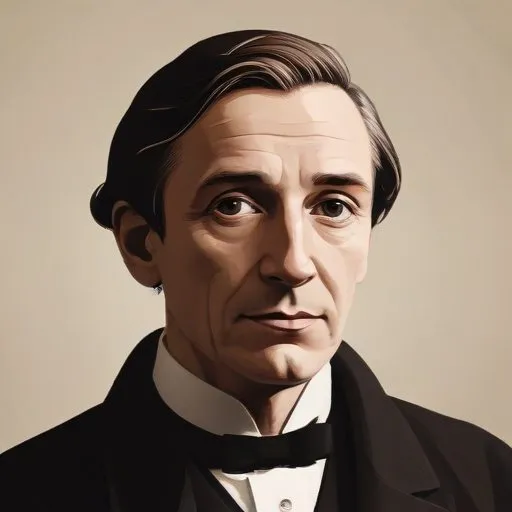
A 17th-century polymath who made significant contributions to mathematics, astronomy, and antiquarianism, particularly in the fields of trigonometry and ancient Greek coins.
Martin Folkes was a multifaceted English antiquarian, numismatist, mathematician, and astronomer who left an indelible mark on the scientific community of his time. As the president of the Royal Society from 1741 to 1752, Folkes spearheaded groundbreaking research and championed innovation, earning him a revered place in the annals of history.
Born on October 29, 1690, in Westminster, Folkes was the eldest son of Martin Folkes, a counselor at law. He received his education at Clare College, Cambridge, where he demonstrated exceptional prowess in mathematics, leading to his election as a fellow of the Royal Society at the tender age of 23.
Folkes' ascendancy in the scientific hierarchy was swift and decisive. He was appointed to the council of the Royal Society in 1716 and became one of the vice-presidents in 1723, courtesy of Sir Isaac Newton's patronage. Although he lost the presidency to Sir Hans Sloane in 1723, Folkes eventually succeeded him in 1741, cementing his position as a leading figure in the scientific community.
Folkes' fascination with astronomy led him to contribute significantly to the field. He was made a member of the French Royal Academy of Sciences in 1742, a testament to his far-reaching influence. His work on ancient coins, particularly his Dissertations on the Weights and Values of Ancient Coins, showcased his mastery of numismatics and demonstrated the interconnectedness of astronomy and antiquarianism.
Folkes' involvement in Freemasonry was yet another facet of his multifaceted personality. He served as the Deputy Grand Master of the Premier Grand Lodge of England from 1724 to 1725, using his position to promote charitable causes. In 1739, he was elected one of the founding vice-presidents of the Foundling Hospital for abandoned children, a role he maintained until 1747, exemplifying his commitment to social welfare.
Folkes' legacy extends far beyond his scientific contributions. He was awarded honorary degrees from Oxford and Cambridge in 1746, recognizing his immense impact on the academic community. His portrait, painted and etched by William Hogarth, remains an enduring testament to his stature as a polymath and a man of letters.
Folkes married Lucretia Bradshaw, an accomplished actress, in 1714. His life was a masterclass in navigating multiple passions and pursuits, leaving behind a rich tapestry of achievements that continue to inspire generations of scholars and scientists.
Martin Folkes' extraordinary life serves as a potent reminder of the transformative power of curiosity and dedication. As an antiquarian, numismatist, mathematician, astronomer, and philanthropist, Folkes embodied the Renaissance ideal of the universal scholar, leaving an indelible mark on the history of science and beyond.
Born in 1656
Predicted celestial events, including the return of a comet that bears his name, and made significant contributions to navigation, astronomy, and mathematics.
Born in 1644
Danish astronomer and instrument maker who made the first quantitative measurements of the speed of light and contributed to the development of telescopes and other astronomical instruments.
Born in 1629
A 17th-century polymath who made groundbreaking contributions to optics, probability theory, and astronomy, including the discovery of Saturn's rings and the largest moon, Titan.
Born in 1623
A 17th-century genius who made major contributions to mathematics, physics, and philosophy, inventing the mechanical calculator and developing the theory of probability. His writings also explored the human condition and faith.
