


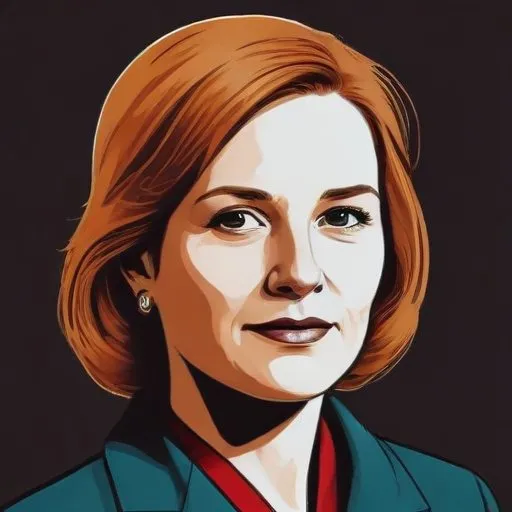
First American woman to receive a patent, inventing a process for weaving straw with silk and cotton, revolutionizing the hat-making industry.
Mary Dixon Kies, born on March 21, 1752, was an American inventor who made history by receiving a US patent for her innovative technique of weaving straw with silk and thread to create sturdy hats. This groundbreaking invention not only filled a gap in the market during the Napoleonic Wars but also paved the way for American-made hats to replace European millinery.
Mary Dixon Kies was born in Killingly, Connecticut, to John Dixon, a farmer from Ulster, Ireland, and Janet Kennedy, his third wife. She grew up in a large family and married Isaac Pike I in 1770, with whom she had a son, Isaac Pike II. After her first husband's death, she married John Kies in 1813, who passed away in 1813 at the age of 63. Mary then lived with her second son, Daniel Kies, in Brooklyn, New York, until her death in 1837 at the age of 85.
During the Napoleonic Wars, the United States had embargoed all trade with France and Great Britain, leading to a surge in demand for American-made hats. Mary Kies' invention came at a time when the straw-weaving industry was flourishing, with over 500,000 straw bonnets produced in Massachusetts alone in 1810. Her patented technique of weaving straw with silk and thread made the hats sturdier and more cost-effective, revolutionizing the hat-making industry.
Mary Kies received her patent on May 5, 1809, signed by President James Madison. Although her patent was destroyed in the fire of the Patent Office in 1836, her contribution to the hat-making industry remains unmatched. Despite making very little profit from her sales, Kies' invention is estimated to have generated around $500,000 (approximately $4.7 million today) in revenue.
While Mary Dixon Kies may not have received widespread recognition during her lifetime, she is now celebrated as a pioneering female inventor in American history. Her legacy extends beyond the hat-making industry, inspiring generations of women to pursue careers in science, technology, engineering, and mathematics (STEM).
In conclusion, Mary Dixon Kies' remarkable story is a reminder that innovation, hard work, and resilience can lead to lasting legacies, even in the face of adversity. Her contribution to the hat-making industry and American history serves as a powerful inspiration to women and inventors alike.
Born in 1765
An American engineer revolutionized the cotton industry with a machine that simplified harvesting, making cotton production more efficient and profitable. This innovation had a significant impact on the economy and society.
Born in 1809
Co-founder of International Harvester, a pioneering manufacturer of agricultural machinery, revolutionizing farming with the mechanical reaper, increasing food production and transforming the industry.
Born in 1819
Invented the first practical sewing machine, revolutionizing the textile industry and transforming the way clothing was made. This innovation had a profound impact on the Industrial Revolution and daily life.
Born in 1768
Built America's first successful cotton mill, revolutionizing the textile industry and earning the nickname "Father of American Industry".
Born in 1663
A Puritan minister and writer who advocated for the use of inoculation against smallpox and wrote influential books on witchcraft, including "Memorable Providences, Relating to Witchcrafts and Possessions".
Born in 1699
America's first botanist, who explored and cataloged the New World's flora, introducing many species to Europe and establishing a renowned botanical garden. He's considered the "Father of American Botany".
Born in 1732
An American polymath who made significant contributions to astronomy, mathematics, and physics, and is credited with being the first to observe and record a transit of Venus in 1769.
