


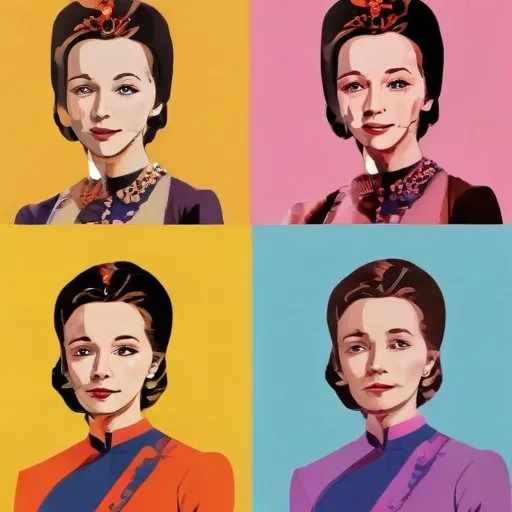
Eldest daughter of King Charles I of England, she was a princess who played a significant role in 17th-century European politics and was the first princess to be given the title Princess Royal. She's known for her strong character and diplomatic efforts.
Mary, Princess Royal and Princess of Orange, is renowned for being the first holder of the title Princess Royal and for her pivotal role as regent for her minor son from 1651 to 1660. As a member of the House of Stuart and by marriage Princess of Orange and Countess of Nassau, Mary's life was marked by royal duties, maternal devotion, and a lasting impact on European history.
Born on November 4, 1631, at St. James's Palace, London, Mary Henrietta Stuart was the eldest daughter of King Charles I of England and Queen Henrietta Maria. She was baptized on the same day, with William Laud, Archbishop of Canterbury, presiding over the ceremony. Mary's early life was marked by the tumultuous political climate of England, which would eventually lead to her departure for the Netherlands.
In 1641, at the tender age of nine, Mary was married to the future stadtholder of the Netherlands, William II of Orange. The young couple remained in England until early 1642, when Mary and her mother left for the Netherlands due to the heated political situation in England.
In 1647, Mary's husband inherited the titles of Prince of Orange and Stadtholder of Holland, Zeeland, Utrecht, Guelders, Overijssel, and Groningen in the United Provinces of the Netherlands. Five years later, in 1650, Mary gave birth to a son, William III of Orange, who would later become King of England, Scotland, and Ireland. Following her husband's death just eight days after the birth, Mary became the sole guardian of her son.
Despite facing opposition from her mother-in-law, Amalia of Solms-Braunfels, who deemed her inexperienced, Mary proved to be a capable and devoted regent for her minor son from 1651 to 1660. During this period, she navigated the complexities of Dutch politics and ensured the stability of the Orange monarchy.
In 1660, Mary departed for celebrations in London, following the restoration of the monarchy in England. Tragically, she fell ill with smallpox and died on December 24, 1660, at the age of 29. Her untimely death marked the end of a life dedicated to royal duties and maternal devotion.
Mary, Princess Royal and Princess of Orange, may have lived a short life, but her impact on European history is undeniable. As the first holder of the title Princess Royal, she paved the way for future generations of princesses. Her role as regent for her son ensured the continuation of the Orange monarchy, which would go on to play a significant role in shaping European politics. Today, Mary is remembered as a devoted mother, a capable regent, and a testament to the enduring legacy of the House of Stuart.
Born in 1533
The Virgin Queen, a powerful and beloved monarch, ruled England during a golden age of culture, literature, and exploration, establishing the Church of England and defeating the Spanish Armada.
Born in 1516
The first queen to rule England in her own right, Bloody Mary tried to restore Catholicism, earning her notorious reputation for burning hundreds of Protestants at the stake.
Born in 1650
The Prince of Orange, King of England, Scotland, and Ireland, led the Glorious Revolution, overthrowing the Catholic King James II, and ruled with his wife Mary II, establishing a Protestant monarchy. He's also known for his military victories in Ireland and Europe.
Born in 1683
King of Great Britain and Ireland from 1727 to 1760, known for his military victories, particularly the Battle of Dettingen, and his role in the War of the Austrian Succession.
Born in 1683
King of Great Britain and Ireland from 1727 to 1760, known for his military victories, particularly the Battle of Dettingen, and his role in the War of the Austrian Succession.
Born in 1738
The British monarch who ruled during the American Revolution, losing the colonies, and later suffered a mental illness that led to a regency crisis. He's also known for his cultural and artistic patronage.
Born in 1744
German-born queen to George III of the United Kingdom, known for her strong character and influence on her husband's reign, as well as her cultural and artistic patronage. She was a devoted mother to their 15 children, including the future George IV.
