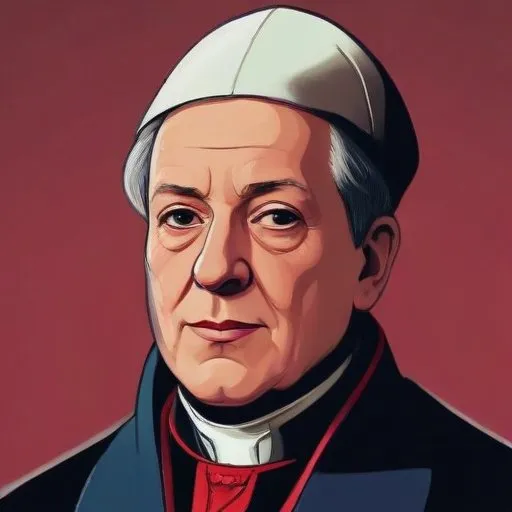
William Laud: The Controversial Archbishop of Canterbury
A Champion of Episcopalianism and Liturgical Ceremony
William Laud, Archbishop of Canterbury from 1633, was a pivotal figure in the Church of England during a tumultuous period in British history. He is best known for his advocacy of episcopalianism, a reform movement that emphasized liturgical ceremony and clerical hierarchy, aiming to enforce uniformity within the Church of England.
Early Life and Education
Born on October 7, 1573, in Reading, Berkshire, Laud was the only son of William Laud, a clothier, and Lucy Webbe, widow of
John Robinson. He was educated at Reading School and later matriculated to St. John's College, Oxford, where he was taught by Thomas Holland. Laud graduated with a Bachelor of Arts in 1594, Master of Arts in 1598, and Doctor of Divinity in 1608.
Rise to Prominence and Controversy
Laud's early career was marked by rapid promotions, becoming a fellow of St. John's College in 1593 and later serving as President of St. John's College, Oxford. His support for episcopalianism and opposition to Calvinism led to controversies, earning him the scorn of Puritan clerics and laymen. His use of the Star Chamber to persecute opponents, such as William Prynne, further solidified his unpopularity.
Laudianism and Theological Debates
Laud's reform movement, known as Laudianism, emphasized the importance of liturgical ceremony and clerical hierarchy in the Church of England. This led to accusations of Arminianism, which favored doctrines of the historic church prior to the Reformation. Laud defended the continuity of the English Church with the primitive and medieval church, opposing Calvinist views.
The Fall of Laud and Execution
In 1640, Laud was arrested by Parliament amidst the turmoil of the First English Civil War. He was eventually executed on January 10, 1645, marking the end of his tumultuous career.
Legacy and Historical Context
Laud's legacy is marked by his unwavering commitment to his beliefs, despite the controversy surrounding him. His emphasis on liturgical ceremony and clerical hierarchy continues to influence the high church tradition within the Church of England. While his actions were divisive in his lifetime, Laud's impact on the Church of England remains significant to this day.
Quotes and Memorable Sayings
- "The Church of God is not a few scattered Christians, but a visible society, with a visible government, and a visible communion."
Historical Context and Timeline
- 1573: Born in Reading, Berkshire
- 1589: Matriculated to St. John's College, Oxford
- 1593: Became a fellow of St. John's College
- 1594: Graduated with a Bachelor of Arts
- 1598: Graduated with a Master of Arts
- 1604: Contended for the degree of Bachelor in Divinity
- 1608: Graduated with a Doctor of Divinity
- 1633: Appointed Archbishop of Canterbury
- 1640: Arrested by Parliament
- 1645: Executed
FAQ
What was William Lauds role in the Church of England?
William Laud was a prominent figure in the Church of England, serving as Archbishop of Canterbury and playing a key role in shaping the Churchs theology and practice.
How did William Lauds policies impact the Church of England?
William Lauds policies had a significant impact on the Church of England, promoting a more high-church approach and sparking controversy over issues such as Arminianism and Laudianism.
What was William Lauds relationship like with King Charles I?
William Laud was a close advisor to King Charles I, and their relationship was marked by mutual respect and trust.
How did William Laud respond to the Puritan movement?
William Laud responded to the Puritan movement by promoting a more ceremonial and formal approach to worship, which sparked opposition from Puritan leaders.
What is William Lauds legacy in English history?
William Lauds legacy in English history is that of a prominent and influential church leader who played a significant role in shaping the Church of England and the course of English religious history.