


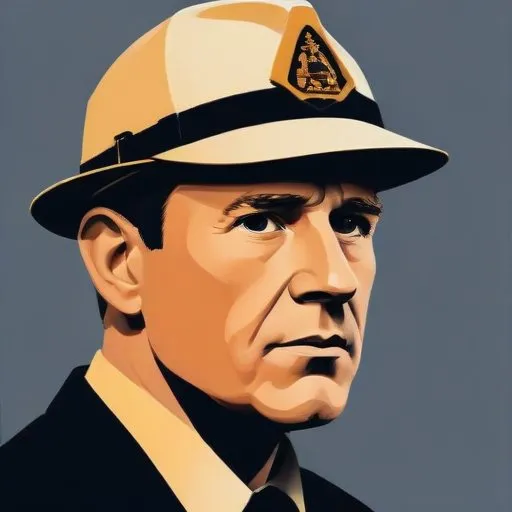
Australian miner and politician who served as a Labor Party member in the New South Wales Legislative Assembly, advocating for workers' rights and social reform.
Matthew Charlton was a stalwart Australian politician who served as the leader of the Australian Labor Party (ALP) and Leader of the Opposition from 1922 to 1928. During his tenure, he led the party to two federal elections, leaving an indelible mark on Australian politics.
Born on March 15, 1866, in Linton, Victoria, Charlton's early life was shaped by his English miner father, Matthew, and his mother, Mabel. At the tender age of five, his family moved to Lambton, New South Wales, where he began his education at Lambton Public School.
Charlton's introduction to the workforce began as a coal trapper at Lambton Colliery, a job reserved for children. As he grew older, he transitioned to working at the coalface, where he developed a deep understanding of the struggles faced by miners. This experience would later fuel his passion for workers' rights and social justice.
In 1896, Charlton supported the miners' strike against wage reductions, which, although unsuccessful, marked the beginning of his involvement in the trade union movement. He later moved to the goldfields near Kalgoorlie, where he continued to advocate for workers' rights.
In 1903, Charlton was elected to the New South Wales Legislative Assembly, representing the Labor Party. His dedication to the party's ideals and his grassroots experience propelled him to federal parliament in 1910.
Following the death of Frank Tudor in 1922, Charlton was elected leader of the ALP. Despite leading the party to defeat in the 1922 and 1925 federal elections, he increased Labor's vote share in 1922, demonstrating his ability to mobilize the party.
Charlton's leadership was marked by his unwavering commitment to social justice and his opposition to conscription. He remained loyal to the Labor Party even after the 1916 split, solidifying his position as a champion of workers' rights.
In 1890, Charlton married Martha Rollings, with whom he shared a life-long partnership. After resigning as party leader in 1928, he stepped away from politics, leaving a legacy that would inspire future generations of Australian politicians.
Matthew Charlton's contributions to Australian politics extend beyond his leadership of the ALP. He played a pivotal role in shaping the party's ideology and promoting the welfare of workers. His unwavering commitment to social justice continues to inspire Australians today.
Born in 1862
The 5th Prime Minister of Australia, a key figure in the country's early 20th-century politics, known for his role in shaping Australia's social and economic landscape. He played a crucial part in establishing the country's old-age pension and maternity allowance systems.
Born in 1867
Third Prime Minister of Australia, serving from 1904 to 1905, known for his efforts to establish a national government and implement progressive reforms.
Born in 1862
A carpenter-turned-politician who served as Australia's 7th Prime Minister, known for his strong leadership during World War I and his role in shaping the country's post-war development.
Born in 1857
Australian publisher and politician who served as the 10th Minister for Foreign Affairs, known for his advocacy for Irish independence and his role in shaping Australia's foreign policy.
Born in 1885
Led the country through World War II, implementing policies to defend Australia and its economy. He's also known for his leadership during the country's transition from British to American influence.
