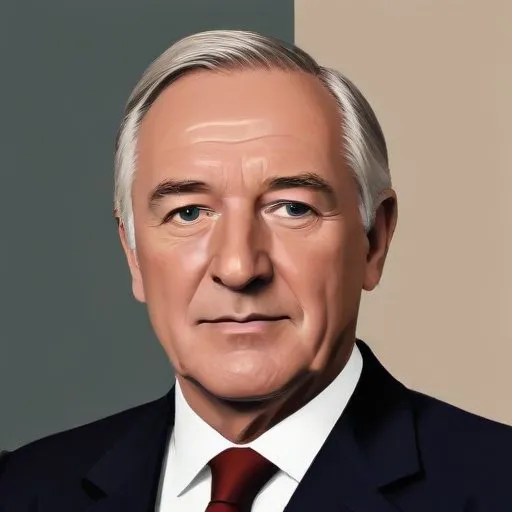
Hugh Mahon: The Australian Politician Who Defied the British Empire
A Life of Dissent and Politics
Hugh Mahon is famously known as the only person to be expelled from the Australian Parliament, a fate he suffered in 1920 for his seditious and disloyal utterances against the British Empire. This defiance, however, was only a culmination of a lifetime of activism, politics, and journalism that spanned three continents.
Early Life and Activism
Born on January 6, 1857, in Killurin, Ireland, Mahon migrated to Canada and the United States with his family in 1869. It was during this time that he learned the printing trade, which would later serve him well in his journalistic pursuits. Returning to Ireland in 1880, Mahon worked as the editor of the New Ross Standard, covering the infamous Shanbogh killing and aiding in the defense of the accused. His involvement in the Irish National Land League's boycotting campaign led to his imprisonment in 1881, alongside notable figures like
Charles Stewart Parnell. Released due to ill health, Mahon emigrated to Australia in 1882 to avoid rearrest.
Australian Odyssey
In Australia, Mahon continued his journalistic career, working for newspapers in Goulburn and Sydney. He acquired a newspaper in Gosford, which he later sold in 1888 to move to Melbourne. After an unsuccessful bid for the seat of Wollombi in the 1891 NSW parliamentary elections, Mahon began working for the Australian Mining Standard. His journey then took him to Western Australia's goldfields, where he started a newspaper, The Menzies Miner, in 1895.
Rise to Prominence
Mahon's political career gained momentum in 1897 when he stood for the state seat of North Coolgardie, although unsuccessfully. The following year, he joined the Australian Labor Party (ALP) and began to make his mark. He served as Postmaster-General in 1904, Minister for Home Affairs from 1908 to 1909, and Minister for External Affairs from 1914 to 1916.
The Incident that Sealed His Fate
Mahon's vocal criticism of the British Empire's role in World War I led to his expulsion from Parliament in 1920. His anti-war sentiments and perceived disloyalty to the Empire were deemed unacceptable, and he was subsequently expelled from the Parliament of Australia. This event cemented his place in Australian history as a symbol of dissent and resistance.
Legacy and Impact
Mahon's determination to challenge the status quo left an indelible mark on Australian politics. His controversial views on British imperialism and his unwavering commitment to his principles continue to inspire and educate. Despite the controversies that surrounded him, Mahon's legacy serves as a testament to the power of conviction and the importance of questioning authority.
Personal Life
Mahon married Mary Alice LEstrange of Melbourne in 1888, and the couple remained together until his death on August 28, 1931. His personal life was marked by his relentless pursuit of social justice and his unshakeable commitment to his ideals.
Timeline of Key Events
- 1857: Born on January 6 in Killurin, Ireland
- 1869: Migrated to Canada and the United States with family
- 1880: Returned to Ireland and worked as editor of the New Ross Standard
- 1881: Imprisoned for involvement in the Irish National Land League's boycotting campaign
- 1882: Emigrated to Australia to avoid rearrest
- 1888: Married Mary Alice LEstrange of Melbourne
- 1891: Unsuccessfully stood for the seat of Wollombi in NSW parliamentary elections
- 1895: Started The Menzies Miner newspaper in Western Australia's goldfields
- 1897: Stood unsuccessfully for the state seat of North Coolgardie
- 1904: Served as Postmaster-General
- 1908-1909: Served as Minister for Home Affairs
- 1914-1916: Served as Minister for External Affairs
- 1920: Expelled from the Parliament of Australia for seditious and disloyal utterances
- 1931: Died on August 28
Quotes and Memorabilia
Mahon's defiant spirit is perhaps best captured in his own words: "I have always been a rebel, and I will die a rebel." His legacy serves as a powerful reminder of the importance of dissent and the need to challenge authority.
FAQ
What was Hugh Mahons role in Australian politics?
Hugh Mahon was a prominent figure in Australian politics, serving as the 10th Australian Minister for Foreign Affairs from 1904 to 1909 and again from 1914 to 1915. He was a strong advocate for Australian independence and played a key role in shaping the countrys early foreign policy.
What was Hugh Mahons role in the Australian Labor Party?
Hugh Mahon was a founding member of the Australian Labor Party (ALP) and served as its leader from 1904 to 1908. He was a key figure in shaping the partys early policies and platform.
What was Hugh Mahons relationship with Alfred Deakin?
Hugh Mahon had a close working relationship with Alfred Deakin, Australias second Prime Minister, and served as his Minister for Foreign Affairs from 1904 to 1909. The two were key collaborators in shaping Australias early foreign policy.
What were Hugh Mahons views on Australian federation?
Hugh Mahon was a strong supporter of Australian federation and played a key role in the countrys transition from a collection of colonies to a unified nation. He believed that federation would strengthen Australias economy and increase its global influence.
How did Hugh Mahons views on immigration shape Australian policy?
Hugh Mahon held strong views on immigration, advocating for a White Australia policy that restricted non-European immigration. His views had a lasting impact on Australian immigration policy and continue to be debated by historians and scholars today.