


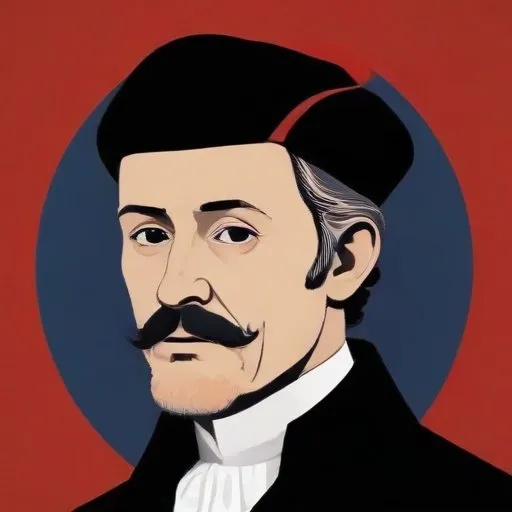
A 17th-century poet and diplomat who served as British Ambassador to France, known for his witty and satirical poetry that often critiqued politics and society.
Matthew Prior, born on July 21, 1664, and died on September 18, 1721, was a prominent English poet, diplomat, and contributor to the esteemed publication, The Examiner. He is renowned for his literary prowess, diplomatic acumen, and significant contributions to the world of poetry and politics.
Prior was born in Wimborne Minster, Dorset, to a Nonconformist joiner father, George Prior. His father's relocation to London facilitated his education at Westminster School under the tutelage of Dr. Richard Busby. After his father's demise, Prior's uncle, a vintner in Channel Row, supported his education.
A chance encounter with Lord Dorset, who discovered Prior reading Horace, led to an offer to support his continued education at Westminster. This meeting marked the beginning of Prior's illustrious career.
During his time at Westminster, Prior formed lasting friendships with Charles Montagu, 1st Earl of Halifax, and his brother James. To avoid separation from his friends, Prior accepted a scholarship at St. John's College, Cambridge, against his patron's wishes.
In 1687, Prior collaborated with Montagu to write "The City Mouse and Country Mouse," a satirical response to John Dryden's "The Hind and the Panther." This work showcased his literary skills, earning him recognition and patronage.
Prior's diplomatic career began in 1690 when he became secretary to the embassy at the Hague. His talents were soon recognized, and he was appointed a Gentleman of the Bedchamber at court. In 1697, he served as secretary to the plenipotentiaries who concluded the Peace of Ryswick.
His diplomatic skills and grasp of details earned him the trust of King William, who employed him in important diplomatic affairs. Prior's knowledge of French facilitated his appointment as an attendant to the English ambassador in Paris in 1698.
Matthew Prior was a prolific poet, and his works include "An Ode in Imitation of Horace" and "Solomon on the Vanity of the World." His poetry often explored themes of morality, politics, and social satire.
Prior's literary legacy extends beyond his own works. He was a patron and friend to Alexander Pope, and their correspondence offers valuable insights into the literary circles of the time.
Matthew Prior's contributions to literature and diplomacy were recognized during his lifetime. He was awarded a pension of £200 per annum by King William in 1698, a testament to his exceptional service.
Prior's personal life was marked by significant relationships, including his close friendship with Charles Montagu. He also formed connections with prominent figures, such as King William and Alexander Pope.
Throughout his life, Prior navigated the complexities of diplomacy and literature, leaving behind a legacy that continues to inspire and influence generations of writers and diplomats.
Born in 1631
A dominant literary figure of the Restoration era, known for his influential poetry, plays, and critical essays that shaped the English literary landscape. He's often credited with creating a new style of heroic drama and satire.
Born in 1667
A witty wordsmith who penned scathing social commentaries, including the iconic "Gulliver's Travels", which continue to delight and provoke readers to this day.
Born in 1694
A witty and insightful 18th-century writer and philosopher who used satire to critique societal norms and advocate for reason, tolerance, and human rights.
Born in 1712
A pioneering thinker who shaped modern democracy and education with his ideas on social contracts, general will, and the importance of early childhood education. His writings influenced the French Revolution and modern political thought.
Born in 1585
A powerful and cunning statesman who dominated French politics during the 17th century, known for his ruthless suppression of dissent and centralization of power. He was a master strategist and diplomat who shaped the course of European history.
Born in 1622
A 17th-century master of comedy, he penned witty plays that satirized the French aristocracy, leaving a lasting impact on Western theater. His works remain widely performed and adapted today.
Born in 1632
A 17th-century thinker who laid the groundwork for modern democracy, arguing that governments derive their power from the people and that individuals have inherent rights to life, liberty, and property.
