


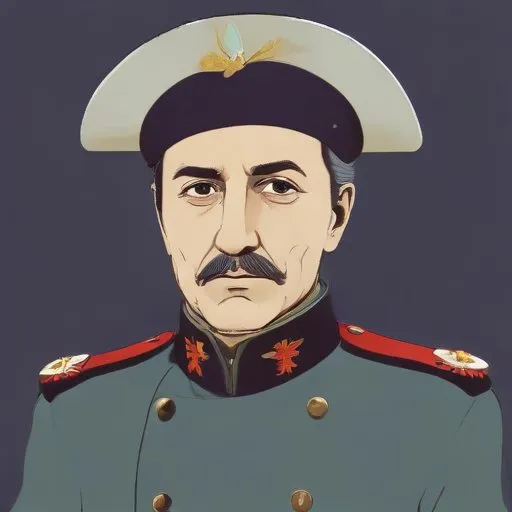
French general who led the French Army during the early years of World War II, known for his failed strategy of "defense in depth" and the subsequent fall of France.
Maurice Gamelin, a French general, is infamously known for his disastrous command of the French military during the Battle of France in World War II, which ultimately led to his dismissal on May 17, 1940. His ill-fated leadership, marked by stagnation and inefficiency, is often attributed to his reliance on World War I tactics, which proved ineffective against the Blitzkrieg.
Born on September 20, 1872, in Paris, Gamelin's affinity for the military was evident from an early age. His father, Zéphyrin, fought in the Battle of Solferino in 1859, setting a precedence for Gamelin's own military pursuits. He graduated from the École Spéciale Militaire de Saint-Cyr in 1893 and went on to serve with distinction in various military campaigns, including World War I.
Gamelin's military prowess earned him recognition, and he rose through the ranks, becoming a staff officer under General Joseph Joffre during World War I. He is credited with devising the outline of the French counterattack during the First Battle of the Marne in 1914, which led to a decisive victory for the French.
In 1933, Gamelin was appointed as the Commander-in-Chief of the French Army, overseeing a modernization and mechanization program. He played a crucial role in the completion of the Maginot Line defenses, a series of fortifications along the French-German border. Gamelin's commitment to the republican model of government and his refusal to allow politics to influence military planning and promotion earned him the support of Prime Minister Édouard Daladier.
Despite his earlier successes, Gamelin's leadership during the Battle of France proved catastrophic. His rigid adherence to outdated tactics and failure to adapt to the rapidly changing circumstances of modern warfare led to a series of disastrous defeats. The German army's Blitzkrieg tactics, which Gamelin had underestimated, caught the French military off guard, resulting in a swift and decisive defeat.
On May 17, 1940, Gamelin was dismissed as Commander-in-Chief, replaced by General Maxime Weygand. The fall of France was a watershed moment in Gamelin's career, marking a turning point in his reputation from a respected military leader to a symbol of military ineptitude.
Gamelin's legacy is shrouded in controversy, with many historians and military strategists criticizing his leadership during World War II. His failure to adapt to modern warfare and his reliance on outdated tactics have been cited as major contributing factors to the French defeat.
Despite this, Gamelin remains a significant figure in French military history, with his contributions to the development of the Maginot Line and his service during World War I still recognized. His commitment to the republican values and his refusal to allow politics to influence military planning are also acknowledged as admirable aspects of his character.
Little is known about Gamelin's personal life, with his military career dominating the narrative of his life. After his dismissal, Gamelin lived a quiet life, passing away on April 18, 1958, at the age of 85.
In conclusion, Maurice Gamelin's legacy serves as a cautionary tale of the importance of adaptability and innovation in military strategy. While his contributions to French military history are undeniable, his failures during World War II serve as a reminder of the devastating consequences of stagnation and complacency.
Born in 1856
A French general who led the country to defeat in World War II and later collaborated with the Nazis, serving as the Chief of State of Vichy France. He's infamous for his role in the French surrender and subsequent authoritarian regime.
Born in 1867
A Belgian-French general who served as the commander-in-chief of the French army during the early years of World War II, known for his defense strategies and leadership during the Battle of France.
Born in 1851
A French field marshal who played a crucial role in World War I, leading the Allied forces to victory and earning the title "The Tiger" for his tenacity and strategic genius. He's also known for his post-war efforts to maintain peace and stability in Europe.
Born in 1890
A French military leader who led the Free French Forces during WWII and later became President of France, known for his strong leadership and vision for a unified Europe.
Born in 1841
A French journalist, physician, and politician who served as Prime Minister of France during World War I, leading the country to victory and playing a key role in shaping the Treaty of Versailles. He's also known for his strong leadership and witty humor.
Born in 1878
A French lawyer and politician who served as Prime Minister of France during the tumultuous period of World War II, known for his attempts to reform the French government and resist German occupation.
