


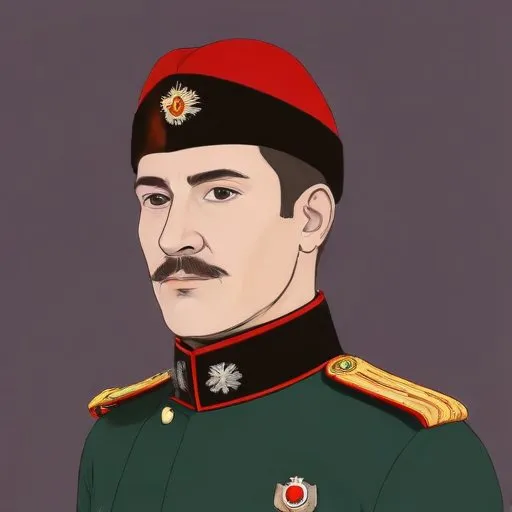
A Belgian-French general who served as the commander-in-chief of the French army during the early years of World War II, known for his defense strategies and leadership during the Battle of France.
Maxime Weygand, a French military commander, is best known for his role in World War I and World War II, as well as his involvement in the Vichy regime. Born in Belgium in 1867, Weygand's illustrious military career spanned over five decades, earning him both praise and criticism for his actions during some of the most tumultuous periods in French history.
Weygand was educated at the prestigious Saint-Cyr military academy in Paris, graduating in 1887. He went on to become an instructor at the Cavalry School at Saumur, where he honed his military skills.
During World War I, Weygand served as a staff officer to General Ferdinand Foch, eventually rising to the rank of general. His experience and expertise led to him being appointed as an advisor to Poland during the Polish-Soviet War. In the 1930s, Weygand served as High Commissioner of the Levant before becoming Chief of Staff of the French Army in 1931, a position he held until his retirement in 1935.
In May 1940, Weygand was recalled for active duty and assumed command of the French Army during the German invasion. Despite his efforts, the French military suffered a series of setbacks, leading Weygand to advise armistice. France subsequently capitulated, and Weygand joined Philippe Pétain's Vichy regime as Minister for Defence.
As Minister for Defence, Weygand was responsible for implementing German anti-Semitic policies, which have been widely criticized as brutal and inhumane. However, Weygand's collaboration with Germany was not without controversy, and he was eventually dismissed from his post in November 1941 on Adolf Hitler's demand.
Following the Allied invasion of North Africa in November 1942, Weygand was arrested by the Germans and imprisoned at Itter Castle in Austria until May 1945. After the war, he was arrested again by the French authorities and held as a collaborator at the Val-de-Grâce prison. However, he was released in 1946 and eventually cleared of all charges in 1948.
Weygand spent the remainder of his life in relative quiet, passing away on January 28, 1965, at the age of 98. Despite his controversial legacy, Weygand's military career remains a testament to his skill and dedication as a soldier.
Weygand's legacy is complex and multifaceted, with some hailing him as a hero for his service in World War I, while others condemn his role in the Vichy regime and his implementation of German anti-Semitic policies.
Regardless of one's opinion on Weygand's actions, his life serves as a fascinating case study on the complexities of military leadership, collaboration, and the moral dilemmas faced by those in power during times of war and conflict.
Weygand was known for his exceptional horsemanship skills, which he developed during his time at the Cavalry School at Saumur.
Despite his controversial legacy, Weygand's life serves as a fascinating testament to the complexities of human nature, highlighting the importance of critical thinking and moral reflection in the face of adversity.
Born in 1856
A French general who led the country to defeat in World War II and later collaborated with the Nazis, serving as the Chief of State of Vichy France. He's infamous for his role in the French surrender and subsequent authoritarian regime.
Born in 1890
A French military leader who led the Free French Forces during WWII and later became President of France, known for his strong leadership and vision for a unified Europe.
Born in 1841
A French journalist, physician, and politician who served as Prime Minister of France during World War I, leading the country to victory and playing a key role in shaping the Treaty of Versailles. He's also known for his strong leadership and witty humor.
Born in 1851
A French field marshal who played a crucial role in World War I, leading the Allied forces to victory and earning the title "The Tiger" for his tenacity and strategic genius. He's also known for his post-war efforts to maintain peace and stability in Europe.
Born in 1889
A French general who led the First Army to victory in World War II, liberating Marseille and playing a key role in the Allied invasion of Germany. He's also known for his post-war efforts to modernize the French military.
Born in 1888
A highly decorated military leader who played a crucial role in World War II, particularly in the Italian Campaign, and later became a prominent figure in French politics.
