


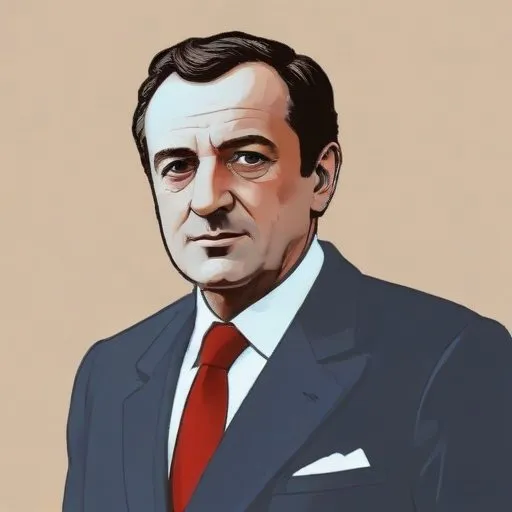
A French businessman and politician who served as Prime Minister of France, known for his efforts to stabilize the country's economy and politics during a tumultuous period. He played a key role in shaping France's early 20th-century government and economy.
Maurice Rouvier, a French statesman and prime minister, is best known for hisFinancial policies and unpopular decisions designed to avoid a rupture with Germany during his term from 1887 to 1889. His leadership had a profound impact on France's economy and politics, earning him a significant place in the country's history.
Rouvier was born on April 17, 1842, in Aix-en-Provence, France. He began his career in business in Marseille, where he supported Léon Gambetta's candidacy in 1867. He also founded an anti-imperial journal, L'Égalité, in 1870 and belonged to the same Masonic lodge as Gambetta, La Réforme, in Marseille.
Rouvier became secretary general of the prefecture of Bouches-du-Rhône in 1870-1871 and refused the office of prefect. In July 1871, he was returned to the National Assembly for Marseille at a by-election, where he voted steadily with the Republican party. His expertise in finance earned him a reputation as a recognized authority, and he repeatedly served on the Budget Commission as reporter or president.
Rouvier held several key political roles, including:
Rouvier's financial policies, although unpopular, aimed to strengthen France's economy and avoid conflict with Germany. However, his government faced several scandals, including the infamous "decorations scandal" involving President Grévy's son-in-law, Daniel Wilson. This scandal led to the fall of Rouvier's cabinet in 1889.
Maurice Rouvier's contributions to France's economy and politics are undeniable. Despite controversies and unpopular decisions, he played a crucial role in shaping the country's financial landscape. His legacy serves as a reminder of the importance of wise financial decision-making and the delicate balance between economic growth and political stability.
Rouvier's personal life was marked by his strong relationships with prominent figures, including Léon Gambetta and Jules Ferry. He was a member of the same Masonic lodge as Gambetta, La Réforme, in Marseille, which fostered a sense of camaraderie and shared ideals.
Did you know that Rouvier was a skilled writer and published several articles on finance and politics? He was also known for his strong oratory skills, which earned him a reputation as an eloquent speaker in the National Assembly.
Rouvier's legacy continues to inspire and educate future generations of politicians, economists, and historians. His life and career serve as a testament to the power of financial wisdom and the importance of informed decision-making in shaping a nation's destiny.
Born in 1838
A French lawyer and politician who served as Prime Minister of France, known for his key role in the Franco-Prussian War and his efforts to modernize and unify France. He's a significant figure in French history, shaping the country's politics and identity.
Born in 1883
A renowned French actor and director, celebrated for his iconic performances in classic films like "Le Rouge et le Noir" and "Les Enfants du Paradis", showcasing his remarkable range and charisma.
Born in 1846
A French lawyer and politician who served as Prime Minister of France from 1899 to 1902, known for resolving the Dreyfus Affair and reforming the French government.
Born in 1862
A French statesman who served as Prime Minister of France and was awarded the Nobel Peace Prize for his efforts to establish the European unity and collective security. He played a key role in shaping the League of Nations and promoting international cooperation.
Born in 1860
A French statesman who served as President of France during a tumultuous period, playing a crucial role in shaping the country's response to World War I. He's also known for his efforts to reform the French economy and stabilize the franc.
Born in 1841
A French journalist, physician, and politician who served as Prime Minister of France during World War I, leading the country to victory and playing a key role in shaping the Treaty of Versailles. He's also known for his strong leadership and witty humor.
Born in 1842
A French academic and politician who served as Prime Minister of France, known for his role in shaping the country's government and education system. He played a key part in reforming the French Senate and introducing secular education.
