


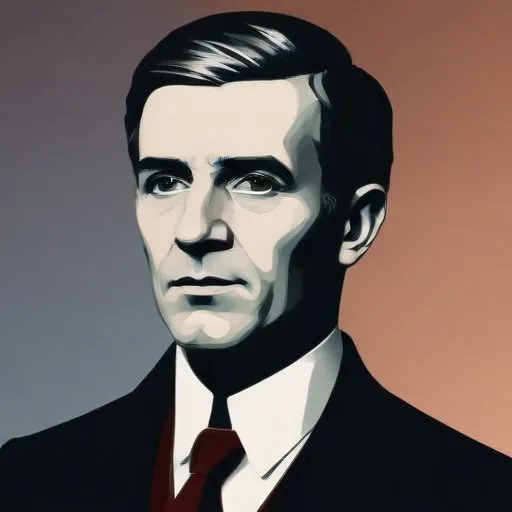
A poet and lawyer who wrote the iconic poem "Desiderata," offering wisdom on living a virtuous and peaceful life. His words have inspired generations with their timeless message of hope and harmony.
Max Ehrmann is perhaps best known for his iconic prose poem, Desiderata, a work that has inspired generations with its timeless wisdom and profound insight into the human experience. Written in 1927, Desiderata has become a cultural touchstone, resonating with people from all walks of life with its poetic exploration of virtues, morals, and the essence of being.
Ehrmann was born on September 26, 1872, in Terre Haute, Indiana, to German immigrant parents. His early education took place at the Terre Haute Fourth District School and the German Methodist Church. He later attended DePauw University in Greencastle, Indiana, where he earned a degree in English and was editor of the school newspaper, Depauw Weekly.
Ehrmann's fascination with philosophy and law led him to pursue further studies at Harvard University, where he was editor of The Rainbow, the national magazine of Delta Tau Delta fraternity.
Upon returning to Terre Haute, Ehrmann practiced law and served as a deputy states attorney in Vigo County, Indiana, for two years. He later worked in his family's meatpacking business and the overalls manufacturing industry, Ehrmann Manufacturing Co. However, it was not until he was 40 that Ehrmann decided to leave the business world behind and devote himself to writing full-time.
In 1927, at the age of 55, Ehrmann penned Desiderata, a work that would eventually become his most enduring legacy. The poem's fame, however, was not immediate, and it was only after Ehrmann's death that Desiderata gained widespread recognition and acclaim.
Ehrmann was awarded an honorary Doctor of Letters degree from DePauw University in 1937. He was also elected to the Delta Tau Delta Distinguished Service Chapter, the fraternity's highest alumni award.
In 2010, the city of Terre Haute honored Ehrmann with a life-size bronze statue, which sits on a downtown bench, pen in hand, with a notebook in his lap. The statue is part of the Wabash Valley Outdoor Sculpture Collection, and lines from Desiderata are embedded in the walkway nearby.
Desiderata has been translated into numerous languages and has inspired countless adaptations, from music to art to film. Ehrmann's poetic wisdom has resonated with people from all walks of life, offering guidance, solace, and inspiration to generations.
In a world where his message of hope, resilience, and inner peace is more needed than ever, Max Ehrmann's legacy continues to grow, a testament to the enduring power of his poetry and the timeless wisdom of Desiderata.
Today, Max Ehrmann's poetry continues to inspire, uplift, and guide people around the world, a testament to the transformative power of his art and the enduring legacy of Desiderata.
Born in 1819
A celebrated poet, essayist, and journalist who revolutionized American literature with his collection "Leaves of Grass", known for his free verse style and celebration of the human spirit.
Born in 1803
A leading figure in the Transcendentalist movement, he advocated for individualism, self-reliance, and nature-inspired spirituality through his essays and poetry. His ideas continue to influence American thought and culture.
Born in 1817
A 19th-century thinker who advocated for simple living, civil disobedience, and individualism, inspiring generations to reevaluate their relationship with nature and society.
Born in 1885
A pioneering modernist poet and critic who transformed 20th-century literature with innovative styles and provocative ideas, shaping the course of modern poetry.
Born in 1888
A renowned poet, playwright, and critic who reshaped modern poetry with works like "The Waste Land" and "Old Possum's Book of Practical Cats", influencing literature and art with their unique style.
Born in 1887
A 20th-century poet and philosopher who celebrated the beauty of nature and warned against humanity's destructive tendencies, known for his unique style and environmentalist themes.
Born in 1868
A lawyer-turned-writer who crafted a collection of free-verse poems, each telling the story of a fictional small-town resident, offering a glimpse into the human experience. His works are celebrated for their innovative style and poignant insights into American life.
Born in 1876
A pioneering writer of modernist fiction, known for his innovative and influential short stories that explored the American psyche and the human condition.
