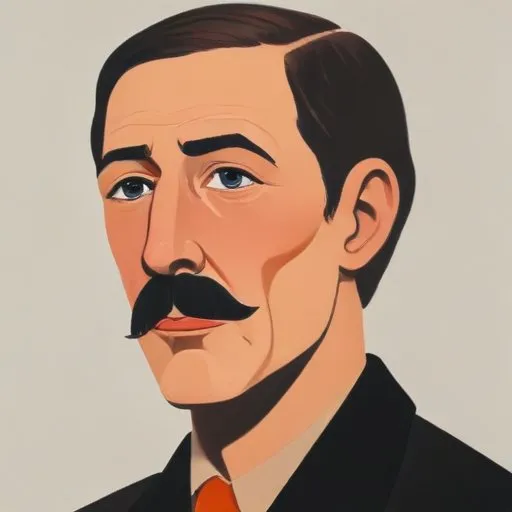
Max Pechstein

Max Pechstein

Max Pechstein was born on December 31st, 1881

Full Name: Hermann Max Pechstein
Place of Birth: Zwickau, Germany
Profession: Painter and Academic
Nationality: German
Movement: Expressionism
Notable Work: The Dancer
Education: Dresden Academy of Fine Arts
Born: December 31, 1881

A German Expressionist painter and printmaker, known for vibrant, emotive works that explored the human condition, blending primitivism with modernist techniques.

Written by: Jack Thompson Jack Thompson

Max Pechstein: The German Expressionist Painter and Printmaker

A Pioneer of Die Brücke Group

Max Pechstein was a renowned German expressionist painter and printmaker, best known for his vibrant and emotive works that captivated the art world in the early 20th century. As a core member of the Die Brücke group, Pechstein played a significant role in shaping the movement's distinctive style, characterized by bold colors, distorted forms, and a focus on conveying intense emotions.

Early Life and Training

Born on December 31, 1881, in Zwickau, Germany, Pechstein grew up in a family of modest means. His father, a craftsman, worked in a textile mill, and the family of eight relied on his salary. Pechstein's early exposure to the works of Vincent van Gogh had a profound impact on his artistic development, steering him towards expressionism.

After completing his training as a decorator in his hometown, Pechstein enrolled at the School of Applied Arts and later at the Royal Art Academy in Dresden. Here, he met Otto Gussmann, who would become his mentor, and Wilhelm Kreis, an architect. During this period, Pechstein's artistic style began to take shape, influenced by his studies under Gussmann.

The Die Brücke Years

In 1906, Pechstein met Erich Heckel, a fellow artist, and was invited to join the Die Brücke group. As the only member with formal art training, Pechstein brought a new level of sophistication to the group's work. During his time with Die Brücke, Pechstein developed a distinctive style, characterized by bold, vibrant colors and a focus on capturing the essence of the human experience.

Between 1907 and 1910, Pechstein traveled extensively, visiting Italy, Paris, and Berlin. These journeys had a profound impact on his art, as he was exposed to various styles and techniques that influenced his own work. His time in Paris, in particular, was instrumental in shaping his style, as he met Fauvist painter Kees van Dongen and was introduced to the works of Henri Matisse.

Expulsion from Die Brücke and Rise to Prominence

In 1910, Pechstein was expelled from the Die Brücke group, a move that marked a turning point in his career. He went on to found the New Secession, becoming its chairman and gaining recognition for his innovative prints and paintings. Pechstein's art, characterized by its expressive use of color and form, began to gain widespread acclaim, earning him numerous awards and accolades.

World War I and the Nazi Era

During World War I, Pechstein fought on the Western Front, an experience that had a profound impact on his art. In the 1930s, the Nazi regime classified his work as "Degenerate Art," and over 300 of his paintings were removed from German museums. This period was marked by great personal struggle and hardship, as Pechstein's art was deemed unacceptable by the Nazi regime.

Legacy and Impact

Despite the challenges he faced, Pechstein continued to create art that was true to his vision. His contributions to the development of expressionism, and his role in shaping the style of the Die Brücke group, are still recognized today. Pechstein's art, with its bold colors and emotive power, continues to inspire artists and art lovers alike, ensuring his legacy as a pioneer of 20th-century art.

Major Works

Personal Life and Relationships

Pechstein's personal life was marked by strong relationships with his fellow artists, including Erich Heckel and Otto Gussmann. His time in Berlin, where he moved in 1908, was instrumental in shaping his artistic style, as he was exposed to a vibrant community of artists and intellectuals.

Quotes and Memorable Sayings

Legacy and Impact on Modern Society

Pechstein's contributions to the development of expressionism continue to influence artists today. His bold, vibrant style, and his emphasis on conveying the human experience, have inspired generations of artists. As a pioneer of 20th-century art, Pechstein's legacy continues to shape the art world, ensuring his place as one of the most important artists of the last century.
Timeline
1881
Begins Art Studies
Max Pechstein begins his art studies at the Academy of Fine Arts in Berlin, Germany.
1906
Co-Founding of Die Brücke
Pechstein co-founds the Expressionist art group Die Brücke, along with Ernst Ludwig Kirchner and Erich Heckel.
1910
Exhibits at Berlin Secession
Pechsteins work is exhibited at the Berlin Secession, solidifying his reputation as a leading Expressionist artist.
1922
Teaches at Academy
Pechstein begins teaching at the Berlin Academy of Fine Arts, where he influences a new generation of artists.
1954
Passes Away
Max Pechstein passes away at the age of 73, leaving behind a legacy as a pioneering Expressionist artist and educator.
Max Pechstein

Max Pechstein Quiz

What art movement was Max Pechstein associated with?

Score: 0/5
FAQ
What style of art did Max Pechstein practice?
Max Pechstein was a German painter and academic who practiced Expressionism and Fauvism. He was a key figure in the Berlin Secession movement, which sought to promote modern art in Germany.
What was Max Pechsteins role in the German art world?
Max Pechstein was a prominent figure in the German art world, serving as a teacher at the Dresden Academy of Fine Arts and a member of several art organizations. He also exhibited his work internationally, influencing the development of modern art.
What were Max Pechsteins artistic influences?
Max Pechstein was influenced by the works of Vincent van Gogh, Paul Gauguin, and the Fauvists. He also drew inspiration from African and Oceanic art, which he encountered during his travels to the Pacific Islands.
How did Max Pechsteins style evolve over time?
Max Pechsteins style evolved over time, becoming more abstract and expressive. He experimented with new techniques, such as collage and mixed media, and explored themes related to nature, mythology, and the human experience.
What is Max Pechsteins legacy in modern art?
Max Pechsteins legacy in modern art is that of a pioneering Expressionist and Fauvist who helped to shape the development of modern art in Germany and beyond. His innovative style and enthusiasm for experimentation continue to inspire artists today.

Related People:

Karl Schmidt-Rottluff

Born in 1884

A German Expressionist master, known for vibrant, emotive paintings and etchings that capture the intensity of modern life, blending primitivism with modernity.

Emil Nolde

Born in 1867

A pioneering Expressionist artist, known for vibrant, emotive paintings and prints that explored the human condition, often with a focus on spirituality and the natural world.

Franz Marc

Born in 1880

A German soldier-turned-painter who pioneered Expressionism, capturing the emotional essence of animals and landscapes in vibrant, abstracted forms. His work continues to inspire artists and art lovers alike.

August Macke

Born in 1887

A pioneering expressionist painter who captured the vibrant spirit of early 20th-century Europe through bold, colorful works that blended Fauvism and Cubism. His innovative style continues to inspire artists today.

Lyonel Feininger

Born in 1871

A German-American painter and illustrator who blended cubism and futurism to create vibrant, abstracted cityscapes and seascapes, influencing the development of modern art.

Alexej von Jawlensky

Born in 1864

A Russian-German painter who pioneered Expressionism, capturing intense emotions through vibrant, distorted forms and bold colors. He's famous for his bold, avant-garde portraits.

Wassily Kandinsky

Born in 1866

A pioneer of abstract art, creating vibrant, expressive works that explored the emotional and spiritual properties of color, and wrote extensively on art theory.