


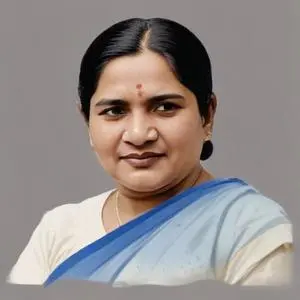
The first female Dalit Chief Minister of Uttar Pradesh, known for her efforts to empower marginalized communities and her iconic statues and memorials.
Mayawati, the four-time Chief Minister of Uttar Pradesh, is a stalwart of Indian politics, revered for her unwavering dedication to the empowerment of the marginalized and oppressed. As the national president of the Bahujan Samaj Party (BSP), she has been a beacon of hope for the Scheduled Castes, Scheduled Tribes, and Other Backward Castes, as well as religious minorities.
Born on January 15, 1956, in New Delhi, Mayawati was raised in a humble family, where her father, Prabhu Das, worked at a post office in Badalpur village, near Dadri in Gautam Buddha Nagar. Despite the limited resources, Mayawati's parents encouraged her to pursue higher education, and she went on to earn a Bachelor of Arts degree from the Kalindi College, University of Delhi in 1975, followed by a law degree from the prestigious Faculty of Law, Delhi University.
In 1993, Mayawati joined forces with Kanshi Ram, a prominent Dalit leader, and together they formed a coalition with the Samajwadi Party. This alliance led to her first stint as the Chief Minister of Uttar Pradesh in 1995, making her the first female Scheduled Caste chief minister in India. Her subsequent terms in 1997, 2002, and 2007 solidified her position as a formidable force in Indian politics.
MAYAWATI'S commitment to the principles of social change and equality is unwavering. She believes that the empowerment of the marginalized is the key to a truly inclusive and democratic society. Through her party, the BSP, she has championed the causes of the Bahujans, advocating for their rights and dignity.
Mayawati's impact on modern society is multifaceted. She has inspired countless Dalits and marginalized communities to assert their rights and demand justice. Her birthdays are celebrated by her supporters with great fanfare, and she has been instrumental in raising funds for her party through innovative initiatives.
Despite her achievements, Mayawati has faced criticism for her party's perceived corruption and her own growing wealth. Detractors have questioned the sources of her income and the extravagant celebrations on her birthdays. However, her supporters regard her as an icon, affectionately calling her "Behenji" (elder sister).
Mayawati's legacy is a testament to her unwavering commitment to social justice and equality. She has inspired a generation of leaders and continues to be a powerful voice for the marginalized. As P. V. Narasimha Rao, former prime minister of India, aptly put it, her rise from humble beginnings is a "miracle of democracy."
In conclusion, Mayawati's impact on Indian politics and society is undeniable. Her unwavering dedication to the empowerment of the marginalized has earned her a revered position in the hearts of millions. As a champion of social change, she will continue to inspire generations to come.
79 Years Old
The first female President of the Indian National Congress, leading the party to a landslide victory in 2004, and playing a crucial role in shaping India's political landscape.
56 Years Old
Indian National Congress leader and scion of the Nehru-Gandhi family, known for his efforts to revitalize the party and promote social justice.
94 Years Old
The 13th Prime Minister of India, a renowned economist who led the country through a period of rapid economic growth and liberalization, implementing reforms that transformed India's economy. He is credited with helping to lift millions of people out of poverty.
86 Years Old
Indian politician who served as Minister of Defence, known for his influence in Indian politics and his role in shaping the country's defence policies.
92 Years Old
Founder of the Bahujan Samaj Party, a prominent Indian political party that advocates for the rights of marginalized communities, particularly Dalits and other backward castes.
Born in 1891
Indian Minister of Law and Justice who fought for the rights of the marginalized and drafted the Indian Constitution, playing a key role in shaping modern India's democracy.
