


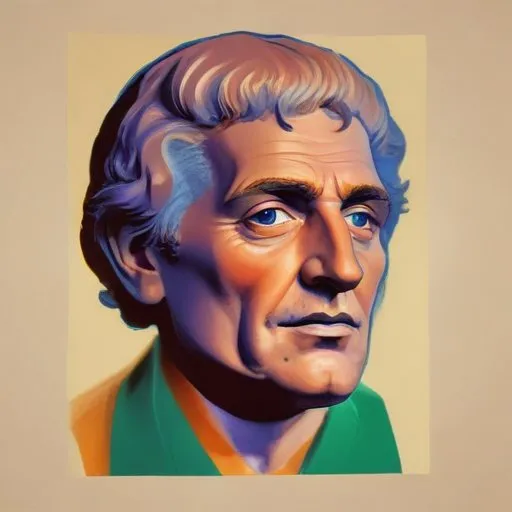
An Italian artist who pioneered Impressionist sculpture, capturing fleeting moments of modern life in delicate, expressive works that blurred the line between art and reality.
Medardo Rosso, an Italian sculptor born on June 21, 1858, is renowned for his pioneering work in the post-Impressionist style, earning him a place alongside his contemporary and admirer Auguste Rodin. Rosso's innovative approach to sculpture, which blended realism with a sense of modernity, has made him a standout figure in the art world.
Rosso was born in Turin, Italy, to a family that would soon relocate to Milan when he was just 12 years old. At the age of 24, he enrolled at the prestigious Brera Academy, but his stay was short-lived. He was expelled after punching a fellow student who refused to sign a petition demanding the use of live models and body parts in drawing classes. This early incident would set the tone for Rosso's unwavering commitment to artistic integrity and his willingness to challenge established norms.
In the late 1880s, Rosso began producing bronze busts and figures that reflected a strong Realist influence, with works such as The Hooligan (1882) and Kiss Under the Lamppost (1882). However, his style underwent a significant transformation after 1882, likely influenced by his discovery of Impressionism. This shift is evident in works like Portinaia (Concierge, 1883-1884) and Carne altrui (Flesh of Others, 1883-1884), which showcased his ability to blend realism with a sense of modernity.
Rosso's innovative approach to sculpture lay in his use of non-traditional materials and techniques. He experimented with wax, plaster, and bronze, often combining these materials to create unique textures and forms. This willingness to push boundaries and challenge conventional methods earned him a reputation as a pioneer in the art world. Rosso's work also reflected a deep philosophical understanding of the human condition, as evidenced by his exploration of themes such as alienation, identity, and the human experience.
Rosso's life was not without controversy. His rebellious nature and disregard for authority led to clashes with art critics and institutions. In 1889, Angelo de Gubernatis, a prominent art critic, wrote a romanticized portrait of Rosso's early years, which only added to the myth surrounding the artist. Despite these controversies, Rosso remained committed to his artistic vision, continued to produce groundbreaking work, and eventually gained recognition from his peers and the art world at large.
Medardo Rosso's legacy extends far beyond his own innovative work. His pioneering spirit and commitment to artistic integrity have inspired generations of artists, from his contemporaries to modern-day sculptors. His influence can be seen in the work of artists such as Umberto Boccioni, Giacomo Balla, and even modern sculptors like Anish Kapoor. Rosso's contribution to the development of modern art is undeniable, and his work continues to captivate audiences around the world.
Today, Rosso's work can be found in museums and galleries across Europe and the United States, including the Galleria d'Arte Moderna in Milan, the Musée d'Orsay in Paris, and the Metropolitan Museum of Art in New York City. His legacy serves as a testament to the power of innovation, creativity, and unwavering commitment to artistic vision.
Born in 1840
A French sculptor and illustrator famous for creating iconic, emotionally charged figures that capture the human experience, including the iconic symbol of intellectualism, The Thinker.
Born in 1864
French illustrator and sculptor renowned for her pioneering work in Rodin's studio and her own expressive, emotional sculptures that explored the human form. Her tragic life and tumultuous relationship with Rodin have become legendary.
Born in 1884
An Italian artist famous for elongated, emotive portraits and nudes that blended primitivism with cubism, capturing the essence of his subjects with expressive simplicity.
Born in 1888
A pioneer of Surrealist art, creating dreamlike, eerie, and thought-provoking scenes that blend reality and fantasy, influencing generations of artists and filmmakers.
Born in 1882
A pioneering figure in Futurism, creating dynamic, abstracted depictions of modern life and technology, blending sculpture and painting to capture the essence of speed and energy.
Born in 1883
A pioneering Futurist painter and writer, known for vibrant, dynamic works that captured the energy of modern life and the chaos of war.
