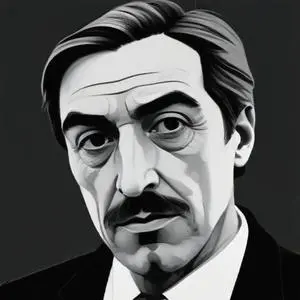
Umberto Boccioni: The Futurist Pioneer
A Revolutionary Artist and Sculptor
Umberto Boccioni was a renowned Italian painter and sculptor who played a pivotal role in shaping the revolutionary aesthetic of the Futurism movement. As one of its principal figures, he pioneered a new approach to art that emphasized dynamism, energy, and the deconstruction of solid mass.
Early Life and Education
Born on October 19, 1882, in Reggio Calabria, Italy, Boccioni grew up in a family that frequently relocated throughout the country due to his father's job as a minor government employee. This nomadic lifestyle exposed him to various regions and cultures, which would later influence his artistic style. He received his formal education in art at the Scuola Libera del Nudo of the Accademia di Belle Arti di Roma, where he studied under the Liberty style poster artist Giovanni Mataloni.
The Formation of Futurism
In Rome, Boccioni met with other like-minded artists, including
Gino Severini, who would become a close friend and fellow Futurist. Together, they were influenced by the works of
Friedrich Nietzsche and the ideals of socialism and rebellion. Boccioni's writing during this period revealed his critical and rebellious nature, which would become a hallmark of the Futurism movement.
Method and Style
Boccioni's artistic style was characterized by his use of dynamic lines, geometric shapes, and a bold color palette. He was fascinated by the concept of motion and energy, which he sought to capture in his works. His sculptures, in particular, showcased his innovative approach to form and mass, often deconstructing solid objects into their constituent parts.
Major Works and Influence
Some of Boccioni's most notable works include "The City Rises" (1910), "The Forces of a Street" (1911), and "Unique Forms of Continuity in Space" (1913). These works showcased his ability to capture the dynamism and energy of modern life, earning him widespread acclaim and recognition. His influence extended beyond the art world, inspiring filmmakers, architects, and designers to explore new ways of expressing movement and energy.
Legacy and Impact
Despite his short life, which was cut short by his death in 1916, Boccioni's legacy continues to inspire artists, designers, and thinkers to this day. His works are held by many public art museums, including the Metropolitan Museum of Art in New York City, which organized a major retrospective of 100 pieces in 1988. His contribution to the Futurism movement paved the way for future avant-garde movements, including Cubism, Constructivism, and Surrealism.
Personal Milestones and Key Life Events
- 1897: Moved to Catania, Sicily, with his father
- 1901: Met Gino Severini, a fellow Futurist artist
- 1903: Began studying under Giacomo Balla, a painter focusing on the Divisionist technique
- 1910: Created "The City Rises," a seminal work that showcased his Futurist style
- 1916: Died on August 17, at the age of 33, in a horse riding accident
Philosophical Contributions and Beliefs
Boccioni's artistic philosophy was deeply rooted in his belief in the power of dynamism and energy. He sought to capture the essence of modern life, characterized by speed, technology, and progress. His works embody the Futurist ideals of rebellion, innovation, and experimentation, inspiring generations of artists to push the boundaries of art and design.
Quotes and Memorable Sayings
- "We stand for the absolute and unbridled liberty of art..."
- "The past does not count for us. Our concern is the future."
Influence on Modern Society
Boccioni's Futurist aesthetic has had a profound impact on modern society, influencing architecture, design, film, and literature. His emphasis on dynamism, energy, and innovation has inspired generations of creatives to experiment with new forms and styles. Today, his legacy can be seen in everything from skyscrapers to sports cars, a testament to the enduring power of his artistic vision.
FAQ
What was Umberto Boccionis role in Futurism?
Umberto Boccioni was an Italian painter and sculptor who was a key figure in the Futurist movement, which sought to break with traditional artistic conventions and celebrate the dynamism and energy of modern life.
What were Umberto Boccionis notable artistic works?
Umberto Boccionis notable artistic works include his sculptures, such as Unique Forms of Continuity in Space, which explored the relationship between form and movement, and his paintings, which captured the essence of modern urban life.
How did Umberto Boccionis Futurist ideals influence his art?
Umberto Boccionis Futurist ideals, which emphasized the importance of speed, technology, and modernity, influenced his art, which often featured abstracted forms and dynamic compositions.
What was Umberto Boccionis approach to sculpture?
Umberto Boccionis approach to sculpture was characterized by its emphasis on movement and energy, often using abstracted forms to convey a sense of dynamism and tension.
How is Umberto Boccioni remembered in Italian art history?
Umberto Boccioni is remembered as a pioneering figure in Italian art, who helped to shape the Futurist movement and push the boundaries of modern art.