


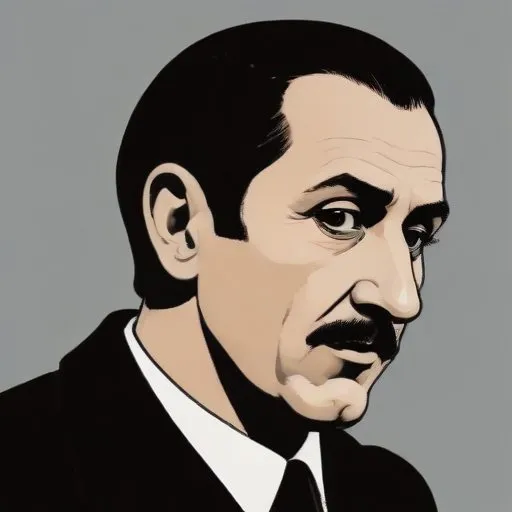
An Italian avant-garde artist who pioneered noise music and created innovative instruments to produce industrial sounds, influencing the development of 20th-century music.
Luigi Russolo was a true visionary, a Italian Futurist painter, composer, and inventor of experimental musical instruments. He is best known for his groundbreaking manifesto, "The Art of Noises" (1913), which proclaimed the dawn of a new era in music, one that would shatter the conventions of traditional melodic music and embrace the avant-garde sounds of the industrial revolution.
In the early 20th century, Russolo's experimental spirit led him to design and construct a series of innovative instruments called Intonarumori, capable of producing a wide range of unconventional sounds. These instruments were not merely noise-making devices, but rather a new language of sound, one that Russolo believed would revolutionize the music world.
Russolo's Futurist ideology was deeply rooted in his art and music. He believed that the industrial revolution had given modern men a greater capacity to appreciate more complex sounds, and that traditional music was confining and outdated. His noise music concerts, which debuted in 1913-1914 and again after World War I, were met with both fascination and hostility, but Russolo remained undeterred in his pursuit of a new sonic landscape.
In 1917, Russolo assembled a noise orchestra to perform his "Gran Concerto Futuristico", a work that was met with strong disapproval and violence from the audience. Despite this initial rejection, Russolo's pioneering work paved the way for future generations of noise musicians and avant-garde composers.
Although Russolo's original Intonarumori instruments were lost or destroyed over time, replicas have been built and performed, ensuring the continued relevance of his innovative ideas. His manifesto, "The Art of Noises", remains a seminal work in the development of noise music and continues to inspire artists and musicians today.
Russolo's contributions to the world of music and art have been recognized through various awards and exhibitions. In 2009, the Solomon R. Guggenheim Museum in New York City hosted an exhibition dedicated to Russolo's work, cementing his status as a pioneer of noise music.
Russolo's association with Italian Fascism, through his connections with Futurist artists and poets, has been a subject of controversy. However, his artistic contributions and philosophical ideas remain distinct from his political affiliations, and continue to inspire and challenge audiences today.
Russolo was born on April 30, 1885, in Portogruaro, Italy. He completed his secondary education at the Seminary of Portogruaro in 1901, before moving to Milan to pursue his artistic interests. Throughout his life, Russolo remained committed to his avant-garde vision, even in the face of adversity and criticism.
Russolo's ideas about the future of music and the role of noise in modern society continue to resonate with artists and thinkers today. His manifesto, "The Art of Noises", remains a powerful statement on the potential of sound to shape our understanding of the world around us.
Russolo's groundbreaking work in noise music and his unwavering commitment to his artistic vision continue to inspire and challenge us today. As we navigate the complexities of modern society, his ideas about the potential of sound to shape our understanding of the world remain more relevant than ever.
Born in 1882
A pioneering figure in Futurism, creating dynamic, abstracted depictions of modern life and technology, blending sculpture and painting to capture the essence of speed and energy.
Born in 1871
A pioneering Futurist artist, capturing dynamic movement and energy in vibrant, abstracted paintings that blur the lines between art and technology.
Born in 1883
A pioneering Futurist painter and writer, known for vibrant, dynamic works that captured the energy of modern life and the chaos of war.
Born in 1876
A pioneering figure in the Futurist movement, he wrote the Futurist Manifesto, advocating for a break with traditional cultural and social norms, and celebrating the dynamism of modern life.
Born in 1881
A 20th-century Italian painter, known for his abstract and lyrical works that explored the relationship between color and emotion. His vibrant, expressive paintings continue to inspire artists and art lovers alike.
