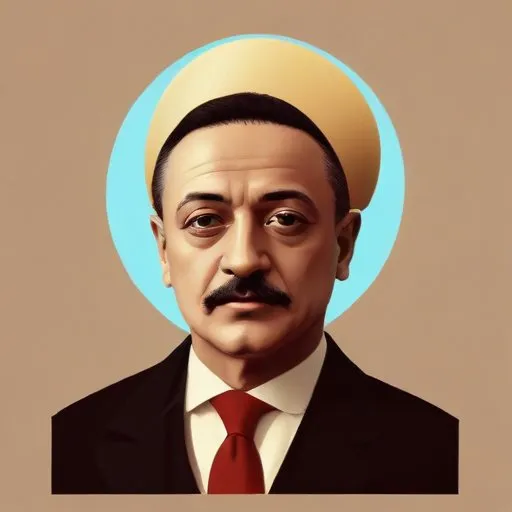
Filippo Tommaso Marinetti: The Futurist Visionary
A Life of Rebellion and Artistic Innovation
Filippo Tommaso Marinetti, an Italian poet, editor, and art theorist, is best known as the founder of the Futurist movement and author of the groundbreaking
Manifesto of Futurism, published in 1909. This bold declaration of artistic and social revolution paved the way for a new era of avant-garde expression, shaking the foundations of traditional art, literature, and society.
Early Years and Literary Influences
Born on December 22, 1876, in Alexandria, Egypt, Marinetti was exposed to a rich cultural heritage from an early age. His parents, Enrico Marinetti and Amalia Grolli, instilled in him a love for literature, which flourished during his school years. Marinetti's mother, an avid reader of poetry, introduced him to the Italian and European classics, shaping his literary tastes. At the age of 17, he started his first school magazine,
Papyrus, showcasing his creative energy and entrepreneurial spirit.
The Birth of Futurism
Marinetti's fascination with literature led him to explore various forms of writing, including poetry, narrative, and theater. During his time at the University of Pavia, where he graduated in law in 1899, he began experimenting with innovative styles, eventually signing his work as Filippo Tommaso Marinetti. This marked the beginning of his journey towards Futurism, a movement that would challenge traditional norms and celebrate the dynamism of modern life.
The Manifesto of Futurism and its Impact
On February 20, 1909, Marinetti's
Manifesto of Futurism was published in the French newspaper
Le Figaro, sparking intense debate and outrage. This provocative declaration praised the beauty of speed, machinery, and violence, rejecting traditional aesthetic values and advocating for a radical transformation of art and society. The manifesto's bold and provocative language inspired a generation of artists, writers, and intellectuals, shaping the course of modern art and literature.
Influence on Modern Society and Art
Marinetti's Futurist movement had a profound impact on modern society and art, influencing a wide range of disciplines, from literature and visual arts to music, architecture, and even politics. His emphasis on dynamism, technology, and innovation resonated with the avant-garde spirit of the early 20th century, inspiring a host of notable artists, including
Umberto Boccioni,
Gino Severini, and Giacomo Balla.
Controversies and Criticisms
Marinetti's radical ideas and his association with Fascist ideology have been the subject of controversy and criticism. His co-authorship of the
Fascist Manifesto in 1919 has led some to view him as a supporter of authoritarian regimes. However, Marinetti's intentions were more complex, and his involvement with Fascism was largely driven by his desire to promote Italian nationalism and modernity.
Personal Life and Relationships
Marinetti's personal life was marked by intense relationships and intellectual collaborations. His association with the Abbaye de Créteil, a utopian community of artists and writers, nourished his creative growth and facilitated his encounter with kindred spirits. His marriage to Benedetta Cappa, a talented artist and writer, was a key partnership, both personally and artistically.
Legacy and Impact
Marinetti's Futurist legacy continues to inspire artists, writers, and thinkers around the world. His emphasis on innovation, experimentation, and avant-garde expression has shaped the course of modern art and literature, influencing movements such as Surrealism, Dadaism, and Constructivism. As a pioneering figure, Marinetti's work remains a testament to the power of creative rebellion and artistic vision.
- Quotes: "We affirm that the world's magnificence has been enriched by a new beauty: the beauty of speed."
- Major Works: Manifesto of Futurism, Zang Tumb Tumb, The Futurist Cookbook
- Influence on Pop Culture: Marinetti's ideas have inspired filmmakers, architects, and musicians, including directors like Stanley Kubrick and filmmakers like Eisenstein.
- Trivia: Marinetti was a prolific writer, publishing over 40 books during his lifetime.