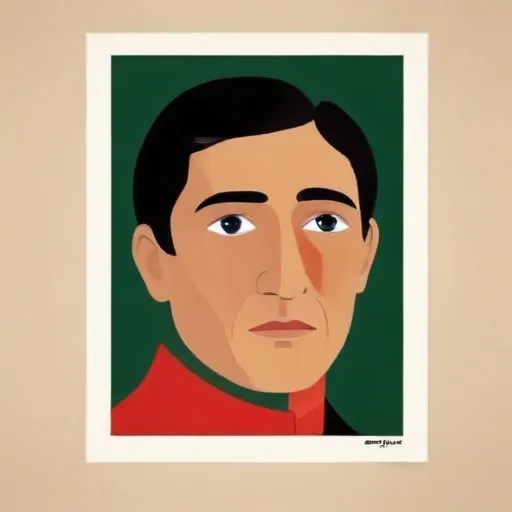
Carlo Carr: The Leading Figure of the Futurist Movement
A Life Dedicated to Art and Innovation
Carlo Carr was a renowned Italian painter and a pioneer of the Futurist movement, which swept through Italy in the early 20th century. He is celebrated for his vibrant and innovative works of art, which not only showcased his exceptional skill but also his ability to evolve and adapt to new styles and techniques.
Early Life and Influences
Born on February 11, 1881, in Quargnento, Italy, Carr's artistic journey began at a young age. At just 12, he left home to work as a mural decorator, which laid the foundation for his future success. His travels to Paris and London exposed him to the works of contemporary French artists, and he became acquainted with exiled Italian anarchists, who would later influence his artistic style.
The Futurist Phase
In 1906, Carr enrolled at the Brera Academy in Milan, where he studied under Cesare Tallone. It was during this period that he signed the Manifesto of Futurist Painters, alongside
Umberto Boccioni,
Luigi Russolo, and
Giacomo Balla, marking the beginning of his Futurist phase. This period was characterized by his use of vibrant colors and dynamic compositions, which captured the essence of modernity and innovation.
Exploring Synaesthesia and New Styles
In 1913, Carr published his manifesto, "The Painting of Sounds, Noises and Smells," which highlighted his fascination with synaesthesia, a perceptual phenomenon that relates to the idea that exposure to one external stimulus induces a parallel visualization. This fascination led him to explore new styles, inspired by Trecento painting, children's art, and the work of
Henri Rousseau. His art took on a more simplified and realistic approach, emphasizing the beauty of everyday objects.
Inspiration and Collaborations
Carr's encounter with
Giorgio de Chirico in Ferrara in 1917 had a profound impact on his art. He began to incorporate mannequin imagery into his paintings, a style that would become synonymous with the Metaphysical art movement. This collaboration marked a turning point in Carr's career, as he continued to evolve and experiment with new techniques.
Legacy and Impact
Throughout his life, Carr taught art in Milan, inspiring a new generation of artists. His contributions to the Futurist movement and his later exploration of Metaphysical art have left an indelible mark on the art world. Today, his works are celebrated for their innovative spirit, their ability to capture the essence of modernity, and their continued influence on contemporary art.
\...
*
The Funeral of the Anarchist Galli (1911)
*
The Revolt (1914)
*
The Metaphysical Interior (1917)
*
The Bathers (1920)
Remembering Carlo Carr
Carlo Carr's life was a testament to his passion for art and his unwavering commitment to innovation. His legacy continues to inspire artists, and his works remain a powerful reminder of the Futurist movement's impact on modern art.
FAQ
What style of art did Carlo Carrà practice?
Carlo Carrà was an Italian painter who practiced Futurism, an avant-garde movement that emphasized dynamism, energy, and the machine age, and later transitioned to a more classical and figurative style.
What is Carlo Carràs most famous work?
Carlo Carràs most famous work is The Funeral of the Anarchist Galli, a painting that showcases his Futurist style and is considered a landmark of Italian modern art.
How did Carlo Carràs work influence Italian modern art?
Carlo Carràs work significantly influenced Italian modern art, contributing to the development of Futurism and inspiring a generation of Italian artists to explore new styles and techniques.
What was Carlo Carràs role in the Futurist movement?
Carlo Carrà was a founding member of the Futurist movement, signing the Futurist Manifesto in 1910 and producing works that embodied the movements ideals of dynamism, energy, and rebellion.
What is Carlo Carràs legacy in the art world?
Carlo Carràs legacy in the art world is that of a pioneering artist who pushed the boundaries of modern art, exploring new styles and techniques, and inspiring future generations of artists to experiment and innovate.