


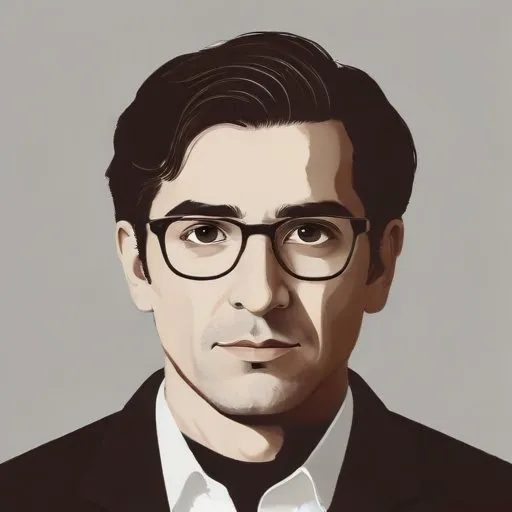
A pioneer in human-computer interaction, he led the development of the Alto computer, which inspired the Macintosh and Windows operating systems. He also founded the MIT Laboratory for Computer Science.
Michael Dertouzos, a Greek-American computer scientist, is renowned for predicting the expansion of computer use and pioneering various areas of technology, including ubiquitous computing. As the Director of the Massachusetts Institute of Technology's (MIT) Laboratory for Computer Science (LCS), Dertouzos played a crucial role in shaping the digital landscape.
Born in Athens, Greece on November 5, 1936, Dertouzos grew up with a fascination for technology, courtesy of his father, an admiral in the Greek navy. His early exposure to Morse code, shipboard machinery, and mathematics sparked an interest that would only intensify with time.
At 16, Dertouzos discovered Claude Shannon's work on information theory and MIT's attempt to build a mechanical mouse robot, which propelled him to pursue higher education in the United States. He was awarded a Fulbright scholarship to study electrical engineering and went on to complete his bachelor's and master's degrees at the University of Arkansas in 1957 and 1959, respectively. Dertouzos earned his Ph.D. in electrical engineering from MIT in 1964.
Dertouzos joined the MIT faculty immediately after graduation and remained there for the rest of his career. During his tenure, LCS innovated in various areas, including:
Dertouzos was instrumental in creating the World Wide Web Consortium and bringing it to MIT. He was a fervent supporter of the GNU Project, Richard Stallman, and the Free Software Foundation (FSF), and their continued presence at MIT.
Dertouzos was a visionary who believed in the potential of technology to transform human life. He advocated for the democratization of technology, making it accessible to everyone, everywhere. His concept of ubiquitous computing foresaw a future where computers would be seamlessly integrated into daily life, making it easier for people to communicate, access information, and navigate the world.
In addition to his academic achievements, Dertouzos was known for his warm personality and ability to inspire others. He was a dedicated mentor, guiding many students and researchers throughout his career.
Michael Dertouzos' legacy extends far beyond his numerous contributions to the world of technology. He played a significant role in shaping the digital landscape, making it more accessible and user-friendly. His vision of ubiquitous computing has inspired generations of researchers, entrepreneurs, and innovators, transforming the way we live, work, and interact with each other.
Dertouzos passed away on August 27, 2001, but his work continues to influence the tech industry, and his ideas remain a testament to his boundless enthusiasm for technology and humanity.
Born in 1915
Pioneering computer scientist and psychologist who envisioned and funded the creation of the first operational packet switching network, ARPANET, precursor to the modern internet.
87 Years Old
Co-developer of the Transmission Control Protocol, a fundamental communication protocol that enables reliable data transfer over the internet, revolutionizing modern communication. This pioneer's work has had a profound impact on the development of the internet as we know it today.
72 Years Old
Irish guitarist and songwriter, founding member of The Boomtown Rats, known for hits like "I Don't Like Mondays" and "Rat Trap".
83 Years Old
Creator of the Domain Name System (DNS) and Internet Protocol (IP), revolutionizing internet communication and navigation.
Born in 1925
A pioneer in human-computer interaction, he revolutionized personal computing by inventing the mouse, enabling intuitive navigation and transforming the way we interact with technology.
Born in 1912
Pioneering mathematician and computer scientist who cracked the German Enigma code during WWII and laid the foundations for modern computer science and artificial intelligence.
99 Years Old
Pioneering computer scientist and academic who coined the term "Artificial Intelligence" and made significant contributions to the development of AI, time-sharing systems, and Lisp programming language.
