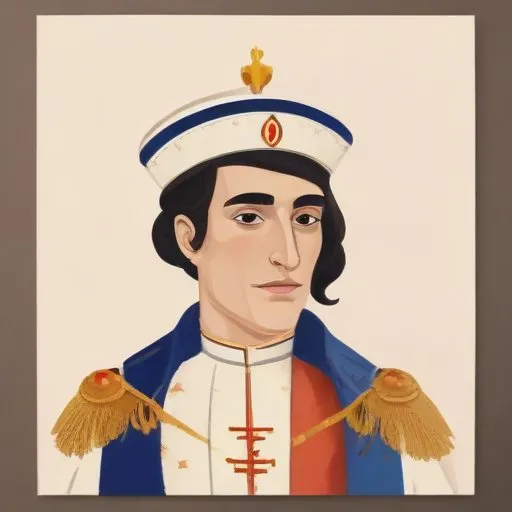
Napoléon, Prince Imperial

Napoléon, Prince Imperial

Napoléon, Prince Imperial was born on March 16th, 1856

Full Name: Napoléon, Prince Imperial
Nationality: French
Occupation: Prince Imperial of France
Born: March 1856
Died: June 1879
Title: Prince Imperial
Parents: Napoleon III and Eugénie
Burial: Farnborough Abbey

Grandson of Napoleon Bonaparte, last heir to the French throne, and a military officer who fought in the Franco-Prussian War. He's known for his short, tragic life and symbolic significance in French history.

Timeline
1856
Birth in Paris
Napoléon, Prince Imperial was born in Paris, France, to Emperor Napoléon III and Empress Eugénie.
1870
Exile to England
The French Second Empire fell, and Napoléon and his family were exiled to England.
1879
Joined French army
Napoléon joined the French army, seeking to restore the Bonaparte dynasty to power.
1883
Died in South African War
Napoléon, Prince Imperial died in the Zulu War in South Africa, fighting on behalf of the British Empire.
1883
Death in Zululand
Napoléon, Prince Imperial was killed in action at the age of 27 in Zululand, South Africa.
Napoléon, Prince Imperial

Napoléon, Prince Imperial Quiz

Napoléon, Prince Imperial was the grandson of which French historical figure?

Score: 0/5
FAQ
What was Napoléon, Prince Imperials role in the French monarchy?
Napoléon, Prince Imperial was the only son of Emperor Napoléon III and Empress Eugénie, and was thus the heir apparent to the French throne. He was born in 1856 and died in 1879.
How did Napoléon, Prince Imperial impact French politics?
Napoléon, Prince Imperials life was marked by turmoil and controversy, particularly in the context of the Franco-Prussian War. His death at a young age had significant implications for French politics and the monarchy.
What was Napoléon, Prince Imperials relationship with his parents?
Napoléon, Prince Imperial was very close to his parents, Emperor Napoléon III and Empress Eugénie. He was their only son and they invested great hopes in him as the future ruler of France.
How did Napoléon, Prince Imperials death impact the French monarchy?
Napoléon, Prince Imperials death had significant implications for the French monarchy, leading to a crisis of succession and eventually the fall of the Second Empire.
What is Napoléon, Prince Imperials legacy in French history?
Napoléon, Prince Imperials legacy in French history is one of tragedy and what-ifs. He is remembered as a symbol of the Napoleonic dynasty and a potential leader who never had the opportunity to fulfill his destiny.

Related People:

Napoleon Bonaparte

Born in 1769

A French military leader who rose to prominence during the French Revolution and became Emperor of France, known for his military conquests and reorganization of Europe. He is also famous for his Napoleonic Code, which remains a foundation of modern law.

Joséphine de Beauharnais

Born in 1763

French empress and fashion icon, known for her extravagant lifestyle and influence on European fashion during the early 19th century.

Jérôme Bonaparte

Born in 1784

The youngest brother of Napoleon Bonaparte, married to a German princess, and briefly King of Westphalia, known for his brief reign and attempts to modernize his kingdom. He's a footnote in Napoleon's shadow.

Pauline Bonaparte

Born in 1780

Napoleon's sister, a beautiful and fashionable woman, was a prominent figure in French high society and a muse for many artists, including the famous sculptor Canova. She was known for her extravagant lifestyle and numerous love affairs.

Caroline Bonaparte

Born in 1782

Younger sister of Napoleon Bonaparte, she became Queen of Naples and Sicily through her marriage, playing a significant role in European politics during the early 19th century.

Lucien Bonaparte

Born in 1775

French soldier and politician who played a key role in the French Revolution and was the brother of Napoleon Bonaparte, serving as Minister of the Interior and helping to establish the French Consulate. He's also known for his diplomatic and military skills.

Joachim Murat

Born in 1767

A flamboyant and daring cavalry commander who played a key role in Napoleon's military conquests, earning the title of King of Naples.