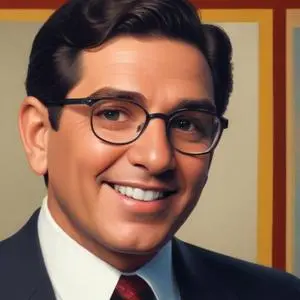
Neil Postman

Neil Postman

Neil Postman was born on March 8th, 1931

Full Name: Neil Postman
Place of Birth: New York City, USA
Profession: Author, Social Critic
Notable Works: Amusing Ourselves to Death, Technopoly
Education: State University of New York at Fredonia, Columbia University
Teaching Career: New York University
Awards: Elliot Ness Award, Orwell Award
Genre: Social Commentary, Cultural Criticism

A renowned author and social critic who critiqued the effects of technology on society, warning about the dangers of a culture obsessed with entertainment and lacking in critical thinking.

Timeline
1931
Born in New York
Neil Postman was born on March 8, 1931, in New York City, beginning his journey as a renowned author and social critic.
1953
Graduated from State University
Postman earned his Bachelors degree from the State University of New York at Fredonia, laying the foundation for his future academic pursuits.
1961
Earned Ph.D. from Columbia University
Postman received his Ph.D. in English education from Columbia University, solidifying his expertise in language and communication.
1985
Published Amusing Ourselves to Death
Postman published his influential book Amusing Ourselves to Death, which critiqued the effects of television on modern society.
2003
Died on October 5
Neil Postman passed away on October 5, 2003, leaving behind a legacy of thought-provoking writings and critiques on modern media and society.
Neil Postman

Neil Postman Quiz

What was Neil Postman's primary concern about the effects of technology on society?

Score: 0/5
FAQ
What is Neil Postmans most famous book?
Neil Postmans most famous book is arguably Amusing Ourselves to Death, which was published in 1985 and critiques the effects of television on American culture.
What awards has Neil Postman won?
Neil Postman won several awards for his writing, including the Orwell Award for Distinguished Contribution to Honesty and Clarity in Public Language.
What is Neil Postmans educational background?
Neil Postman earned his Bachelors degree from the State University of New York at Fredonia and his Masters degree from Columbia University.
What is Neil Postmans legacy in media studies?
Neil Postman is widely regarded as one of the most important and influential media critics of his generation, known for his insightful analyses of the effects of media on society.
What is Neil Postmans contribution to education?
Neil Postman was a professor of communication arts and sciences at New York University, and was known for his innovative teaching style and his advocacy for critical thinking and media literacy.

Related People:

Marshall McLuhan

Born in 1911

A pioneering media theorist who coined the phrase "the medium is the message," exploring how technology shapes human culture and communication.

Jean Baudrillard

96 Years Old

A French sociologist and philosopher who developed theories on consumerism, hyperreality, and the simulation of reality, arguing that our postmodern world is more concerned with images and appearances than reality itself.

Herbert Marcuse

Born in 1898

A critical theorist who challenged traditional notions of freedom, democracy, and consumerism, arguing that modern society is oppressive and dehumanizing.

Noam Chomsky

97 Years Old

Developed groundbreaking theories on language acquisition and universal grammar, and is a prominent critic of power and propaganda in modern society.

Susan Sontag

93 Years Old

A renowned writer and thinker who explored the human experience through novels, essays, and criticism, delving into topics like culture, politics, and morality. Known for her provocative ideas and lyrical prose.

Christopher Lasch

93 Years Old

A cultural critic who wrote about the decline of American culture and the rise of narcissism, arguing that modern society values self-promotion over genuine achievement.

Paul Goodman

Born in 1911

A countercultural figure of the 1960s, known for his anarchist and pacifist views, which influenced the anti-war movement and the development of the modern American left. His writings often explored the intersection of psychology, politics, and culture.