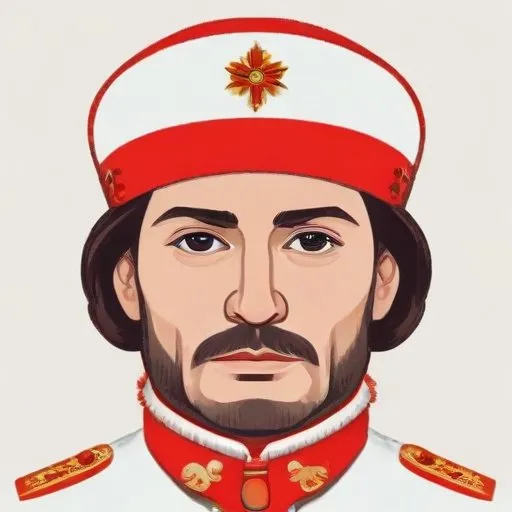
Nikolai von Meck

Nikolai von Meck

Nikolai von Meck was born on April 28th, 1863

Full Name: Nikolai Karlovich von Meck
Place of Birth: Moscow, Russia
Nationality: Russian
Occupation: Engineer
Birth Date: January 22, 1863
Death Date: May 24, 1929
Notable Works: Russian railways
Patron: Tchaikovsky

A Russian engineer who sponsored and collaborated with famous composers like Tchaikovsky, providing financial support and inspiration for iconic works like the 1812 Overture.

Timeline
1863
Born in Russia
Nikolai von Meck was born into a noble family in Russia, where he would later become an engineer and make significant contributions to the development of Russias railway system.
1880
Graduated from University
Meck graduated from the University of Saint Petersburg with a degree in engineering, which laid the foundation for his future career.
1891
Joined Imperial Russian Railways
Meck joined the Imperial Russian Railways, where he would work for over two decades, eventually rising to become the director of the railway system.
1913
Retired from Railways
After a distinguished career, Meck retired from the Imperial Russian Railways, leaving behind a legacy of innovation and progress.
1929
Passed Away
Nikolai von Meck passed away at the age of 66, leaving behind a legacy as one of Russias most important engineers of the late 19th and early 20th centuries.
Nikolai von Meck

Nikolai von Meck Quiz

Nikolai von Meck was a Russian engineer who sponsored and collaborated with which famous composer?

Score: 0/5
FAQ
What was Nikolai von Mecks role in Russian engineering?
Nikolai von Meck was a prominent Russian engineer who made significant contributions to the development of the Russian railway system and the construction of the Trans-Siberian Railway.
What was Nikolai von Mecks early life and education like?
Nikolai von Meck was born in Russia in 1863 and studied engineering at the Petersburg Institute of Railway Engineers.
How did Nikolai von Mecks work impact Russian industry and economy?
Nikolai von Mecks work had a significant impact on Russian industry and economy, facilitating the growth of trade and commerce across the vast distances of the Russian Empire.
What were Nikolai von Mecks key achievements as an engineer?
Nikolai von Mecks key achievements include the construction of the Trans-Siberian Railway, which connected Moscow to Vladivostok and revolutionized transportation in Russia.
How is Nikolai von Meck remembered in Russian history?
Nikolai von Meck is remembered as a pioneering engineer who made significant contributions to Russian infrastructure and economic development.

Related People:

Vladimir Lenin

Born in 1870

Founder of the world's first socialist state, leading the Bolshevik Revolution and establishing the Soviet Union, known for his radical Marxist ideology and authoritarian rule.

Leon Trotsky

Born in 1879

Founded the Red Army and played a crucial role in the Russian Revolution, shaping the course of modern communism. A key figure in 20th-century politics and ideology.

Joseph Stalin

Born in 1878

The Soviet Union's ruthless leader who ruled with an iron fist, implementing policies that led to widespread famine and purges, while also playing a crucial role in defeating Nazi Germany in World War II.

Felix Dzerzhinsky

Born in 1877

Founder of the Soviet secret police, known for his role in establishing the Cheka, a precursor to the KGB, and implementing repressive policies during the Russian Revolution.

Mikhail Kalinin

Born in 1875

The first Head of State of the Soviet Union, serving from 1919 to 1946, known for his role in establishing the Soviet government and implementing Stalin's policies. He was a key figure in the Soviet leadership during World War II.

Alexei Rykov

Born in 1881

Premier of Russia during the early Soviet era, known for his moderate policies and opposition to Stalin's rise to power.

Nikolai Bukharin

Born in 1888

A prominent figure in the Russian Revolution, he was a key architect of the Soviet economy and a vocal critic of Stalin's regime, ultimately falling victim to his purges.