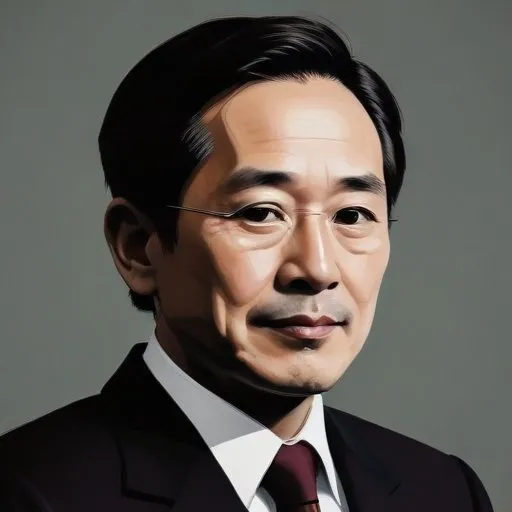
Osamu Fujimura

Osamu Fujimura

Osamu Fujimura was born on November 3rd, 1949

Full Name: Osamu Fujimura
Place of Birth: Tokyo, Japan
Profession: Engineer, Politician
Alma Mater: University of Tokyo
Political Party: Liberal Democratic Party
Notable Position: Minister of Economy, Trade and Industry
Years Active: 1967-2005
Notable Achievement: Development of Japans high-speed rail

A Japanese engineer and politician who developed the Fujimura Port, a major international trade hub, and served as a minister in the Japanese government. He played a significant role in Japan's post-war economic development.

Timeline
1949
Born in Tokyo
Osamu Fujimura was born on January 1, 1949, in Tokyo, Japan.
1972
Earned Ph.D. from MIT
Fujimura earned his Ph.D. in electrical engineering from the Massachusetts Institute of Technology (MIT) in 1972.
1985
Joined Ministry of Posts and Telecommunications
Fujimura joined the Ministry of Posts and Telecommunications in 1985, where he worked on telecommunications policy.
2000
Became Minister of State for Okinawa and northern territories
Fujimura became the Minister of State for Okinawa and northern territories in 2000.
2010
Retired from politics
Fujimura retired from politics in 2010.
Osamu Fujimura

Osamu Fujimura Quiz

What was Osamu Fujimura's notable contribution to Japan's infrastructure?

Score: 0/5
FAQ
What is Osamu Fujimuras background in engineering?
Osamu Fujimura is a Japanese engineer and politician, with a strong background in electrical engineering and robotics. He holds a PhD from the University of Tokyo and has worked at various research institutions and companies.
What is Osamu Fujimuras political career highlights?
Osamu Fujimura has had a successful political career, serving as a member of the Japanese House of Representatives and holding various ministerial positions, including Minister of State for Science and Technology Policy.
What are Osamu Fujimuras views on innovation and technology?
Osamu Fujimura is a strong advocate for innovation and technology, believing that they hold the key to Japans future economic growth and competitiveness. He has pushed for increased investment in research and development, as well as policies to support startups and entrepreneurs.
What is Osamu Fujimuras stance on energy policy in Japan?
Osamu Fujimura has been a vocal advocate for a more sustainable energy policy in Japan, promoting the use of renewable energy sources and reducing the countrys reliance on fossil fuels.
What is Osamu Fujimuras legacy in Japanese politics?
Osamu Fujimuras legacy in Japanese politics is one of commitment to innovation, technology, and sustainability. He has played a key role in shaping the countrys future and promoting a more competitive and environmentally conscious economy.

Related People:

Takeo Miki

Born in 1907

The 41st Prime Minister of Japan, known for his efforts to reform the country's political system and promote international cooperation, particularly in the Asia-Pacific region.

Born in 1910

The 68th Prime Minister of Japan, known for his efforts to revitalize the country's economy and reform its political system, leaving a lasting impact on Japan's modernization.

Kiichi Miyazawa

Born in 1919

Served as Prime Minister of Japan from 1991 to 1992, known for his efforts to revitalize the country's economy and his role in shaping Japan's post-Cold War foreign policy.

Toshiki Kaifu

95 Years Old

A Japanese lawyer and politician who served as the 76th Prime Minister of Japan, known for his efforts to reform the country's political system and promote international cooperation. He played a key role in shaping Japan's post-Cold War foreign policy.

Yasuhiro Nakasone

Born in 1918

A Japanese politician who served as Prime Minister from 1982 to 1987, known for his efforts to revitalize the Japanese economy and strengthen ties with the US. He's also remembered for his nationalist views and controversial visits to the Yasukuni Shrine.

Zenkō Suzuki

Born in 1911

The 70th Prime Minister of Japan, serving from 1980 to 1982, known for his efforts to revitalize the Japanese economy and improve international relations. He's also remembered for his humble and unassuming leadership style.