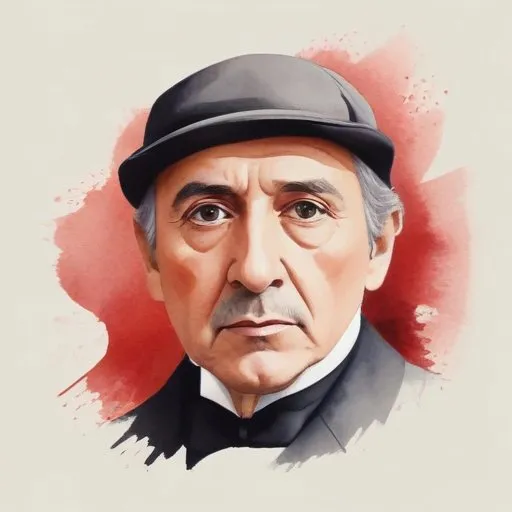
Pablo Sorozábal

Pablo Sorozábal

Pablo Sorozábal was born on September 18th, 1897

Full Name: Pablo Sorozábal Mariezcurrena
Nationality: Spanish
Occupation: Composer, Conductor
Birth Date: September 18, 1897
Died: December 26, 1988
Notable Works: Katiuska
Instrument: Piano
Genre: Classical music

A Spanish maestro who blended folk and classical music, creating iconic operas and ballets that showcased his country's rich cultural heritage. His works are still widely performed today.

Timeline
1897
Born in San Sebastián
Pablo Sorozábal was born on September 18, 1897, in San Sebastián, Spain. He would go on to become a Spanish composer and conductor.
1915
Studied at Madrid Conservatory
Sorozábal studied at the Madrid Conservatory from 1915 to 1920, where he honed his musical skills.
1923
Conducted Bilbao Symphony Orchestra
In 1923, Sorozábal conducted the Bilbao Symphony Orchestra, marking the beginning of his career as a conductor.
1930
Composed Katiuska
Sorozábal composed his famous zarzuela Katiuska in 1930, a work that would become a staple of Spanish opera.
1988
Died in Madrid
Pablo Sorozábal died on December 26, 1988, in Madrid, Spain, leaving behind a legacy as a Spanish composer and conductor.
Pablo Sorozábal

Pablo Sorozábal Quiz

Pablo Sorozábal's music style is characterized by the blending of

Score: 0/5
FAQ
What is the most famous composition of Pablo Sorozábal?
Pablo Sorozábal is best known for his opera La casa de las siete chimeneas, which premiered in 1932 and is considered one of the most important works of Spanish opera in the 20th century. Sub-question: What is the story behind La casa de las siete chimeneas?
What is Pablo Sorozábals contribution to Spanish music?
Pablo Sorozábal was a prolific composer and conductor who made significant contributions to Spanish music, particularly in the opera and zarzuela genres. His work helped to revitalize Spanish musical theatre in the early 20th century.
Where did Pablo Sorozábal study music?
Pablo Sorozábal studied music at the Madrid Conservatory, where he was a student of renowned composers such as Conrado del Campo and Amadeo Vives.
What awards did Pablo Sorozábal receive for his work?
Pablo Sorozábal received numerous awards and honors for his contributions to Spanish music, including the National Music Prize in 1942 and the Grand Cross of the Order of Alfonso X the Wise in 1955.
What is Pablo Sorozábals legacy in Spanish culture?
Pablo Sorozábals legacy in Spanish culture is significant, as he helped to promote and preserve traditional Spanish music and opera, and inspired future generations of Spanish composers and musicians.

Related People:

Isaac Albéniz

Born in 1860

A renowned Spanish pianist and composer, he's celebrated for his evocative and expressive works that blended folk influences with classical music, particularly his iconic suite "Iberia".

Enrique Granados

Born in 1867

A renowned Spanish pianist and composer, known for his romantic and expressive works, particularly his piano suite "Goyescas", which is considered a masterpiece of Spanish music.

Manuel de Falla

Born in 1876

A renowned Spanish pianist and composer, known for blending folk influences with modernist techniques, creating iconic works like "The Three-Cornered Hat" and "Nights in the Gardens of Spain".

Joaquín Rodrigo

Born in 1901

A renowned pianist and composer, he's celebrated for his evocative and expressive works, particularly his iconic guitar concerto, "Concierto de Aranjuez".

Federico García Lorca

Born in 1898

A Spanish poet, playwright, and director who explored themes of love, death, and Spanish culture through his works, including the famous play "Blood Wedding".

Salvador Dalí

Born in 1904

A renowned surrealist master of bizarre, dream-like paintings and sculptures that blur reality and fantasy, known for iconic works like "The Persistence of Memory" and "The Elephants".

Pablo Picasso

Born in 1881

A pioneering artist who transformed modern art with pioneering Cubist works, creating a new visual language that continues to inspire and influence art, design, and culture.

Andrés Segovia

Born in 1893

Renowned for popularizing classical guitar music and transcribing classical masterpieces for the instrument, he elevated the guitar's status as a concert instrument.