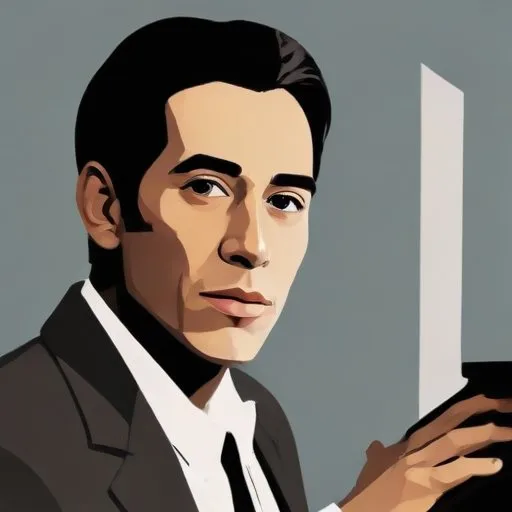
Joaqun Rodrigo: The Maestro of Spanish Classical Music
The Legacy of Concierto de Aranjuez
Joaqun Rodrigo is widely regarded as one of the most celebrated Spanish composers of the 20th century, and his magnum opus, Concierto de Aranjuez, is a cornerstone of the classical guitar repertoire. This iconic concerto for guitar and orchestra has been captivating audiences for generations, and its beauty and elegance continue to inspire musicians and music lovers alike.
A Life of Music and Triumph Over Adversity
Born on November 22, 1901, in Sagunto, Valencia, Spain, Rodrigo's life was marked by tragedy and triumph. At the tender age of three, he contracted diphtheria, which left him completely blind. Undeterred by his disability, Rodrigo began studying solfeggio, piano, and violin at the age of eight, and later harmony and composition at 16. His remarkable talent and perseverance earned him a place at the École Normale de Musique in Paris, where he studied under the tutelage of
Paul Dukas.
A Pioneering Spirit and Innovative Compositions
Rodrigo's contributions to Spanish classical music are immeasurable. He single-handedly elevated the Spanish guitar to a dignified concert instrument, paving the way for future generations of guitarists. Despite never mastering the instrument himself, Rodrigo wrote his compositions in Braille, which were then transcribed for publication. His first published works date back to 1923, and he continued to compose music throughout his life, leaving behind a legacy of masterpieces.
An Inspirational Teaching Career
From 1947 until his retirement, Rodrigo held the prestigious
Manuel de Falla Chair of Music at the Complutense University of Madrid, where he taught music history. Among his notable students was Turkish composer and pianist Yksel Koptagel. Rodrigo's dedication to sharing his knowledge and passion for music inspired countless students and colleagues.
Personal Milestones and Key Life Events
Rodrigo's life was marked by both personal triumphs and challenges. He married Victoria Kamhi in 1933, and the couple suffered a heartbreaking miscarriage that inspired Concierto de Aranjuez. The couple had two children, and Rodrigo's devotion to his family was only surpassed by his love for music.
Awards and Honors
Throughout his lifetime, Rodrigo received numerous accolades for his contributions to music. He was awarded the Prince of Asturias Award for the Arts in 1985 and was named Marquess of the Gardens of Aranjuez in 1991. His legacy continues to be celebrated through various awards, festivals, and concerts dedicated to his music.
Influence on Pop Culture
Concierto de Aranjuez has transcended the classical music realm, influencing popular culture in unexpected ways. The adagio movement was famously adapted by
Gil Evans for
Miles Davis's 1960 album Sketches of Spain, introducing Rodrigo's music to a new generation of jazz enthusiasts. The concerto's beauty and elegance have also been featured in films, television shows, and advertisements.
Legacy and Impact on Spanish Classical Music
Joaqun Rodrigo's impact on Spanish classical music is immeasurable. He bridged the gap between traditional Spanish music and classical guitar, creating a new canon of works that continue to inspire composers and musicians today. His legacy extends far beyond his own compositions, as he paved the way for future generations of Spanish classical musicians.
Remembering a Maestro
Joaqun Rodrigo's life was a testament to the power of determination, passion, and creativity. Through his music, he continues to inspire and uplift audiences around the world. As we remember this maestro, we celebrate not only his remarkable compositions but also the boundless energy and spirit that defined his life.
FAQ
What was Joaquín Rodrigos contribution to music?
Joaquín Rodrigo was a Spanish pianist and composer, known for his work in the neoclassical style, particularly his famous Concierto de Aranjuez for guitar and orchestra.
What was Joaquín Rodrigos early life like?
Joaquín Rodrigo was born in 1901 in Sagunto, Spain, began studying music at a young age, and later attended the Conservatoire de Paris.
How did Joaquín Rodrigos music reflect Spanish culture?
Joaquín Rodrigos music often incorporated elements of Spanish folk music and classical guitar, reflecting his love for his native culture and heritage.
What awards did Joaquín Rodrigo receive?
Joaquín Rodrigo received numerous awards and honors, including the Prince of Asturias Award, the Premio Nacional de Música, and the Grand Cross of the Order of Charles III.
How did Joaquín Rodrigo die?
Joaquín Rodrigo died on July 6, 1999, at the age of 97, leaving behind a legacy as one of Spains most celebrated composers.