


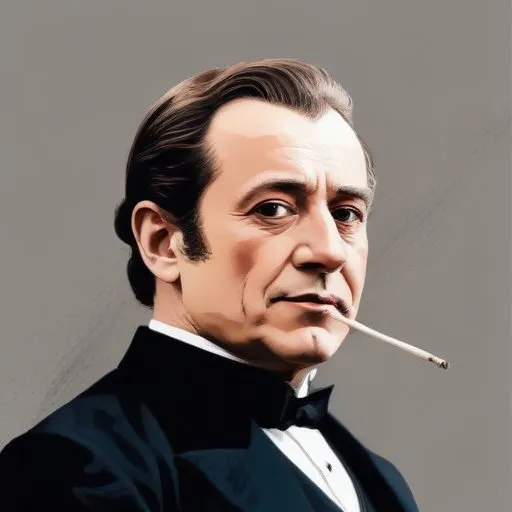
A Spanish composer and conductor who wrote orchestral and chamber music, and was a prominent figure in the Spanish musical scene during the 20th century.
Ernesto Halffter Escriche, a renowned Spanish composer and conductor, is celebrated for his iconic contributions to the world of music, leaving an indelible mark on the cultural landscape of Spain and beyond. Born on January 16, 1905, in Madrid, Halffter's impressive repertoire includes orchestral works, chamber music, film scores, and operas, earning him a revered status among his contemporaries and successive generations of musicians.
Halffter was the third son of Prussian jeweller Ernest Halffter Hein and his wife Rosario Escriche Erradn. He demonstrated an extraordinary talent for music from a very young age, penning his first composition at the tender age of six. His early education took place at the Colegio Alemn de Madrid, where he was further nurtured by his piano teacher, Fernando Ember. This pivotal relationship led to Ember performing three of Halffter's pieces from Crepsculos at the Ritz Hotel in Madrid in 1922.
In 1923, Halffter's life took a dramatic turn when he met the illustrious Spanish composer, Manuel de Falla. This chance encounter sparked a long-lasting mentorship, with Falla providing valuable lessons that greatly influenced Halffter's compositional style. The young prodigy's score for Homenajes, a trio for violin, cello, and piano, was enthusiastically received by Falla, marking the beginning of a fruitful partnership.
In 1934, Halffter assumed the directorship and conductorship of the Seville Conservatory of Music, while residing in Lisbon with his Portuguese pianist wife, Alice Cmara Santos. During this period, he mentored the Finnish composer AnnElise Hannikainen, who would later become his life companion.
Following Falla's passing in 1946, Halffter was entrusted with completing the unfinished opera, Atlántida. This monumental task culminated in the opera's premiere in 1961, cementing Halffter's status as a guardian of Spanish musical heritage.
Ernesto Halffter's remarkable life and works have left an indelible mark on the world of music. His commitment to preserving and promoting Spanish musical identity has inspired generations of composers, conductors, and musicians. Today, his legacy continues to resonate, reminding us of the power of art to transcend time and borders.
Born in 1876
A renowned Spanish pianist and composer, known for blending folk influences with modernist techniques, creating iconic works like "The Three-Cornered Hat" and "Nights in the Gardens of Spain".
Born in 1860
A renowned Spanish pianist and composer, he's celebrated for his evocative and expressive works that blended folk influences with classical music, particularly his iconic suite "Iberia".
Born in 1867
A renowned Spanish pianist and composer, known for his romantic and expressive works, particularly his piano suite "Goyescas", which is considered a masterpiece of Spanish music.
Born in 1893
A renowned Spanish artist, famous for his vibrant, dreamlike paintings and sculptures that blended abstraction and surrealism, creating a unique visual language. His works often featured bold colors, biomorphic forms, and a sense of playfulness.
Born in 1881
A pioneering artist who transformed modern art with pioneering Cubist works, creating a new visual language that continues to inspire and influence art, design, and culture.
Born in 1904
A renowned surrealist master of bizarre, dream-like paintings and sculptures that blur reality and fantasy, known for iconic works like "The Persistence of Memory" and "The Elephants".
Born in 1898
A Spanish poet, playwright, and director who explored themes of love, death, and Spanish culture through his works, including the famous play "Blood Wedding".
Born in 1893
Renowned for popularizing classical guitar music and transcribing classical masterpieces for the instrument, he elevated the guitar's status as a concert instrument.
