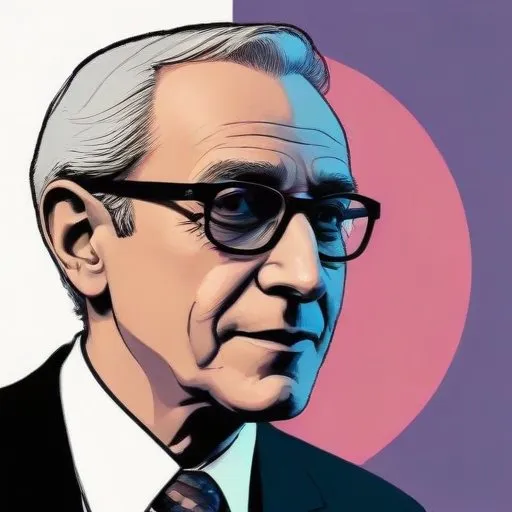
Paul Erdman

Paul Erdman

Paul Erdman was born on May 19th, 1932

Full Name: Paul Erdman
Birthplace: California, USA
Profession: Economist
Field of Study: International Economics
Notable Work: The Crash of 79
Known For: Economic Thrillers
Institution: Stanford University
Awards: New York Times Bestseller

An economist and author who wrote bestselling novels about international finance and economics, making complex financial concepts accessible to a broad audience.

Timeline
1932
Born in Ontario
Paul Erdman was born on May 19, 1932, in Ontario, Canada. He would go on to become an economist and author.
1954
Earns PhD
Erdman earned his PhD in economics from the University of California, Berkeley, in 1954, launching a successful academic career.
1965
Publishes The Silver Bears
Erdman published his bestselling novel The Silver Bears in 1965, which explored the world of international finance.
1974
Publishes The Crash of 79
Erdman published his book The Crash of 79 in 1974, which predicted a major stock market crash in the late 1970s.
2007
Passes Away
Paul Erdman passed away on April 23, 2007, at the age of 74, leaving behind a legacy in the fields of economics and finance.
Paul Erdman

Paul Erdman Quiz

What field did Paul Erdman primarily work in?

Score: 0/5
FAQ
What was Paul Erdmans early life and academic background like?
Paul Erdman was born on May 19, 1931, in Cleveland, Ohio. He received his Ph.D. in economics from the University of California, Berkeley in 1960.
What was Paul Erdmans area of economic specialization?
Paul Erdman was a leading expert on international finance and trade policy. He wrote extensively on topics such as exchange rates, trade policy, and global economic trends.
Did Paul Erdman have a notable teaching career?
Yes, Paul Erdman taught at several universities, including Stanford University and the University of California, Berkeley. He was known for his engaging and provocative teaching style.
What are some of Paul Erdmans most famous books?
Some of Paul Erdmans most famous books include The Silver Bears and The Crash of 97.
What is Paul Erdmans legacy in American economic thought?
Paul Erdman is remembered as a prominent economist and author who wrote insightfully about international finance and trade policy.

Related People:

Alan Greenspan

Born in 1926

Former Chairman of the Federal Reserve, guiding the US economy through periods of growth and crisis, and known for his influence on monetary policy.

Ben Bernanke

72 Years Old

The Chairman of the Federal Reserve during the 2008 financial crisis, credited with implementing unconventional monetary policies to stabilize the economy. Known for his calm and decisive leadership during tumultuous times.

Paul Volcker

99 Years Old

A renowned economist who served as Chairman of the Federal Reserve, implementing monetary policies to combat inflation and stabilize the US economy. He's credited with ending the 1970s stagflation crisis.

Lawrence Summers

71 Years Old

A renowned economist and academic who served as the Chief Economist of the World Bank and Secretary of the Treasury, known for his influential economic policies and theories.

Robert Rubin

88 Years Old

Served as Treasury Secretary under President Clinton, playing a key role in shaping the country's economic policies and overseeing the deregulation of the financial industry. Known for his influence on the Gramm-Leach-Bliley Act, which repealed parts of the Glass-Steagall Act.

Timothy Geithner

65 Years Old

The 75th United States Secretary of the Treasury, who played a crucial role in responding to the 2008 financial crisis and implementing policies to stabilize the economy. He's known for his leadership during a tumultuous period in American economic history.

Henry Paulson

80 Years Old

The 74th United States Secretary of the Treasury played a crucial role in shaping the country's economic policies, particularly during the 2008 financial crisis, and is known for his bold decisions to stabilize the economy. He's also a prominent banker and politician.

Milton Friedman

Born in 1912

A Nobel Prize-winning economist who championed free market capitalism and limited government intervention, known for his advocacy of laissez-faire economics and influential writings on monetary policy.