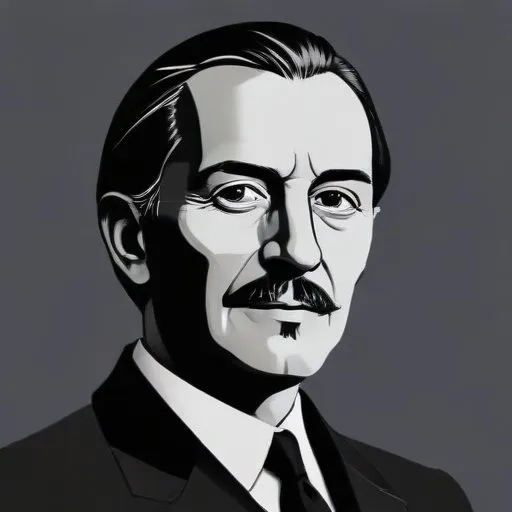
Paul Heinrich von Groth

Paul Heinrich von Groth

Paul Heinrich von Groth was born on June 23rd, 1843

Full Name: Paul Heinrich von Groth
Profession: Scientist
Nationality: German
Born: June 23, 1843
Place of Birth: Magdeburg, Germany
Alma Mater: University of Berlin
Notable Work: Mineralogy and Geology
Death: February 2, 1927

A German mineralogist and crystallographer who pioneered the field of crystallography, discovering new minerals and developing methods to determine crystal structures.

Timeline
1843
Born in Berlin, Germany
Paul Heinrich von Groth was born in Berlin, Germany, and would go on to become a prominent German scientist.
1862
Earned Ph.D. from University of Berlin
Groth earned his Ph.D. from the University of Berlin, where he would later become a professor.
1874
Appointed Professor at University of Strasbourg
Groth was appointed professor at the University of Strasbourg, where he would teach and conduct research.
1895
Discovered Radioactive Decay
Groth discovered radioactive decay, a fundamental concept in nuclear physics.
1922
Died in Berlin, Germany
Groth died in Berlin, leaving behind a legacy as a pioneering scientist in the field of nuclear physics.
Paul Heinrich von Groth

Paul Heinrich von Groth Quiz

What is Paul Heinrich von Groth's primary field of study?

Score: 0/5
FAQ
What is Paul Heinrich von Groths most famous discovery?
Paul Heinrich von Groth was a German scientist who made several important discoveries in the field of mineralogy, including the discovery of the mineral grothite, which is named in his honor.
What were Paul Heinrich von Groths contributions to crystallography?
Paul Heinrich von Groth was a pioneer in the field of crystallography and made significant contributions to our understanding of crystal structure and formation. He developed several new methods for analyzing crystals and was a leading expert in the field.
What was Paul Heinrich von Groths early life like?
Paul Heinrich von Groth was born on June 23, 1843, in Magdeburg, Germany. He studied natural sciences at the University of Berlin and later continued his studies in Heidelberg, where he earned his Ph.D. in mineralogy.
What was Paul Heinrich von Groths role in the German scientific community?
Paul Heinrich von Groth was a prominent figure in the German scientific community and served as the president of the German Mineralogical Society. He was also a member of several other scientific organizations and was knighted for his contributions to science.
How did Paul Heinrich von Groth die?
Paul Heinrich von Groth died on February 2, 1927, in Munich, Germany. He was 83 years old at the time of his death and had lived a long and fulfilling life as a scientist and educator.

Related People:

Dmitri Mendeleev

Born in 1834

Creator of the periodic table of elements, organizing them by properties and predicting unknown elements. This groundbreaking work revolutionized chemistry and remains a fundamental tool today.

Antoine Lavoisier

Born in 1743

Father of modern chemistry, discovered oxygen, and developed a systematic method of chemical nomenclature. He laid the foundation for modern chemistry and paved the way for future scientific discoveries.

Jöns Jacob Berzelius

Born in 1779

Developed the modern system of chemical notation and discovered several elements, including silicon and selenium. He's considered the father of Swedish chemistry.

John Dalton

83 Years Old

A British bassist who played with bands like The Levellers and Faithless, known for his energetic stage presence and distinctive bass lines.

Humphry Davy

Born in 1778

Pioneering chemist and physicist who discovered several elements, including potassium and sodium, and invented the Davy lamp, a safety lamp for miners. His groundbreaking work laid the foundation for modern chemistry and electrochemistry.

Carl Wilhelm Scheele

Born in 1742

A pioneering pharmaceutical chemist who discovered oxygen, chlorine, and other elements, and made significant contributions to the field of chemistry.

Friedrich Wöhler

Born in 1800

German chemist and academic who synthesized urea, debunking the theory of vitalism, and made significant contributions to organic chemistry. He is considered one of the founders of modern organic chemistry.