


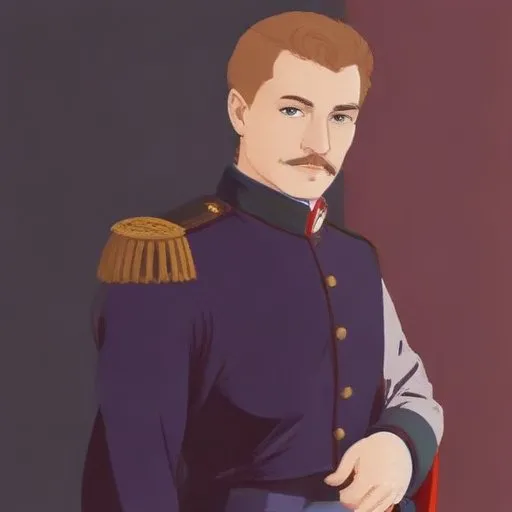
A Hungarian prince who served as a diplomat and military leader, known for his bravery and strategic thinking during the Napoleonic Wars. He played a key role in shaping European politics and alliances.
Paul I, Prince Esterhzy, was a renowned military leader, skilled diplomat, and passionate patron of the arts, who played a pivotal role in shaping the history of the Kingdom of Hungary and the Habsburg Empire. As the first Prince Esterhzy of Galantha, he established the wealth, power, and influence of his family, which would go on to become one of the most prominent noble houses in Europe.
Born on September 8, 1635, in Kismarton (now Eisenstadt, Austria), Paul was the third son of Nicholas, Count Esterhzy of Galantha, and his second wife, Baroness Krisztina Nyry of Bedegh. He was raised in a deeply religious atmosphere and received his education at Jesuit institutions in Graz and Nagyszombat (today Trnava, Slovakia).
Paul's military career began in 1663, when he opposed the Ottoman Turks in the Austro-Turkish War (1663-1664). He fought with distinction in several battles, including the siege of Novi Zrin in June 1664 and the Battle of Saint Gotthard on August 1, 1664, under the leadership of Raimondo Montecuccoli. His bravery and tactical prowess earned him the respect of his commanding officers and the admiration of his comrades.
In 1667, at the age of 30, Paul was appointed Field Marshal and Commander-in-Chief of the Military Frontier of southern Kingdom of Hungary. This marked the beginning of his rise to prominence, as he went on to play a key role in shaping the military strategy of the Habsburg Empire.
Paul was not only a skilled military leader but also a talented poet, harpsichordist, and composer. He actively promoted the arts and commissioned numerous works from prominent artists and composers of his time. His love for music and literature helped to establish the Esterhazy family as patrons of the arts, a legacy that would continue for generations to come.
Paul I, Prince Esterhzy, left an indelible mark on the history of the Kingdom of Hungary and the Habsburg Empire. He was a visionary leader who combined military prowess with a passion for the arts, establishing the Esterhazy family as a prominent force in European politics and culture. His legacy continues to inspire and influence generations to come.
Paul's deep commitment to his faith and his passion for the arts reflect a philosophical belief in the importance of balance and harmony in life. He saw the pursuit of military glory and the cultivation of artistic talent as complementary aspects of a well-rounded individual.
Paul's legacy continues to inspire and influence modern society, particularly in the fields of music, literature, and the arts. The Esterhazy family's patronage of the arts has led to the creation of numerous masterpieces, many of which continue to be celebrated and admired today.
Paul's military career was marked by numerous victories against the Ottoman Turks, and his patronage of the arts led to the creation of many notable works. Some of his most significant achievements include:
Born in 1678
A virtuosic violinist and prolific composer, he crafted over 400 concertos, including "The Four Seasons," which remains a beloved and iconic masterpiece of classical music.
Born in 1685
A master of Baroque music, he composed over 1,000 works, including orchestral suites, cantatas, and passions, that still inspire and influence musicians today. His innovative use of counterpoint and harmony raised the bar for classical music.
Born in 1685
A renowned Baroque composer and organist, famous for creating majestic orchestral suites, operas, and oratorios, including the iconic "Messiah" masterpiece.
Born in 1732
A renowned composer and pianist of the Classical period, known for his symphonies, operas, and chamber music that showcased his innovative and expressive style. He played a significant role in shaping the Classical music era.
Born in 1756
A child prodigy and master of classical music, he composed over 600 works, including symphonies, operas, and chamber music, that continue to inspire and influence musicians today.
Born in 1770
A musical genius who expanded the possibilities of classical music, creating iconic symphonies and piano sonatas that continue to inspire and influence generations of artists.
Born in 1811
A virtuosic pianist and composer who revolutionized classical music with his technically demanding and emotionally expressive works, blending Hungarian folk influences with Romantic-era drama.
Born in 1907
A renowned composer and conductor, he created iconic film scores for Hollywood classics like "Ben-Hur" and "El Cid", earning him multiple Academy Awards.
