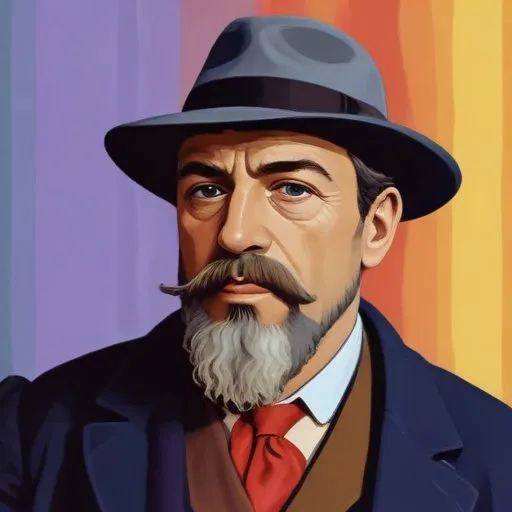
Paul Signac: The Visionary of Neo-Impressionism
The Pioneer of Pointillism
Paul Victor Jules Signac, a French Neo-Impressionist painter, is renowned for his pivotal role in developing the artistic technique of Pointillism, alongside
Georges Seurat. This innovative style, characterized by the use of small dots of pure color, revolutionized the art world in the late 19th century.
Early Life and Influences
Born on November 11, 1863, in Paris, France, Signac's fascination with art began at a young age. However, his parents, who envisioned a career in architecture for their son, discouraged his artistic inclinations. It wasn't until the 1880 exhibition of
Claude Monet's work that Signac's passion for art was reignited. This experience led him to abandon his architectural studies and focus on painting.
The Birth of Pointillism
In 1884, Signac met Claude Monet and Georges Seurat, an encounter that would change the course of his artistic career. Seurat's systematic working methods and color theory greatly influenced Signac, who became his faithful supporter, friend, and heir. Under Seurat's guidance, Signac experimented with Pointillism, a technique that involved juxtaposing small dots of pure color to create vibrant, shimmering effects.
The Mediterranean Coast: A Lifetime Inspiration
The Mediterranean coast, particularly the villages of Collioure and St. Tropez, held a special place in Signac's heart. He spent his summers there, drawing inspiration from the region's picturesque landscapes and warm, sunny climate. His paintings of the Mediterranean coast are a testament to his love for the area, which he envisioned as the perfect location for a future anarchist utopia.
The Socit des Artistes Indpendants
In 1884, Signac, along with Albert Dubois-Pillet,
Odilon Redon, and Seurat, founded the Socit des Artistes Indpendants, an association dedicated to promoting artistic freedom and innovation. The society's motto, "Sans jury ni rcompense" (Neither jury nor awards), reflected its commitment to allowing artists to showcase their work without the constraints of traditional juried exhibitions. For three decades, the society's annual exhibitions played a significant role in shaping the art world of the early 20th century.
Major Works and Legacy
Some of Signac's most notable works include "The Port of Marseille" (1884), "The Ladies of the Seine" (1888), and "The Dining Room" (1891). These paintings showcase his mastery of Pointillism, as well as his ability to capture the essence of everyday life.
As a leading figure in the development of Neo-Impressionism, Signac's influence on modern art is profound. His innovative techniques and unwavering commitment to artistic freedom paved the way for future generations of artists.
Personal Life and Philosophical Beliefs
Signac's philosophical beliefs were deeply rooted in anarchism, which he saw as a means to achieve social and artistic freedom. He believed that art should be accessible to all, not just the privileged few. This conviction was reflected in his involvement with the Socit des Artistes Indpendants, which aimed to provide a platform for artists to showcase their work without the constraints of traditional exhibitions.
Awards and Honors
Throughout his career, Signac received numerous awards and honors, including the Grand Prix at the 1932 Salon des Artistes Indpendants.
Legacy and Impact
Paul Signac's contributions to the world of art are immeasurable. As a pioneer of Pointillism and a champion of artistic freedom, he left an indelible mark on the development of modern art. His legacy continues to inspire artists, art historians, and enthusiasts alike, ensuring his place as one of the most important figures in the history of art.
FAQ
What style of art did Paul Signac develop?
Paul Signac developed a style of art known as Pointillism, which involved the use of small dots of color to create images.
What was Paul Signacs contribution to the development of modern art?
Paul Signac made significant contributions to the development of modern art, including the development of Pointillism and his role in the Neo-Impressionist movement.
What was Paul Signacs early life like?
Paul Signac was born on November 11, 1863, in Paris, France. He studied art at the École des Beaux-Arts and later became involved in the Impressionist movement.
How did Paul Signacs experiences influence his art?
Paul Signacs experiences, including his time on the Mediterranean coast, had a significant impact on his art. His paintings often featured bright, vibrant colors and a focus on light and water.
What is Paul Signacs legacy in modern art?
Paul Signac is widely regarded as one of the most important figures in modern art. His legacy has had a significant impact on the development of art movements, including Fauvism and Cubism. Sub-question: How has Paul Signacs legacy influenced contemporary art?