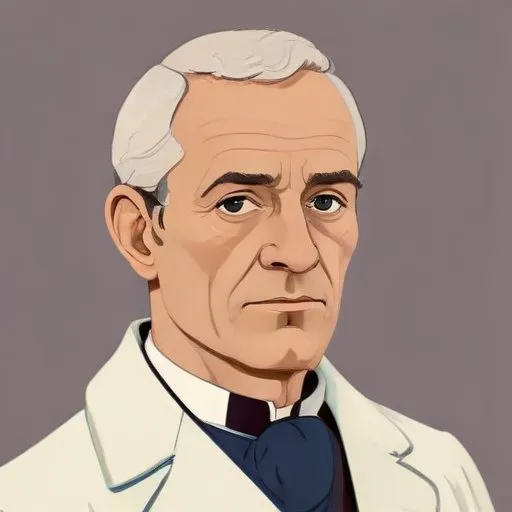
Paul Veyne

Paul Veyne

Paul Veyne was born on June 13th, 1930

Nationality: French
Profession: Archaeologist, Historian
Place of Birth: France
Field of Work: Ancient history
Notable Works: Did the Greeks Believe in Their Myths?
Awards: Prix Chateaubriand
Education: École Normale Supérieure
Career: Professor at Collège de France

A French archaeologist, historian, and academic who challenged traditional views of ancient history and culture through his provocative and insightful writings. He's known for his unconventional approach to understanding the past.

Timeline
1930
Birth of Paul Veyne
French archaeologist, historian, and academic Paul Veyne was born on June 13th in Aix-en-Provence, France.
1953
Membership in the École Française
Veyne became a member of the École Française, a prestigious French research institution.
1967
Professor at the Collège de France
Veyne was appointed as a professor at the Collège de France, where he taught archaeology and ancient history.
1976
Writer and Historian
Veyne published several influential books on ancient history and culture, solidifying his reputation as a leading historian.
2022
Death of Paul Veyne
Paul Veyne passed away on September 29th in Paris, France, at the age of 92.
Paul Veyne

Paul Veyne Quiz

What field of study did Paul Veyne primarily contribute to?

Score: 0/5
FAQ
What is Paul Veyne known for in the field of archaeology?
Paul Veyne is known for his groundbreaking work in the field of archaeology, particularly his research on the ancient Roman Empire and its social and economic structures.
What is the significance of Paul Veynes work on the Roman Empire?
Paul Veynes work on the Roman Empire is significant because it provides a nuanced understanding of the social, economic, and cultural dynamics of the ancient world.
How did Paul Veynes academic background influence his research?
Paul Veynes academic background in classical philology and history influenced his research, allowing him to approach archaeological questions from a multidisciplinary perspective.
What are some of Paul Veynes notable publications?
Paul Veyne has published numerous notable works, including Bread and Circuses and The Roman Empire, which are considered essential reading in the field of archaeology.
What awards has Paul Veyne won for his contributions to archaeology?
Paul Veyne has won several awards for his contributions to archaeology, including the Prix de lAcadémie française and the Prix du Rayonnement français.

Related People:

Michel Foucault

Born in 1926

A French historian and philosopher who critiqued power structures and social norms, arguing that knowledge and truth are shaped by those in power. He's known for his concepts of power, discipline, and surveillance.

Pierre Bourdieu

96 Years Old

A French sociologist, anthropologist, and philosopher who developed the concept of "cultural capital" and critiqued social inequality, highlighting how power and privilege are maintained through cultural and symbolic means.

Jean-Paul Sartre

Born in 1905

Existentialist philosopher and playwright who argued that humans have complete freedom to choose their actions and create their own meaning in life, influencing modern thought on morality and individual responsibility.

Simone de Beauvoir

Born in 1908

A pioneering feminist philosopher who wrote extensively on ethics, politics, and gender, famously arguing that "one is not born, but rather becomes, a woman."

Roland Barthes

Born in 1915

A French philosopher, theorist, and critic who challenged traditional notions of culture, literature, and identity through his influential writings on semiotics, mythology, and structuralism. He's most known for his critical theories on modern society and culture.

Georges Dumézil

Born in 1898

A French philologist and academic who pioneered the study of comparative mythology, uncovering parallels between ancient cultures and their mythological stories.

Jean-François Lyotard

Born in 1924

A French philosopher, sociologist, and literary theorist who challenged traditional notions of knowledge, truth, and power, and is famous for his concept of "postmodernism".

Jacques Derrida

96 Years Old

A pioneer of poststructuralism, deconstructing traditional notions of meaning and challenging Western philosophy's core assumptions. His work redefined the way we think about language, culture, and identity.