


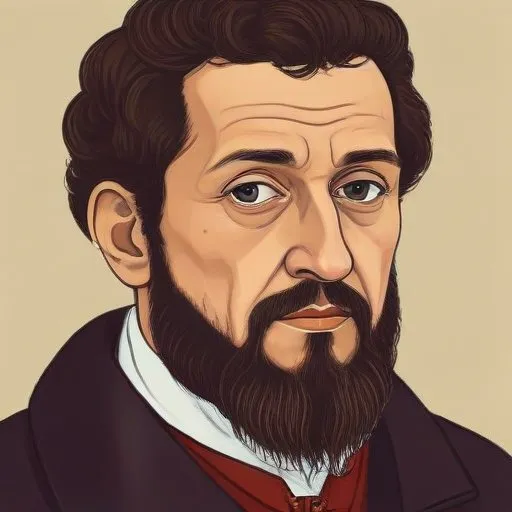
A Russian mathematician and theologian who made significant contributions to the development of set theory and was a prominent figure in the Russian Orthodox Church, exploring the intersection of faith and science.
Pavel Florensky, a Russian Orthodox theologian, priest, philosopher, mathematician, physicist, electrical engineer, and inventor, is renowned for his extraordinary contributions to various fields, earning him the title of a polymath. His intriguing blend of spiritual and scientific pursuits has left an indelible mark on modern thought, making him an fascinating figure to explore.
Born on January 21, 1882, in Yevlakh, Elisabethpol Governorate (present-day Azerbaijan), Florensky was the son of a railroad engineer and an Armenian noblewoman. His family's diverse background would later influence his eclectic interests. After completing his high school studies at the Tbilisi classical lyceum, Florensky underwent a religious crisis, which prompted him to explore the intersection of spirituality and science.
Florensky's quest for knowledge led him to study mathematics at the Imperial Moscow University, where he delved into philosophy, physics, and electrical engineering. His unique approach to reconciling spirituality and science resulted in pioneering works on the philosophy of mathematics, electrical engineering, and Orthodox theology. This fusion of disciplines enabled him to develop innovative theories and inventions, earning him recognition as a true polymath.
Florensky's extensive bibliography includes works on philosophy, mathematics, and theology. His magnum opus, "The Pillar and Ground of the Truth: An Essay in Orthodox Theodicy in Twelve Letters", is a seminal work on Orthodox theology. Other notable contributions include his research on electrical engineering and his invention of the "Florensky's Electrical Converter."
Florensky's philosophical ideas centered around the concept of "antinomies," which he believed were at the heart of human knowledge. He argued that antinomies, or contradictions, were essential to understanding the mysteries of existence. This concept is reflected in his philosophical and theological works, which often explored the tensions between faith and reason.
Florensky's interdisciplinary approach has inspired generations of scholars, thinkers, and innovators. His work has influenced fields beyond theology and philosophy, including physics, electrical engineering, and mathematics. Despite facing persecution during the Stalin era, Florensky's legacy continues to inspire, with many regarding him as a neomartyr and folk saint.
"The truth is not a theory, but a life."
"The pursuit of knowledge is not a destination, but a journey."
Florensky's life and work spanned a tumultuous period in Russian history, marked by revolution, war, and repression. Despite these challenges, his contributions have endured, earning him a place alongside other intellectual giants of the 20th century.
Florensky's legacy extends beyond his written works, inspiring a new generation of thinkers and innovators to pursue interdisciplinary knowledge and bridge the gap between spirituality and science.
Born in 1874
A Russian-French philosopher and theologian who explored the intersection of Christianity and existentialism, known for his critiques of communism and advocacy for human freedom and dignity.
Born in 1853
A Russian polymath who explored the intersection of philosophy, poetry, and criticism, shaping the country's intellectual landscape with his innovative ideas and lyrical writings.
Born in 1821
A Russian literary mastermind who penned psychologically complex novels that probed the human condition, exploring themes of morality, philosophy, and the darker aspects of human nature.
Born in 1828
A Russian literary giant who penned sweeping novels like "War and Peace" and "Anna Karenina", exploring the human condition with profound insight and masterful storytelling.
Born in 1860
A renowned Russian literary mastermind, celebrated for crafting poignant, psychologically nuanced tales that probe the human condition, and pioneering the modern short story genre.
Born in 1899
A Russian-born novelist and critic, renowned for crafting intricate, lyrical prose and exploring themes of identity, morality, and the human condition through works like "Lolita" and "Pale Fire".
Born in 1880
A Russian literary giant, known for pioneering the avant-garde movement in literature, blending poetry and prose to create innovative, symbolic works that explored the human experience.
