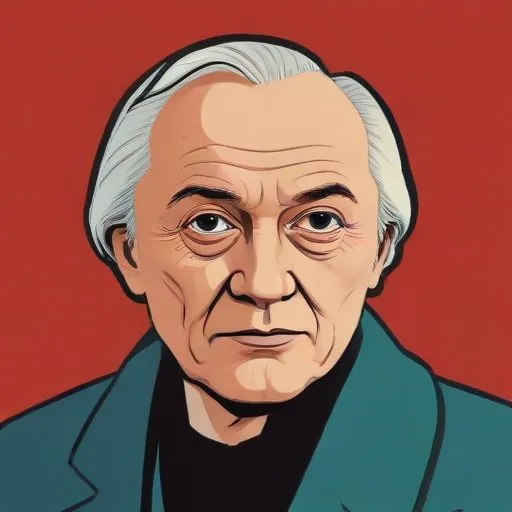
Vladimir Solovyov: The Russian Philosopher who Bridged East and West
A Life of Philosophical Contributions
Vladimir Solovyov was a Russian philosopher, theologian, poet, pamphleteer, and literary critic who played a significant role in the development of Russian philosophy and poetry at the end of the 19th century and in the spiritual renaissance of the early 20th century. He is known for his unique blend of Eastern Orthodox theology and Western philosophical ideas, which has had a lasting impact on Russian thought and culture.
Early Life and Education
Solovyov was born in Moscow on January 16, 1853, to a family of intellectuals. His father, Sergey Mikhaylovich Solovyov, was a historian, and his brother, Vsevolod, became a historical novelist. Solovyov's mother, Polyxena Vladimirovna, belonged to a family of Polish origin and was a descendant of the philosopher Gregory Skovoroda.
Philosophical Contributions
Solovyov's philosophical contributions can be seen in his critique of positivism and his development of a philosophical system that integrates Eastern Orthodox theology and Western philosophical ideas. In his 1874 work, "The Crisis of Western Philosophy Against the Positivists," Solovyov argued against the positivists' rejection of Aristotelian essentialism and instead posited a philosophy of intuitive noetic comprehension.
Intuitive Noetic Comprehension
Solovyov's concept of intuitive noetic comprehension emphasizes the role of intuition in understanding reality. He believed that human consciousness is integral and requires both phenomenon validated by dianoia (reason) and noumenon validated intuitively. This approach allows for a more holistic understanding of reality, one that integrates both rational and intuitive aspects of human experience.
Major Works
Some of Solovyov's most notable works include:
- "The Crisis of Western Philosophy Against the Positivists" (1874)
- "Lectures on Divine Humanity" (1877-1881)
- "The Meaning of Love" (1892-1894)
- "The Justification of the Good" (1897)
Influence on Modern Society
Solovyov's philosophical ideas have had a significant impact on modern society, influencing many prominent thinkers and writers, including:
Awards and Honors
Solovyov was awarded the Pushkin Prize in 1881 for his poetry.
Legacy
Solovyov's philosophical system has had a lasting impact on Russian thought and culture, influencing many areas of study, including philosophy, theology, literature, and art. His unique blend of Eastern Orthodox theology and Western philosophical ideas has made him a prominent figure in Russian intellectual history.
Personal Milestones
Solovyov died on July 31, 1900, at the age of 47. Despite his short life, he left a lasting legacy that continues to inspire and influence thinkers and writers to this day.
FAQ
What were Vladimir Solovyovs views on Russian Orthodox theology?
Vladimir Solovyov was a prominent Russian philosopher and theologian who developed a unique synthesis of Orthodox Christianity and mystical thought. He believed in the importance of ecumenism and saw Christianity as a universal force for good.
How did Vladimir Solovyovs poetry influence Russian literature?
Vladimir Solovyovs poetry had a profound influence on Russian literature, as it introduced new themes and styles that explored the relationship between philosophy and art.
What was Vladimir Solovyovs role in the Russian Symbolist movement?
Vladimir Solovyov was a key figure in the Russian Symbolist movement, which emphasized the importance of mystical and symbolic thought in literature and art.
How did Vladimir Solovyovs philosophy influence Russian politics?
Vladimir Solovyovs philosophy influenced Russian politics by promoting a more nuanced understanding of nationalism and imperialism. He believed that Russias role in the world was to promote spiritual values and universal harmony.
What was Vladimir Solovyovs critique of Tolstoys philosophy?
Vladimir Solovyov was critical of Leo Tolstoys philosophy, seeing it as overly simplistic and lacking in depth. He believed that Tolstoys rejection of Orthodox Christianity was misguided and that his philosophy was overly focused on individualism.