


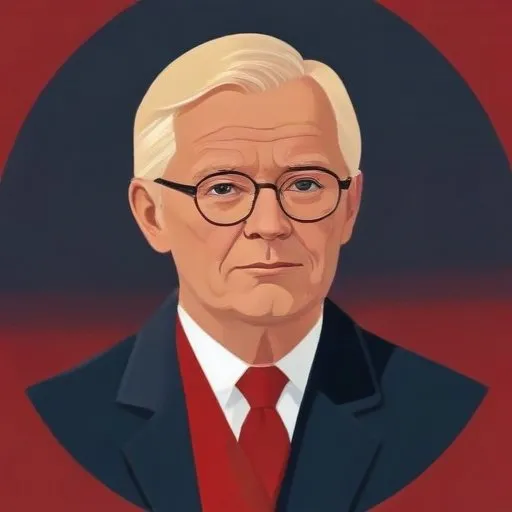
A Norwegian historian, academic, and politician who wrote extensively on Norwegian and European history, and served as a government minister and university rector.
Per Maurseth, a Norwegian historian and politician, is renowned for his groundbreaking contributions to the understanding of Norway's labor movement and socialist history. Through his extensive research and literary works, Maurseth shed light on the country's socio-political landscape, earning him a prominent place in the annals of Norwegian historiography.
Maurseth's academic journey began at the University of Oslo, where he taught as an associate professor from 1971. His scholarly pursuits led him to the University of Trondheim, where he served as a professor from 1982 until his retirement. During this period, he published several seminal works, including Fra Moskvateser til Kristianiaforslag (1972) and the third volume of the six-volume series, Arbeiderbevegelsens historie i Norge (1988).
Maurseth's Magnum Opus, Arbeiderbevegelsens historie i Norge, is a comprehensive exploration of Norway's labor movement from 1920 to 1935. This monumental work not only cemented his reputation as a leading historian but also provided a nuanced understanding of the country's socialist heritage. His editorial endeavors included a tenure as the editor of the esteemed academic journal, Tidsskrift for arbeiderbevegelsens historie, from 1976 to 1986.
In recognition of his outstanding contributions to the field of history, Maurseth was elected a fellow of the Norwegian Academy of Science and Letters. This esteemed honor is a testament to his dedication to advancing knowledge and his commitment to academic excellence.
Per Maurseth's political affiliations were rooted in his strong beliefs, which led him to become a member of the Socialist Left Party. Through his writing and teaching, he sought to inspire and educate, leaving an indelible mark on Norwegian society.
Maurseth's work continues to influence contemporary historiography, shaping the understanding of Norway's complex socio-political landscape. His legacy is a testament to the power of scholarship and the importance of preserving the past for future generations.
Per Maurseth's remarkable life and achievements serve as a testament to the transformative power of knowledge and the importance of preserving our collective heritage.
Born in 1843
A renowned pianist and composer, famous for his iconic and romanticized musical interpretations of Norwegian folk culture, particularly his famous piano concerto.
Born in 1828
A pioneer of realism in theater, known for plays that probed the human condition, challenging social norms and morals through complex characters and situations.
Born in 1832
A Norwegian-French author and playwright who wrote influential works that explored themes of social justice, morality, and national identity, earning him the Nobel Prize in Literature in 1903.
Born in 1849
A prominent figure in Norwegian literature, known for his realistic and socially conscious plays and novels that critiqued the social conventions of his time.
Born in 1859
A Norwegian literary giant, celebrated for his pioneering works that explored the human condition, nature, and the search for meaning. His writing style, a blend of realism and lyricism, influenced generations of writers.
Born in 1882
A Danish-Norwegian writer who penned epic historical novels, including the Kristin Lavransdatter trilogy, which explores themes of love, faith, and identity in medieval Norway. Her works are celebrated for their rich detail and strong female characters.
Born in 1897
A renowned Norwegian literary figure, celebrated for his poignant and evocative writings that explore the human condition, often delving into themes of love, nature, and the complexities of rural life.
85 Years Old
A prominent Norwegian literary figure, celebrated for his thought-provoking novels and plays that often explore themes of identity, morality, and social critique. His works are known for their nuanced character portrayals and witty dialogue.
