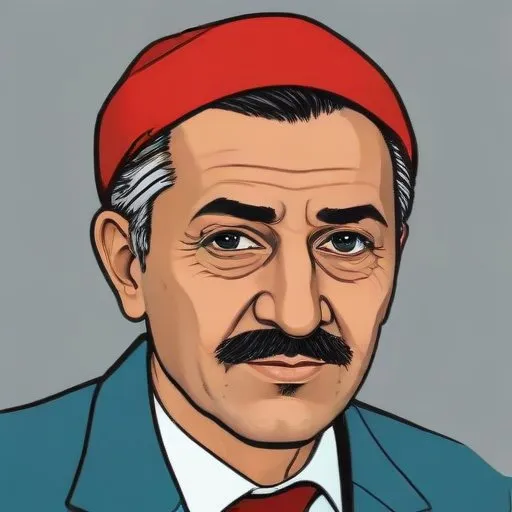
Pertev Naili Boratav: The Father of Turkish Folkloristics
Pertev Naili Boratav, a Turkish folklorist and researcher, is renowned for being the founding father of Turkish folkloristics during the Republic era. He dedicated his life to the study and preservation of Turkish folk literature, leaving an indelible mark on the field.
Early Life and Education
Born Mustafa Pertev on September 2, 1907, in Dardere (now Zlatograd, Bulgaria), Boratav was educated at Istanbul High School before entering Istanbul University in 1927. He graduated from the Turkish Language and Literature Department in 1930.
Career Highlights
- In 1931-1932, he worked as an assistant to the historian Mehmet Fuat Koprulu.
- In 1941-1944, he was among the directors of a monthly sociology journal entitled Yurt ve Dünya, based in Ankara. Although the journal was banned in 1944 due to its communist leaning, Boratav's contributions to the field were significant.
- In 1946, he established Turkey's first Department of Folk Literature.
- With Wolfram Eberhard, he published Halk Hikyeleri ve Halk Hikyeciliği (Folk Narratives and Folk Narration) in 1946, a pioneering work that modified the comparative approach of Antti Aarne.
Philosophical Contributions and Beliefs
Boratav was influenced by the writings of Arnold Van Gennep and was pioneering in giving attention to the performative aspects of folklore. He believed that a detailed classification of folktales of a particular culture needed to precede attempts at cross-cultural research.
Personal Milestones and Key Life Events
- In 1947, he was accused of promoting socialism and undermining nationalism, along with two other professors, but was eventually acquitted in his 1948 trial.
- After his department was closed, he was forced to move to Paris in 1952, where he spent the rest of his life.
- He died on March 16, 1998, leaving behind a legacy in the field of Turkish folkloristics.
Influence on Modern Society
Boratav's work has had a profound impact on the study and preservation of Turkish folk literature, paving the way for future generations of folklorists. His contributions continue to inspire and inform research in the field.
Notable Works
- Krolu Destanı (The Krolu Epic), 1931
- Halk Hikyeleri ve Halk Hikyeciliği (Folk Narratives and Folk Narration), 1946 (with Wolfram Eberhard)
Pertev Naili Boratav's remarkable life and work serve as a testament to his dedication to the field of Turkish folkloristics. His contributions continue to inspire and inform research, solidifying his place as the father of Turkish folkloristics during the Republic era.
FAQ
What was Pertev Naili Boratavs contribution to Turkish literature?
Pertev Naili Boratav was a Turkish author and educator who made significant contributions to Turkish literature, particularly in the field of folklore and folk literature. He was one of the first Turkish scholars to study and document Turkish folk culture.
What was Pertev Naili Boratavs role in Turkish education?
Pertev Naili Boratav was a pioneer in Turkish education, known for his efforts to promote Turkish language and literature in schools. He served as a teacher, professor, and education administrator, and was instrumental in developing Turkeys education system.
What were Pertev Naili Boratavs most famous works?
Pertev Naili Boratavs most famous works include Türk Halk Bilgisi and Türk Folkloru, which are considered seminal texts in the field of Turkish folklore and folk literature. His writing often explored themes of Turkish identity, culture, and history.
How did Pertev Naili Boratav impact Turkish cultural heritage?
Pertev Naili Boratavs work had a profound impact on Turkish cultural heritage, helping to preserve and promote Turkish folk culture and traditions. He is remembered as a champion of Turkish cultural identity and a pioneer in the field of folklore and folk literature.
What legacy did Pertev Naili Boratav leave behind?
Pertev Naili Boratavs legacy is one of cultural preservation and education. He is remembered as a devoted educator, scholar, and advocate for Turkish culture, and his work continues to inspire generations of Turkish scholars and educators.