


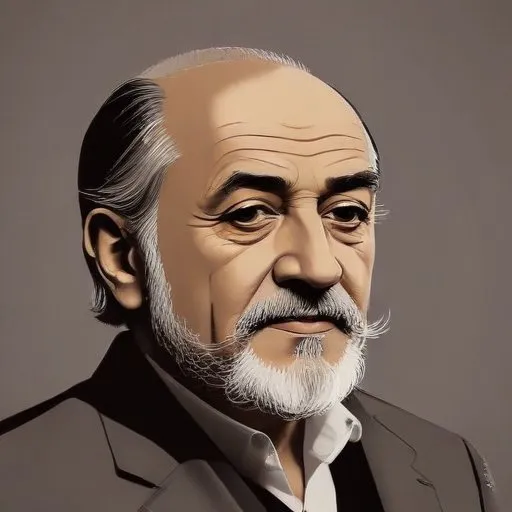
A prominent Turkish writer and poet, known for his patriotic and nationalist works that played a significant role in shaping Turkish literature and identity.
Mehmet Emin Yurdakul was a renowned Turkish nationalist writer, poet, and politician who had a profound impact on defining the term "vatan" (Fatherland) through his writings and poems. He was an ideologue of Pan-Turkism, a movement that sought to unite Turkic peoples from diverse linguistic and cultural backgrounds.
Yurdakul was born on May 13, 1869, in Constantinople, Ottoman Empire, during the late Tanzimat period. His father, Salih Reis, was a fisherman, and his mother, Emine Hatun, was a homemaker. Despite facing financial difficulties, Yurdakul received his early education in Istanbul, although he didn't formally graduate due to his family's dire financial situation.
In 1891, Yurdakul published his first book, "Fazilet ve Asalet," which caught the attention of the prime minister, who appointed him as the director of documentation in his office. His early literary work was heavily influenced by Jaml al-Dn al-Afghn, a political activist and Islamic ideologist, whom he met in Constantinople in 1892. After al-Afghn's death in 1897, Yurdakul published a compilation of his poetry, "Trke iirler," accompanied by paintings from Fausto Zonaro.
In 1907, Yurdakul joined the Committee of Union and Progress, which instigated a coup against Sultan Abdul Hamid II in 1908. He was subsequently employed in the Ottoman administration and sent to Trabzon. From 1909 onwards, he was appointed Governor of several provinces of the Ottoman Empire. Yurdakul's involvement in Pan-Turkist associations, such as the Association of Turks (Trk Dernei) and the Turkish Hearths, began in 1911.
During World War I, Yurdakul's nationalist views resonated with the adherents of the Committee of Union and Progress, as his writings did not exclude religion. In 1913, he became a member of the Ottoman Parliament, representing Mosul. After the foundation of Turkey in 1923, Yurdakul supported the adoption of the Turkish alphabet as a member of the Grand National Assembly.
Mehmet Emin Yurdakul passed away on January 14, 1944, and was buried at the Zincirlikuyu Cemetery in Istanbul, Turkey. His contributions to Turkish literature and politics have left an indelible mark on the country's history, cementing his place as one of the most influential figures of the early 20th century.
Yurdakul's words continue to inspire generations of Turks, including his famous phrase, "Vatan Şahane, Vatan Sultandır" ("The Fatherland is Sacred, the Fatherland is Sovereign").
Yurdakul's pan-Turkist ideology has had a lasting impact on modern Turkish politics and society, shaping the country's national identity and informing its foreign policy decisions. His literary works continue to be studied and celebrated in Turkey, serving as a testament to his enduring legacy.
Born in 1840
A Turkish journalist, playwright, and activist who championed liberal reforms and Turkish nationalism through his writings, inspiring a generation of Ottoman intellectuals.
Born in 1889
A Turkish literary icon, celebrated for crafting poignant novels and plays that probed the human condition, often focusing on the struggles of women in a rapidly modernizing society.
Born in 1873
A Turkish poet, academic, and politician who played a significant role in shaping the country's literary and political landscape, best known for writing the Turkish national anthem.
