


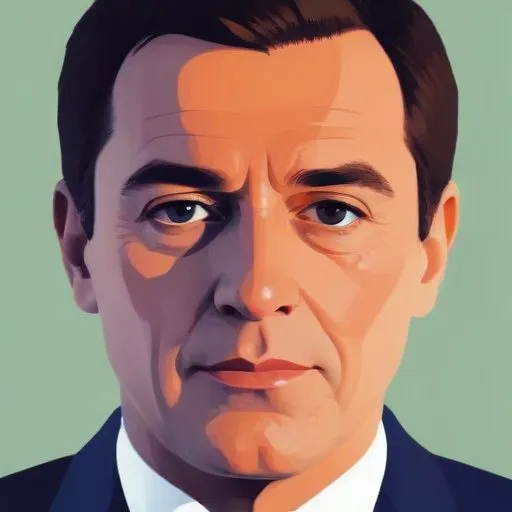
A British politician who served as Secretary of State for Northern Ireland during a tumultuous period in the region's history, known for his efforts to broker peace and stability. He played a key role in shaping the country's policy towards Northern Ireland during the 1990s.
Peter Brooke, Baron Brooke of Sutton Mandeville, was a British politician renowned for his unwavering dedication to the Conservative Party and his pivotal role in the Northern Ireland peace process. As a member of Parliament (MP) for the Cities of London and Westminster from 1977 to 2001, Brooke played a crucial role in shaping the country's political landscape, earning him a place in the annals of British history.
Born on March 3, 1934, in London, England, Peter Brooke was the son of Henry Brooke, a former Home Secretary, and Barbara Brooke, a noblewoman in her own right. His younger brother, Sir Henry Brooke, would later become a judge. Brooke's early education took place at Marlborough College, followed by Balliol College, Oxford, where he served as President of the Oxford Union. He further honed his skills at the Harvard Business School in the United States.
After an unsuccessful bid to unseat Neil Kinnock in the Labour stronghold of Bedwellty in 1974, Brooke was elected as MP for the Cities of London and Westminster in a byelection three years later. He was sworn into the Privy Council in 1988 and went on to hold several key positions, including Chairman of the Conservative Party (1987) and Secretary of State for Northern Ireland (1989).
In November 1990, Brooke delivered a landmark speech in London, which is widely credited with bringing Sinn Féin to the negotiating table. In his address, Brooke declared that Britain had no selfish strategic or economic interest in Northern Ireland and would accept unification if the people wished it. This brave and forward-thinking stance paved the way for future peace talks and earned Brooke a place in the annals of Northern Irish history.
In January 1992, Brooke appeared on the popular Irish chat show, The Late Late Show. During the program, host Gay Byrne persuaded Brooke to sing "Oh My Darling, Clementine," a lighthearted moment that was criticized by many unionists, who felt it was insensitive given the recent killing of seven Protestant construction workers by an IRA bomb. The incident sparked outrage and calls for Brooke's resignation.
Throughout his illustrious career, Peter Brooke demonstrated an unwavering commitment to his country and his party. His unwavering support for the Northern Ireland peace process and his role in bringing Sinn Féin to the negotiating table have left an indelible mark on British and Irish history. As a testament to his dedication, Brooke was awarded a life peerage in 2001, becoming Baron Brooke of Sutton Mandeville.
Peter Brooke's storied career serves as a testament to his unwavering dedication to the Conservative Party and his role in shaping the course of British and Irish history. His bravery in delivering a pivotal speech in 1990 and his commitment to the Northern Ireland peace process have left a lasting impact on the region and beyond.
Became a life peer in 2001, taking the title Baron Brooke of Sutton Mandeville
As a politician, Brooke played a significant role in shaping the country's educational landscape, working to improve access to quality education for all.
83 Years Old
A former Prime Minister of the United Kingdom, he led the country from 1990 to 1997, playing a key role in shaping the nation's economy and foreign policy during a tumultuous period.
Born in 1925
The first female Prime Minister of the United Kingdom, serving from 1979 to 1990, known for her conservative policies and leadership during the Falklands War.
73 Years Old
The former Prime Minister of the United Kingdom who led the country through a transformative period, including the Iraq War, and is known for his charismatic leadership and controversial decisions.
75 Years Old
The Prime Minister of the United Kingdom from 2007 to 2010, known for his key role in shaping the country's economy and response to the 2008 global financial crisis.
60 Years Old
The former Prime Minister of the United Kingdom who led the country from 2010 to 2016, known for his role in the Brexit referendum and austerity measures.
70 Years Old
The second female Prime Minister of the United Kingdom, leading the country through Brexit negotiations and implementing policies on national security and education. Known for her strong stance on immigration and law and order.
62 Years Old
Former Prime Minister of the United Kingdom and former Mayor of London, known for his charismatic leadership and Brexit advocacy. He led the UK's withdrawal from the European Union.
Born in 1926
A firebrand Protestant leader who played a key role in Northern Ireland's turbulent politics, known for his strong anti-Catholic stance and later, his surprising shift towards power-sharing.
