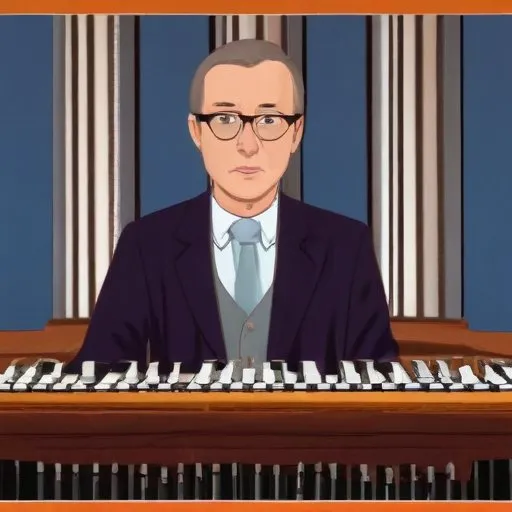
Peter Pelham: The Pioneering Organist and Composer of Colonial America
A Musical Legacy in the New World
Peter Pelham, a talented English-born American organist, harpsichordist, teacher, and composer, left an indelible mark on the musical landscape of colonial America. As one of the earliest and most influential musicians in the New World, Pelham's contributions to music education, composition, and performance paved the way for future generations of American musicians.
Early Life and Training
Born on December 9, 1721, in London, England, Pelham was the son of Peter Pelham, an engraver and artist. Around 1730, the Pelham family immigrated to Boston, Massachusetts, where the young Peter was apprenticed to
Charles Theodore Pachelbel, a renowned German composer and organist. This apprenticeship laid the foundation for Pelham's musical career, which would span over five decades.
The Charleston Years
In 1736, Pelham followed Pachelbel to Charleston, South Carolina, where he continued his studies and eventually became a harpsichord teacher in his own right. During this period, Pelham honed his skills as a musician and developed a deep appreciation for the music of European masters.
A Life of Music and Public Service
In 1744, Pelham returned to Boston to become the first organist of Trinity Church, a position he held for several years. Around 1750, he moved to Williamsburg, Virginia, where he became the organist of Bruton Parish Church, a position he would hold for nearly 50 years. In addition to his musical pursuits, Pelham actively participated in the civic life of Williamsburg, serving as supervisor for the printing of currency from 1758 to 1775 and superintending the Public Gaol from 1770 to 1780.
Musical Contributions and Legacy
Although Pelham's own music has largely been lost to time, with the exception of a short harpsichord minuet, his legacy as a teacher, composer, and performer endures. He compiled several collections of music by other composers, which remain extant today. Moreover, Pelham's influence as a musician and educator helped shape the musical landscape of colonial America, inspiring future generations of American musicians.
- Became blind in 1802
- Daughter Elizabeth succeeded him as organist of Bruton Parish Church for a brief period
- Died in Richmond, Virginia, on April 28, 1805
Influence on Modern Society
Pelham's contributions to music education and performance helped lay the groundwork for the development of American music in the centuries that followed. His legacy continues to inspire musicians and music scholars today, offering a window into the musical culture of colonial America.
Historical Context and Legacy
Pelham's life and career reflect the complex cultural and social dynamics of colonial America. As a European-born musician who made his home in the New World, Pelham's experiences and achievements offer a unique perspective on the intersection of music, culture, and society in early America.
FAQ
What was Peter Pelhams occupation?
Peter Pelham was an English-American organist and composer who settled in Boston, Massachusetts.
What was Peter Pelhams most famous work?
Peter Pelhams most famous work is his A Pedal Tune in F Major, which is still performed by organists today.
What was Peter Pelhams role in American music?
Peter Pelham was one of the first professional musicians to settle in the American colonies, and he played an important role in establishing music as a part of American cultural life.
What is known about Peter Pelhams personal life?
Little is known about Peter Pelhams personal life beyond his professional career as an organist and composer.
What is Peter Pelhams significance in American musical history?
Peter Pelham is an important figure in American musical history, representing the earliest days of professional music-making in the American colonies.