


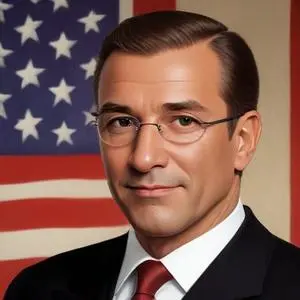
A prominent figure in American politics, serving as Chairman of the House Judiciary Committee during the Watergate scandal, leading the impeachment inquiry of President Nixon. Known for his instrumental role in shaping the country's political landscape.
Peter W. Rodino, a stalwart liberal Democrat, cemented his place in American history as the chairman of the House Judiciary Committee, overseeing the 1974 impeachment hearings against President Richard Nixon. His courageous leadership ultimately led to Nixon's resignation, leaving an indelible mark on the nation's political landscape.
Peter Wallace Rodino Jr. was born on June 7, 1909, in the North Ward of Newark, New Jersey, to Pelligrino Rodino and Giuseppina Margaret Girard. His father, an Italian immigrant, worked tirelessly as a machinist, cabinet maker, and carpenter, instilling in young Peter the value of hard work and determination.
Tragedy struck when Rodino was just four years old, as his mother succumbed to tuberculosis. Despite this early setback, he persevered, motivated by his father's unwavering support. A bout of diphtheria left Rodino with a speech impediment, but he refused to let it define him. Through sheer willpower, he conducted his own speech therapy, reciting Shakespearean sonnets with marbles in his mouth.
After attending McKinley Grammar School and Barringer High School, Rodino enrolled in the University of Newark (now part of Rutgers University), where he earned a law degree. His years of menial jobs and night studies paid off, as he was admitted to the New Jersey Bar in 1937.
Rodino's political journey began in 1949, when he was elected to the U.S. House of Representatives, representing parts of Newark, Essex, and Hudson counties. Over the next four decades, he became a champion for liberal causes, fighting tirelessly for civil rights, labor unions, and social justice.
As chairman of the House Judiciary Committee, Rodino played a pivotal role in the 1974 impeachment hearings against President Nixon. With unwavering dedication, he guided the committee through the complex process, ultimately leading to Nixon's resignation on August 9, 1974.
Rodino's leadership during the impeachment hearings earned him widespread respect and admiration. His commitment to upholding the Constitution and ensuring accountability at the highest levels of government left a lasting impact on American politics.
Throughout his illustrious career, Rodino received numerous accolades, including the Presidential Medal of Freedom in 1995. He passed away on May 7, 2005, leaving behind a legacy of courage, perseverance, and devotion to public service.
Peter W. Rodino's unwavering commitment to justice and accountability has inspired generations of politicians, lawmakers, and citizens alike. His courage in the face of adversity serves as a beacon of hope, reminding us that even in the darkest of times, the power of the Constitution and the will of the people can prevail.
Born in 1917
The 35th President of the United States was a charismatic leader who navigated the country through the Cuban Missile Crisis and advocated for civil rights, leaving a lasting legacy in American politics.
Born in 1925
A Navy officer, lawyer, and politician who served as US Attorney General, playing a key role in the Civil Rights Movement and advocating for social justice. He was a prominent figure in American politics during the 1960s.
Born in 1908
The 36th President of the United States, a skilled politician and leader, played a crucial role in passing landmark civil rights legislation, including the Civil Rights Act and Voting Rights Act.
Born in 1911
The 38th Vice President of the United States was a prominent liberal politician and journalist who played a key role in shaping the country's civil rights policies. He's most known for his strong support of the Civil Rights Act of 1964.
Born in 1896
A decorated war hero who later chaired the Senate Watergate Committee, exposing government corruption and ensuring accountability.
94 Years Old
A prominent figure in American politics, serving nearly 47 years in the Senate, championing liberal causes, and playing a significant role in shaping the country's healthcare and civil rights policies.
Born in 1924
A Medal of Honor recipient and long-serving US Senator, known for his heroic actions in World War II and dedication to public service.
Born in 1913
Leader of the International Brotherhood of Teamsters labor union, notorious for his mysterious disappearance and alleged ties to organized crime.
