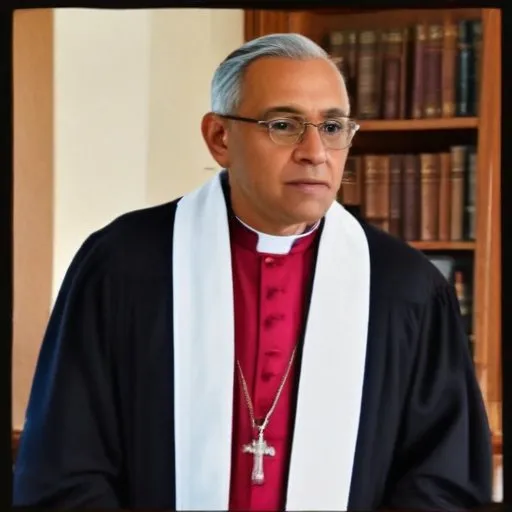
Philander Chase: A Pioneer of the American Frontier and Episcopalian Bishop
A Life of Service and Education
Philander Chase is renowned for his tireless efforts in pioneering the American western frontier, particularly in Ohio and Illinois. As an Episcopal Church bishop, educator, and frontier settler, Chase dedicated his life to spreading education, faith, and community development in the untamed American West.
Early Life and Education
Born on December 14, 1775, in Cornish, New Hampshire, Philander Chase was the youngest of fourteen children to Dudley Chase and Allace Corbett. His family's Puritan roots ran deep, with ancestors who had fled to New England seeking religious freedom. Chase's father, a deacon at their local Congregational church, encouraged his sons to enter the ministry. After graduating from Dartmouth College in 1795, Chase became acquainted with the Book of Common Prayer and began his journey as a lay reader in the Episcopal Church.
Rise to Prominence
Chase's dedication to his faith and education led him to establish Trinity Church in his hometown, where he served as a lay reader. He continued his studies with Rev. Thomas Ellison in Albany, New York, while teaching at the city school. In 1797, Chase married Mary Fay, with whom he had three sons before her passing in 1818. The following summer, he married Sophia May Ingraham, with whom he had three more children.
Pioneering the American West
As the Episcopal Church expanded its reach, Chase was appointed bishop of Ohio in 1818. He played a crucial role in establishing the state's first Episcopal seminary, Kenyon College, in 1824. Chase's vision for education and faith-driven communities led him to found Jubilee College in Illinois in 1840. His efforts helped shape the spiritual and educational landscape of the American frontier.
Influence and Legacy
Philander Chase's contributions to education, faith, and community development have left an indelible mark on American history. His nephew,
Salmon P. Chase, who became his ward after his father's death, went on to become a prominent statesman and jurist, including Chief Justice of the United States. Chase's legacy extends beyond his family, as his tireless efforts helped establish institutions that continue to thrive today.
Quotes and Memorable Sayings
- "Education is the key to unlocking the potential of the human mind, and faith is the guiding light that illuminates the path to wisdom."
- "The wilderness of the American frontier may be vast, but with faith, education, and determination, we can build communities that thrive and flourish."
Personal Milestones and Key Life Events
- Graduated from Dartmouth College (1795)
- Ordained as an Episcopal priest (1801)
- Appointed bishop of Ohio (1818)
- Founded Kenyon College (1824)
- Founded Jubilee College (1840)
Career Highlights and Major Works
- Bishop of Ohio (1818–1831)
- Founder and president of Kenyon College (1824–1831)
- Founder of Jubilee College (1840)
- Prominent figure in the Episcopal Church, shaping its development in the American West
FAQ
What was Philander Chases role in the founding of Kenyon College?
Philander Chase was the founder of Kenyon College, one of the oldest and most prestigious liberal arts colleges in the United States. He was a visionary educator who believed in the importance of providing young men with a rigorous education in the liberal arts. Chases legacy continues to shape the values and mission of Kenyon College.
What were Philander Chases views on education and its importance in American society?
Philander Chase believed that education was essential to the development of American society. He argued that education should be available to all, regardless of social class or background. Chases views on education continue to influence American educational policy today.
How did Philander Chases experiences as a bishop shape his views on education?
Philander Chases experiences as a bishop in the Episcopal Church deeply influenced his views on education. He believed that education should be guided by Christian principles and that it should prepare young men for lives of service and leadership. Chases experiences as a bishop helped to shape the values and mission of Kenyon College.
What was Philander Chases relationship with other prominent American educators of his time?
Philander Chase had a close relationship with other prominent American educators of his time, including Henry Dunster and Samuel Finley. He was part of a network of educators who sought to promote education and intellectual development in the young United States.
How did Philander Chases legacy influence later generations of American educators?
Philander Chases legacy had a lasting impact on later generations of American educators. His emphasis on the importance of liberal arts education and his commitment to providing education to all helped to shape the course of American educational development. Many prominent American educators, including John Dewey, were influenced by Chases ideas and values.