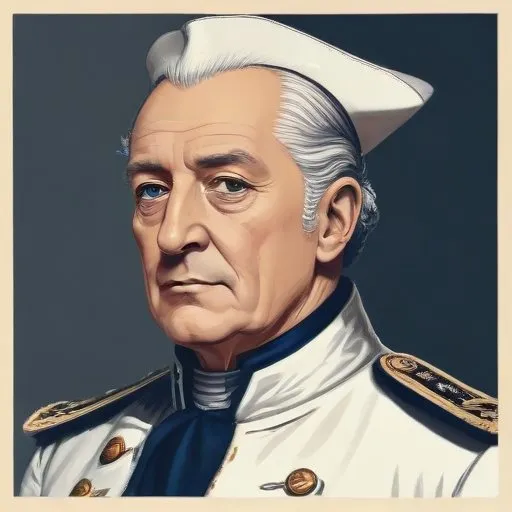
Philip Carteret: The Daring Naval Officer and Explorer
A Trailblazer of the High Seas
Philip Carteret, a British naval officer, and explorer, is renowned for his remarkable contributions to the Royal Navy's circumnavigation expeditions in the 18th century. Between 1764 and 1766, and again from 1766 to 1769, he bravely ventured into the unknown, charting new territories and expanding the British Empire's reach.
Early Life and Naval Career
Born on January 22, 1733, at Trinity Manor, Jersey, Carteret was the son of Charles de Carteret, Seigneur of Trinity, and his wife Frances-Mary S. Paul. He joined the navy in 1747, serving aboard the Salisbury, and later under Captain
John Byron from 1751 to 1755. His experience and skills earned him a promotion to lieutenant in the Dolphin, accompanying Byron during his voyage of circumnavigation.
The Fateful Voyage of the Swallow
In 1766, Carteret was made a commander and given the command of HMS Swallow, tasked with circumnavigating the world as consort to the Dolphin under the command of Samuel Wallis. The two ships sailed through the Strait of Magellan, but shortly after, they were parted, and Carteret took the Swallow on a journey of discovery. He discovered Pitcairn Island, the Carteret Islands, and the Duke of York Islands, as well as rediscovered the Solomon Islands and the Juan Fernández Islands.
Personal Milestones and Key Life Events
Weakened by severe illness, Carteret arrived back in England in 1769. He returned to Jersey as seigneur of Trinity and took part in local politics. In 1771, he was promoted to post-captain, and on May 5, 1772, he married Mary Rachel Silvester, a doctor's daughter. The couple had five children, with four surviving to adulthood, including their second son, Philip Carteret Silvester, born in 1777.
Career Highlights and Major Works
Carteret's expeditions and discoveries had a profound impact on the British Empire's understanding of the world. His voyage on the Swallow contributed significantly to the mapping of the Pacific Ocean and the discovery of new territories.
- Discovery of Pitcairn Island and the Carteret Islands
- Discovery of the Duke of York Islands, Papua New Guinea
- Rediscovery of the Solomon Islands and the Juan Fernández Islands
- Charting of the Pacific Ocean and expansion of the British Empire's reach
Legacy and Impact on Modern Society
Philip Carteret's remarkable career and discoveries have left an indelible mark on history. His bravery, skill, and perseverance paved the way for future explorers and navigators, shaping the course of global politics and international relations.
Today, Carteret's legacy is remembered and celebrated, serving as an inspiration to those who dare to venture into the unknown.
FAQ
What were the major expeditions undertaken by Philip Carteret during his naval career?
Philip Carteret participated in several significant naval expeditions, including the voyage of the HMS Swallow around the world with John Byron in 1764-1766. He later commanded the HMS Dolphin on a circumnavigation of the globe from 1766 to 1769, during which he discovered several islands in the Pacific.
What was Carterets role in the exploration of the Pacific Ocean?
Carteret played a crucial role in the exploration of the Pacific Ocean, charting new territories and expanding British knowledge of the region. His voyages helped to identify new trade routes and facilitated the colonization of Pacific islands.
How did Carterets discoveries impact British maritime trade?
Carterets discoveries significantly expanded British maritime trade, opening up new opportunities for commerce and colonization. His charts and navigational data enabled British ships to navigate the Pacific more safely and efficiently, facilitating the growth of British influence in the region.
What was Carterets relationship with other explorers of his time?
Carteret interacted with other prominent explorers, including James Cook, with whom he shared information and navigational data. His connections with other sailors and explorers helped to advance British knowledge of the Pacific and facilitated future expeditions.
What is Carterets legacy in the history of naval exploration?
Philip Carterets legacy lies in his contributions to the expansion of British naval exploration and trade in the Pacific. He played a significant role in mapping the region, establishing new trade routes, and paving the way for subsequent explorers and colonizers.