


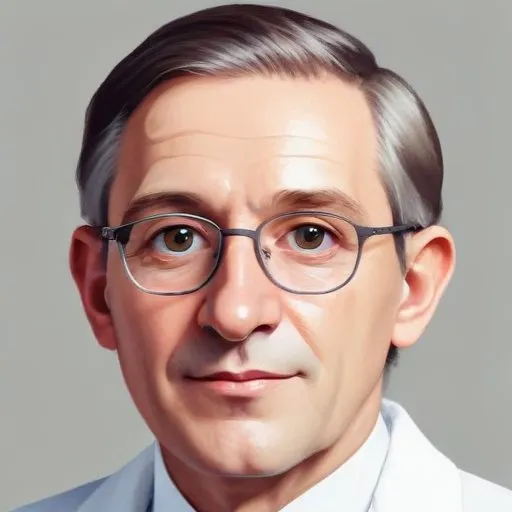
A renowned expert in protein phosphorylation, he made groundbreaking discoveries on the role of protein kinases in cellular regulation, earning him numerous prestigious awards.
Sir Philip Cohen is a distinguished British biochemist renowned for his groundbreaking contributions to the understanding of reversible protein phosphorylation in cell regulation. Through his tireless research, Cohen has shed light on the intricate mechanisms that govern cellular processes, earning him a revered position in the scientific community.
Born on July 22, 1945, Cohen's academic journey began at Hendon County Grammar School in North London, where he laid the foundations for his future success. He subsequently pursued a B.Sc. in Biochemistry at University College London, graduating with 1st Class Honours in 1966.
Under the guidance of Dr. Michael A. Rosemeyer, Cohen completed his PhD in Biochemistry at University College London in 1969. His thesis, titled "The Subunits of Glucose-6-Phosphate Dehydrogenase," marked the beginning of his illustrious research career.
Cohen's early postdoctoral work, supported by an SRC-NATO Postdoctoral Fellowship, allowed him to collaborate with Professor Edmond H. Fischer at the University of Washington in Seattle. This period laid the groundwork for his pioneering research on reversible protein phosphorylation, a process critical to cell regulation.
His subsequent research at the University of Dundee, where he held various positions from Lecturer to Professor of Enzymology, further solidified his reputation as a leading authority in the field. Cohen's work has profoundly impacted our understanding of cellular signaling pathways, earning him numerous accolades and recognition from the scientific community.
Cohen's leadership roles have been instrumental in shaping the scientific landscape. He directed the Medical Research Council Protein Phosphorylation Group (1983-1989) and the Scottish Institute for Cell Signaling (2008-2012). His tireless efforts have inspired generations of researchers, fostering a deeper understanding of cellular regulation and its applications.
Today, Sir Philip Cohen's work continues to have a profound impact on our understanding of cellular processes, paving the way for breakthroughs in fields such as medicine and biotechnology. As a testament to his enduring legacy, Cohen remains an iconic figure in the world of biochemistry, leaving an indelible mark on the scientific community.
In a career spanning over four decades, Cohen has demonstrated an unwavering commitment to scientific inquiry. When asked about his approach to research, he once remarked, "The key to success lies in the pursuit of knowledge, not the pursuit of awards."
Through his remarkable journey, Sir Philip Cohen has inspired countless individuals to pursue careers in science, cementing his place as a beacon of excellence in the scientific community.
