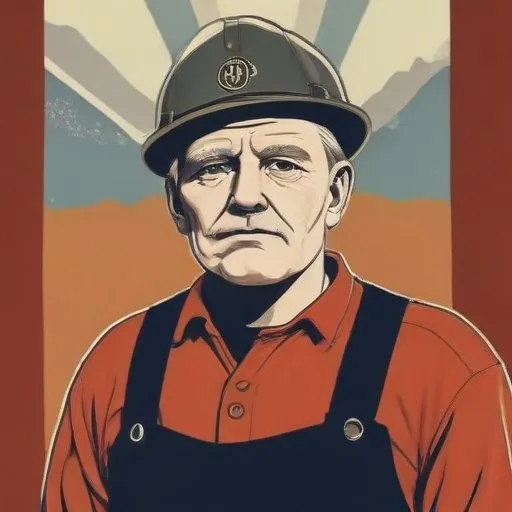
Philip Murray: The Steelworker's Unyielding Champion
A Life of Service and Labor Leadership
Philip Murray, the Scottish-born steelworker, left an indelible mark on America's labor landscape. As the first president of the Steel Workers Organizing Committee (SWOC), the United Steelworkers of America (USWA), and the longest-serving president of the Congress of Industrial Organizations (CIO), Murray's unwavering commitment to workers' rights and social justice epitomizes the essence of a true labor leader.
Early Life and Influences
Born in Blantyre, Scotland, on May 25, 1886, Murray's life was shaped by his father, William Murray, a Catholic coal miner and union leader who emigrated from Ireland to Scotland. After Murray's mother, Rose Layden, passed away when he was just two years old, his father remarried and had eight more children. Murray, the oldest boy, began working in coal mines at the tender age of 10 to support his family.
The American Dream and Labor Activism
In 1902, Murray and his father emigrated to the United States, settling in the Pittsburgh region, where they obtained jobs as coal miners. This marked the beginning of Murray's journey as a labor activist. In 1904, he became involved with the United Mine Workers of America (UMWA) after a dispute with a manager led to his dismissal. The incident sparked a strike, and Murray's family was subsequently thrown out of their company-owned home. This event galvanized Murray's resolve to fight for workers' rights.
Rise to Prominence
Murray's leadership skills and conviction led to his election as president of the UMWA local in Horning, Pennsylvania, in 1905. Determined to excel, he enrolled in an 18-month correspondence course in mathematics and science. His dedication paid off, and he soon rose through the ranks, becoming a prominent figure in the labor movement.
Key Milestones and Achievements
- First president of the Steel Workers Organizing Committee (SWOC)
- First president of the United Steelworkers of America (USWA)
- Longest-serving president of the Congress of Industrial Organizations (CIO)
- Led the CIO during World War II, promoting industrial peace and wartime production
- Played a crucial role in shaping the American labor movement
Philosophical Contributions and Beliefs
Murray's philosophical approach to labor rights was rooted in his conviction that workers deserved fair treatment, better working conditions, and a united voice. He believed in the power of collective bargaining and the importance of workers' education. Throughout his career, Murray remained committed to social justice, advocating for the rights of marginalized communities and promoting racial equality.
Personal Milestones and Key Life Events
- Married to Elizabeth, with whom he had three children
- Passed away on November 9, 1952, at the age of 66
Lasting Legacy
Philip Murray's unwavering dedication to the labor movement has left an enduring impact on American history. His legacy serves as a testament to the power of collective action, social justice, and the unrelenting pursuit of workers' rights. As a champion of the steelworkers, Murray's influence continues to inspire generations of labor leaders, ensuring a brighter future for working-class Americans.
FAQ
What role did Philip Murray play in the labor movement?
Philip Murray was a prominent labor leader who played a key role in organizing coal miners and advocating for their rights. He was a founding member of the Congress of Industrial Organizations (CIO) and served as its president from 1940 to 1960.
What were Philip Murrays early life and career like?
Philip Murray was born in Scotland in 1886 and immigrated to the United States in 1902. He worked as a coal miner in Pennsylvania and became involved in the labor movement, eventually becoming a leader in the United Mine Workers of America.
How did Philip Murray contribute to the formation of the CIO?
Philip Murray was one of the key figures in the formation of the Congress of Industrial Organizations (CIO) in 1935. He worked closely with John L. Lewis to organize industrial workers and challenge the dominance of the American Federation of Labor.
What was Philip Murrays relationship with John L. Lewis?
Philip Murray and John L. Lewis were close allies and friends. They worked together to organize coal miners and industrial workers, and Murray succeeded Lewis as the president of the CIO in 1940.
What was Philip Murrays legacy in the labor movement?
Philip Murrays legacy in the labor movement is one of dedicated service and leadership. He played a key role in organizing workers and advocating for their rights, and his leadership helped to shape the CIO into a powerful force for labor rights.