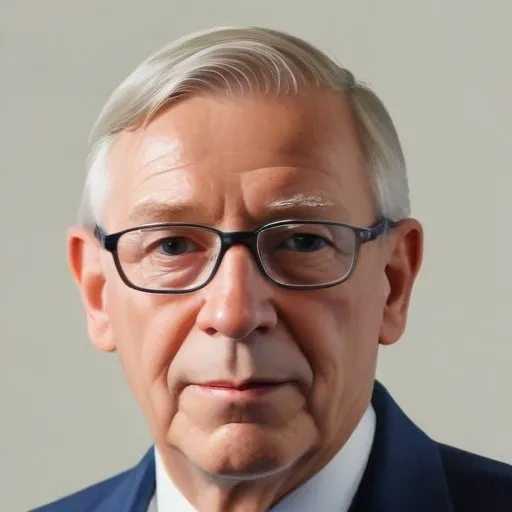
Philip Noel-Baker, Baron Noel-Baker: A Life Dedicated to Peace and Sports
The Nobel Laureate and Olympic Champion
Philip Noel-Baker, Baron Noel-Baker, is best known for being the only person to have won an Olympic gold medal and a Nobel Peace Prize. This remarkable achievement is a testament to his lifelong dedication to promoting peace, international cooperation, and athletic excellence.
Early Life and Education
Born on November 1, 1889, in Brondesbury, London, Philip Noel-Baker was the son of a Quaker family. He was educated at Ackworth School and later attended Cambridge University, where he studied history. During his time at university, he became interested in the Olympic movement and went on to compete in the 1912 and 1920 Summer Olympics, winning a gold medal in the 1500 meters at the 1920 Antwerp Games.
Career Highlights and Major Works
Noel-Baker's most notable contribution to international relations was his work as a diplomat and politician. He served as a Labour Member of Parliament (MP) for Coventry from 1929 to 1931 and later for Derby from 1936 to 1970. During his tenure, he played a crucial role in shaping British foreign policy, advocating for international cooperation and disarmament.
- In 1929, he helped establish the League of Nations Union, an organization dedicated to promoting peace and preventing war through collective security.
- He served as a delegate to the League of Nations from 1929 to 1936, where he worked tirelessly to resolve international conflicts peacefully.
- In 1945, he played a key role in the formation of the United Nations, helping to draft the UN Charter.
Philosophical Contributions and Beliefs
Noel-Baker's philosophical approach to international relations was rooted in his Quaker upbringing and his belief in the importance of pacifism, cooperation, and collective security. He was a strong advocate for disarmament and argued that nations should prioritize mutual understanding and diplomacy over military power.
Personal Milestones and Key Life Events
Noel-Baker's personal life was marked by several significant milestones, including:
- In 1915, he married Irene Noel, with whom he had two daughters.
- In 1929, he was appointed as a Commander of the Order of the British Empire (CBE) for his services to international athletics.
- In 1977, he was created a life peer as Baron Noel-Baker, of the City of Derby.
Awards and Honors
Noel-Baker's contributions to peace and international cooperation were recognized with several prestigious awards, including:
- The Nobel Peace Prize in 1959 for his efforts to promote disarmament and international cooperation.
- The Olympic Order in 1964 for his services to the Olympic movement.
Legacy and Impact on Modern Society
Noel-Baker's legacy extends far beyond his personal achievements. He played a crucial role in shaping the modern international system, promoting the concept of collective security, and advocating for disarmament and pacifism. His work continues to inspire generations of diplomats, politicians, and peace activists.
Inspirational Stories and Motivations
Noel-Baker's remarkable life serves as a testament to the power of dedication, hard work, and a commitment to making the world a better place. His story inspires us to strive for greatness, to pursue our passions, and to never give up in the face of adversity.
Trivia and Fun Facts
- He was the first British athlete to win an Olympic gold medal in the 1500 meters.
- In 1955, he became the first person to be appointed as the President of the International Council for Sport and Physical Education.
Visual Timelines and Milestones
Noel-Baker's life was marked by several significant milestones, including:
- 1889: Born on November 1 in Brondesbury, London
- 1912: Competed in the Stockholm Summer Olympics
- 1920: Won the gold medal in the 1500 meters at the Antwerp Summer Olympics
- 1929: Elected as a Labour MP for Coventry
- 1945: Played a key role in the formation of the United Nations
- 1959: Awarded the Nobel Peace Prize
- 1977: Created a life peer as Baron Noel-Baker
- 1982: Passed away on October 8 at the age of 92
Noel-Baker's remarkable life serves as a testament to the power of dedication, hard work, and a commitment to making the world a better place. His legacy continues to inspire generations of leaders, athletes, and peace activists, and his story remains an essential part of our shared human heritage.
FAQ
What was Philip Noel-Bakers role in politics?
Philip Noel-Baker was a British academic and politician who served as a member of Parliament, Minister of State for Foreign Affairs, and Secretary of State for Commonwealth Relations.
What was Philip Noel-Bakers contribution to international relations?
Philip Noel-Baker made significant contributions to international relations, particularly in the areas of disarmament, international law, and conflict resolution.
What awards did Philip Noel-Baker receive?
Philip Noel-Baker was awarded the Nobel Peace Prize in 1959 for his efforts to promote disarmament and international cooperation.
Did Philip Noel-Baker write any notable works?
Philip Noel-Baker wrote several books on international relations, politics, and history, including The Arms Race and The League of Nations at Work.
Is Philip Noel-Baker considered a prominent peace activist?
Philip Noel-Baker is considered a prominent peace activist, dedicating his life to promoting international cooperation, disarmament, and peace.