


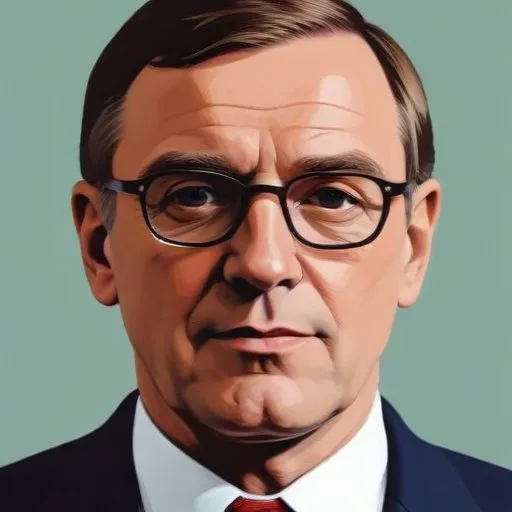
A British politician who served as Chancellor of the Exchequer, playing a crucial role in shaping the country's post-WWII economy and introducing key social welfare reforms. He's also known for his diplomatic efforts to maintain British-Indian relations.
Sir Stafford Cripps, a British Labour Party politician, barrister, and diplomat, is best known for his instrumental role in shaping Britain's post-war economy as Chancellor of the Exchequer. His leadership during this period earned him the reputation as a champion of social reform and a master of economic strategy.
Born on April 24, 1889, Cripps came from a wealthy background, which afforded him the opportunity to pursue a career in law. He was called to the bar in 1912 and quickly established himself as a skilled barrister.
Cripps' entry into politics began with his election to Parliament in 1931. He quickly rose through the ranks, becoming a leading spokesman for the left wing of the Labour Party and advocating for cooperation with Communists in a Popular Front.
In 1939, Cripps' radical views led to his expulsion from the Labour Party. This decision, however, did not deter him from continuing his work in politics. He formed close relationships with influential figures like Krishna Menon and continued to advocate for his beliefs.
During World War II, Cripps served as Ambassador to the USSR from 1940 to 1942. His tenure in this role earned him great public popularity, and he became a potential rival to Winston Churchill for the premiership.
In 1942, Cripps embarked on a mission to resolve the wartime crisis in India. Although his proposals were ultimately rejected, he maintained the trust and friendship of Indian leaders like Mahatma Gandhi and V. K. Krishna Menon.
After rejoining the Labour Party in 1945, Cripps served in the Attlee ministry, first as President of the Board of Trade and later as Chancellor of the Exchequer from 1947 to 1950. During this period, he implemented a series of economic reforms that would shape Britain's post-war economy.
As Chancellor, Cripps introduced a range of policies aimed at addressing Britain's economic woes. He implemented stringent austerity measures, including rationing and import controls, to reduce the country's massive debt. His leadership during this period earned him the reputation as a master of economic strategy.
Sir Stafford Cripps' legacy is that of a maverick politician who dared to challenge the status quo. His unwavering commitment to social reform and economic strategy continues to inspire generations of politicians and economists.
"The Government is not going to introduce any measures which would interfere with the liberty of the subject."
Cripps married Isobel Swithinbank in 1915, and the couple had one son, John. He passed away on April 21, 1952, leaving behind a legacy that continues to shape Britain's economic landscape.
In conclusion, Sir Stafford Cripps' life was a testament to his unwavering commitment to social reform and economic strategy. His leadership during Britain's post-war period continues to inspire generations of politicians and economists, cementing his place as one of the most influential figures in British politics.
Born in 1883
Led the Labour Party to a landslide victory in 1945, implementing significant social and economic reforms, including the creation of the National Health Service. He played a crucial role in shaping post-war Britain.
Born in 1871
Prolific writer of historical novels and adventure stories, also a talented landscape painter.
Born in 1906
Leader of the Labour Party who opposed Britain's entry into the European Economic Community and advocated for a more socialist Britain, known for his strong leadership and economic policies.
Born in 1897
Founder of the UK's National Health Service (NHS), credited with providing universal healthcare to all citizens. A pioneer in socialized medicine, his legacy continues to shape healthcare policies worldwide.
Born in 1885
Won the 1952 Olympic Games marathon in Helsinki, Finland, and held the world record in the marathon from 1952 to 1953.
Born in 1848
Early 20th-century actress and dancer, known for her appearances in silent films and vaudeville performances.
Born in 1925
A pioneering politician who championed socialism and workers' rights, known for his radical views and advocacy for nationalization of key industries.
Born in 1913
A British Labour Party leader and passionate orator who championed workers' rights and opposed nuclear proliferation. He's remembered for his strong socialist stance and charismatic leadership style.
