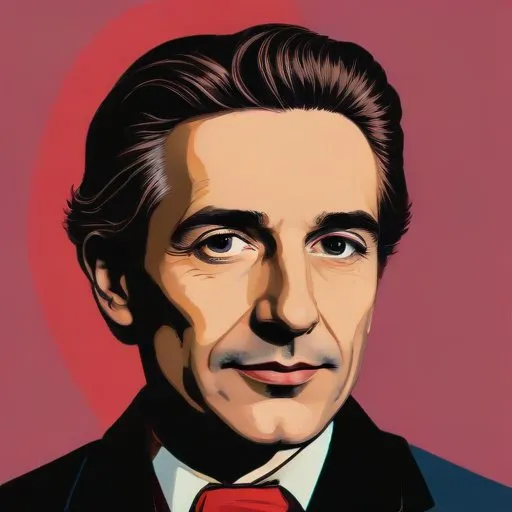
Philipp Frank: A Pioneer in Physics and Philosophy
A Logical Positivist and Vienna Circle Member
Philipp Frank, a renowned physicist, mathematician, and philosopher, left an indelible mark on the early 20th century. He is best known for his work as a logical positivist and his membership in the esteemed Vienna Circle, a group of scholars dedicated to advancing scientific philosophy.
Early Life and Education
Born on March 20, 1884, in Vienna, Austria-Hungary, Frank pursued his passion for physics at the University of Vienna. Under the guidance of
Ludwig Boltzmann, he completed his thesis in theoretical physics in 1907. This marked the beginning of a lifelong dedication to the pursuit of knowledge and understanding.
Academic Career and Influences
Frank's academic career took off when he joined the faculty at the University of Vienna in 1910.
Albert Einstein, impressed by Frank's work, recommended him as his successor for a professorship at the German Charles-Ferdinand University of Prague. Frank held this position from 1912 until 1938, shaping the minds of notable students like Reinhold Furth and Peter Bergmann.
The invasion of Czechoslovakia by Germany in 1938 led to Frank's departure from Prague. He was invited to Harvard University as a visiting lecturer on quantum theory and the philosophy of modern physics. This marked the beginning of a new chapter in his life, as he became a lecturer on physics and mathematics at Harvard until his retirement in 1954.
The Institute for the Unity of Science
In 1947, Frank founded the Institute for the Unity of Science, a part of the American Academy of Arts and Sciences (AAAS). This endeavor was born out of a call by
Howard Mumford Jones, then president of the AAAS, to overcome the fractionalization of knowledge. The institute held regular meetings, attracting a diverse range of participants.
Willard Van Orman Quine regarded the organization as a Vienna Circle in exile.
Philosophical Contributions and Beliefs
Frank's philosophical contributions were deeply rooted in his work as a logical positivist. He was influenced by
Ernst Mach, and his own work on Mach's principle led to a graphic expression of the concept: "When the subway jerks, it's the whole universe that jerks." This phrase, often attributed to Mach himself, captures the essence of Frank's intellectual pursuits.
Personal Milestones and Key Life Events
Frank's commitment to socialism was a testament to his strong sense of social responsibility. His younger brother, Josef Frank, was a noted architect and designer. The Frank brothers' contributions to their respective fields are a testament to their family's rich intellectual heritage.
Legacy and Impact
Astronomer Halton Arp described Frank's Philosophy of Science class at Harvard as his favorite elective. This speaks to the profound impact Frank had on his students and the academic community at large. His work continues to inspire new generations of thinkers, shaping our understanding of the world and our place within it.
- Frank's work influenced the development of modern physics and philosophy.
- He played a crucial role in shaping the intellectual landscape of the 20th century.
- His commitment to the pursuit of knowledge and understanding continues to inspire scholars today.
By examining the life and work of Philipp Frank, we gain insight into the intricacies of human knowledge and the power of intellectual curiosity. His legacy serves as a testament to the boundless potential of the human spirit, inspiring us to continue exploring the unknown and pushing the boundaries of human understanding.
FAQ
What is Philipp Frank known for?
Philipp Frank was an Austrian-American physicist, mathematician, and philosopher who made significant contributions to the fields of philosophy of science and philosophy of physics.
How did Philipp Franks work impact the philosophy of science?
Franks work on the philosophy of science, particularly his critique of logical positivism, had a significant impact on the development of the field.
What was Philipp Franks role in the Vienna Circle?
Frank was a member of the Vienna Circle, a group of philosophers and scientists who sought to develop a scientific worldview.
How did Philipp Franks philosophical views influence his scientific work?
Franks philosophical views, particularly his emphasis on the importance of intuitive understanding, influenced his approach to scientific inquiry.
What was Philipp Franks work like at Harvard University?
Frank taught at Harvard University, where he was a prominent figure in the philosophy department and influenced a generation of students and scholars.