


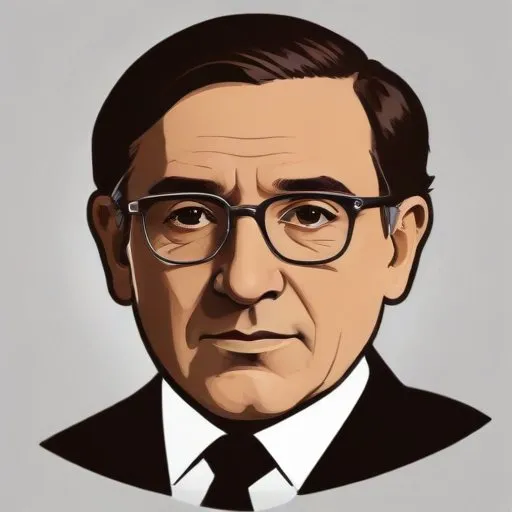
A 15th-century Italian statesman who played a key role in Florence's government, known for his diplomatic efforts to maintain peace and stability in the region.
Piero Soderini, a prominent figure in 15th-century Italy, is renowned for his prudent governance and diplomatic prowess as the Gonfaloniere of Florence, a position he held from 1502 until his exile in 1512. During his tenure, he oversaw the restoration of the city's republican institutions, earning him the respect of his contemporaries and etching his name in the annals of Florentine history.
Born on March 17, 1451, to Tommaso di Lorenzo Soderini and Dianora Tornabuoni, Piero inherited a legacy of prominence from his family. His father, a renowned physician, and his mother, a member of the esteemed Tornabuoni family, instilled in him the values of public service and intellectual curiosity. Piero's brothers, Paolo Antonio and Francesco, would go on to become influential figures in their own right, with Paolo supporting the reformist priest Girolamo Savonarola and Francesco rising to the rank of Cardinal.
These early experiences laid the foundation for Soderini's eventual election as Gonfaloniere for life in 1502, a position that granted him unprecedented authority and responsibility in the governance of Florence.
During his time in office, Soderini implemented a range of reforms aimed at strengthening Florence's military and economic foundations. Key achievements include:
These accomplishments earned Soderini widespread admiration, including from the esteemed Niccolò Machiavelli, who served as his second chancellor and ambassador to various European powers.
Soderini's fortunes began to decline in 1512, when the Medici family, backed by a Spanish army, returned to Florence and ousted him from power. He was subsequently forced into exile, taking refuge in Orašac near Dubrovnik in Dalmatia.
Despite this setback, Soderini's reputation as a skilled diplomat and statesman endured. Following the election of Pope Leo X, he was summoned to Rome and received numerous honors and favors, a testament to his enduring influence in Italian politics.
Piero Soderini's legacy extends far beyond his own lifetime, shaping the course of Florentine history and influencing the development of modern Italian politics. His commitment to republican values, coupled with his diplomatic acumen, has inspired generations of statesmen and scholars.
Today, Soderini is remembered as a beacon of wisdom and integrity, a testament to the enduring power of prudent governance and the importance of strong leadership in shaping the destiny of nations.
Born in 1469
Italian historian and philosopher who wrote "The Prince", a seminal work on politics and power that still influences modern leadership and governance today.
Born in 1449
Renaissance leader who ruled Florence and sponsored artists like Michelangelo and Botticelli, shaping the city's cultural and artistic heritage.
Born in 1452
A Dominican friar who preached about moral reform and prophesied the downfall of corrupt rulers, leading a short-lived theocratic government in Florence before being executed. He's known for his fiery sermons and clashes with the powerful Medicis.
Born in 1535
The second shortest-reigning pope in history, serving for just 27 days in 1605, he is most known for his brief but tumultuous papacy marked by power struggles and controversy.
Born in 1500
Ruling over a vast empire from 1519 to 1556, he was a powerful and influential leader who played a crucial role in shaping European politics and religion. He is most known for his efforts to unify Christian Europe and defend it against the Ottoman Empire.
Born in 1478
The Pope who sparked the English Reformation by refusing to annul King Henry VIII's marriage, leading to the creation of the Church of England. He's also known for his lavish spending and artistic patronage.
