


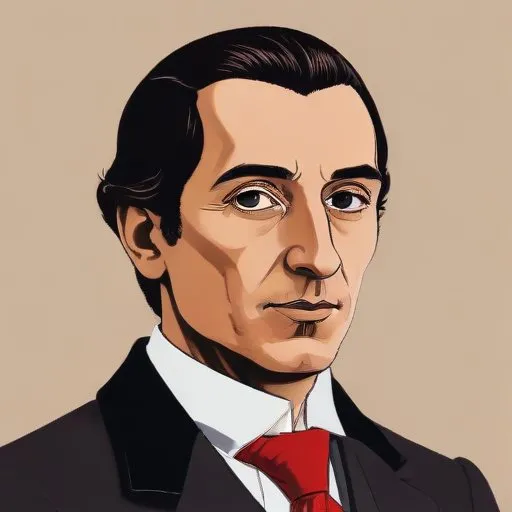
A 17th-century French economist who developed the concept of laissez-faire economics, arguing that economic prosperity is best achieved through minimal government intervention and free trade.
Pierre Le Pesant, sieur de Boisguilbert, was a French lawmaker and Jansenist who made a profound impact on the world of economics, recognized as one of the inventors of the notion of an economic market. His groundbreaking work in the late 17th century paved the way for modern economic thought, leaving an indelible mark on the field.
Born on February 17, 1646, in Rouen, Normandy, Boisguilbert hailed from an ancient noble family allied to the Corneille family. He received his classical education in Rouen and later attended the Petites écoles de Port-Royal, where he was instilled with the values of Jansenism.
Boisguilbert embarked on a career in the magistracy, becoming a judge at Montivilliers, near Le Havre. In 1690, he assumed the position of president of the bailliage of Rouen, a role he held until his death, eventually passing it on to his son.
Boisguilbert's experience in public service and his personal involvement in supervising the cultivation of his lands led him to study local economic conditions. He engaged with prominent merchants in Rouen, which sparked his interest in the economic plight of the common people. In 1695, he published his seminal work, Le détail de la France, la cause de la diminution de ses biens et la facilité du remède, in which he presented a scathing critique of the French economy and proposed remedies to alleviate the suffering of the people.
He advocated for a shift in economic thinking, arguing that a country's wealth is not measured by its abundance of money, but rather by its production and exchange. He also stressed the importance of equalizing taxation, which would enable the poor to consume more and increase overall production.
Boisguilbert's ideas were met with resistance from the tax farmers, who opposed his proposal to introduce a single capitation tax. His work, Factum de la France, published in 1705 or 1706, provided a concise summary of his theories, but failed to garner significant support.
Despite the initial resistance, Boisguilbert's contributions to economic thought have had a lasting impact on modern society. His emphasis on production and exchange laid the groundwork for classical economics, influencing thinkers such as Adam Smith and Jean-Baptiste Say.
Boisguilbert's ideas have permeated various aspects of modern life, from taxation policies to international trade agreements. His legacy serves as a testament to the power of visionary thinking, inspiring future generations of economists and policymakers.
Through his remarkable life and work, Pierre Le Pesant, sieur de Boisguilbert, has left an indelible mark on the world of economics, paving the way for future generations of thinkers and policymakers.
Born in 1619
A 17th-century mastermind who centralized France's economy, creating a powerful and efficient financial system that fueled the country's growth and prosperity. He's renowned for his innovative economic policies and reforms.
Born in 1710
The monarch who ruled France from 1715 to 1774, known as the "Sun King's" great-grandson, and remembered for his extravagance, absolutism, and the decline of the French monarchy.
Born in 1694
A witty and insightful 18th-century writer and philosopher who used satire to critique societal norms and advocate for reason, tolerance, and human rights.
Born in 1712
A pioneering thinker who shaped modern democracy and education with his ideas on social contracts, general will, and the importance of early childhood education. His writings influenced the French Revolution and modern political thought.
Born in 1689
A French lawyer and philosopher who developed the concept of separation of powers, which divides a government into legislative, executive, and judicial branches to prevent abuse of power. His ideas greatly influenced modern democracy.
Born in 1632
A 17th-century thinker who laid the groundwork for modern democracy, arguing that governments derive their power from the people and that individuals have inherent rights to life, liberty, and property.
