


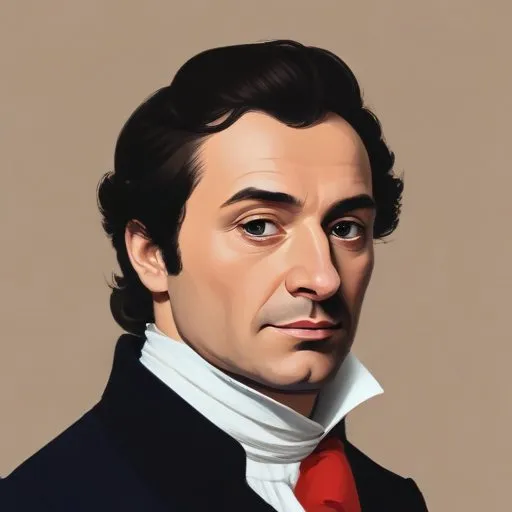
A master of witty dialogue and insightful portrayals of 18th-century French society, this playwright's works continue to delight audiences with their nuanced exploration of the human heart.
Pierre de Marivaux, a renowned French playwright and novelist, is widely regarded as one of the most important literary figures of the 18th century. His works, which include numerous comedies and novels, are still celebrated for their wit, satire, and insight into the human condition.
Born on February 4, 1688, in Paris, France, Marivaux was the son of a Norman financier. He spent his early years in Limoges and Riom, where his father directed the mint. Marivaux's literary talents emerged at a young age, and he is said to have written his first play, Le Pre prudent et quitable, at the age of 18.
During the three years from 1713 to 1715, Marivaux produced three novels: Effets surprenants de la sympathie, La Voiture embourbe, and a book with three titles - Pharsamon, Les Folies romanesques, and Le Don Quichotte moderne. These early works, inspired by Spanish romances and heroic novels, showcase Marivaux's ability to experiment with different genres and styles.
Marivaux's literary career gained momentum when he became associated with the Mercure, the chief newspaper of France. His friendship with Antoine Houdar de La Motte, a prominent writer and critic, introduced him to the newspaper and provided him with a platform to showcase his talents.
Marivaux's most important works include:
These works, which blend wit, satire, and social commentary, have been widely praised for their insight into the human condition and their ability to capture the essence of 18th-century French society.
Marivaux's influence on French literature and theatre cannot be overstated. His works have inspired generations of writers, including Denis Diderot, Voltaire, and Molière, and continue to be performed and studied today.
Marivaux's legacy extends beyond his literary works. He was a pioneer of the Comédie-Française and the Comédie-Italienne, two of the most prominent theatre companies in Paris, and played a significant role in shaping the French theatre scene.
Marivaux's personal life was marked by significant milestones, including his election to the Académie Française in 1742 and his receipt of a pension from King Louis XV in 1753. He died on February 12, 1763, leaving behind a legacy that continues to inspire and enrich French literature and culture.
In conclusion, Pierre de Marivaux was a towering figure in 18th-century French literature, whose works continue to captivate audiences with their wit, satire, and insight into the human condition. His legacy is a testament to his innovative spirit, his mastery of multiple genres, and his enduring impact on French culture.
Born in 1694
A witty and insightful 18th-century writer and philosopher who used satire to critique societal norms and advocate for reason, tolerance, and human rights.
Born in 1712
A pioneering thinker who shaped modern democracy and education with his ideas on social contracts, general will, and the importance of early childhood education. His writings influenced the French Revolution and modern political thought.
Born in 1622
A 17th-century master of comedy, he penned witty plays that satirized the French aristocracy, leaving a lasting impact on Western theater. His works remain widely performed and adapted today.
Born in 1606
A 17th-century French mastermind behind iconic plays like "Le Cid" and "Horace", known for pioneering the classical French tragedy genre.
Born in 1639
A 17th-century master of French tragedy, crafting intricate, psychologically complex dramas that probed the human condition, influencing the development of Western theatre.
Born in 1683
A prominent figure in the Baroque period, this composer and theorist revolutionized Western classical music with innovative harmonies and treatises on music theory, shaping the course of classical music.
Born in 1668
A renowned Baroque composer and organist, known for his intricate and expressive harpsichord music that showcased his mastery of counterpoint and ornamentation. His works continue to inspire and influence classical music today.
